
I get some version of this question every autumn: is it even worth coming to Romania or Bulgaria once summer’s over? My answer is yes, but with a condition attached. Winter here isn’t a quieter rerun of the June-to-August season, it’s a genuinely different trip, and it rewards people who plan around what’s actually open rather than what a generic round-up assumes is open.
A few of the details below come from Zoe, my wife and the Bulgarian half of Balkan Trails, since she’s covered the Bulgarian side of this list more times than I have. Five destinations, plus two capitals worth a stopover, with the logistics, prices, and honest warnings that most winter lists skip entirely.

1. Brașov and Poiana Brașov, Romania
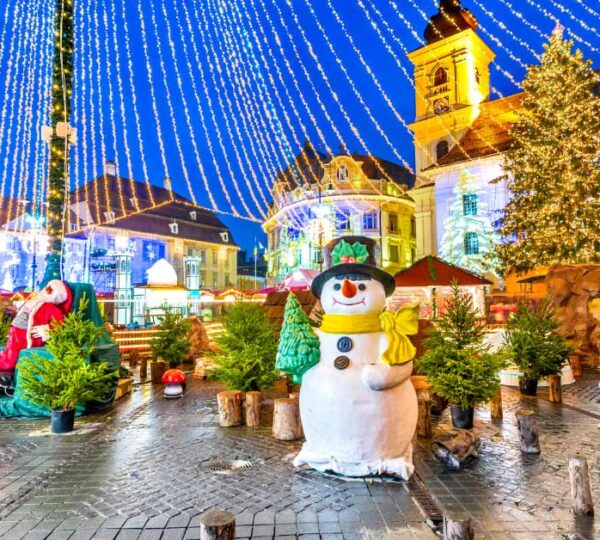
Brașov is where I send most people for a first Romanian winter trip, and Piața Sfatului, the main square, is still the right place to start. The square hosts Brașov’s Christmas market from around the last week of November through early January (exact dates shift a little each year, so check the town’s page before building a schedule around them), and the stalls selling mulled wine and covrigi stay busy well past dark.
From the square, walk toward Biserica Neagră, the Black Church – named for a 1689 fire that scorched its stone walls, not for its original color. It’s the largest Gothic church between Vienna and Istanbul, and in winter the inside is nearly empty, which is not something you can say about it in July.
For skiing, Poiana Brașov sits about 12 km southwest of the old town, roughly a 20-minute drive or a short ride on a local bus from the center. It’s a smaller, gentler ski area than what you’ll find across the border in Bulgaria, and the season depends heavily on natural snowfall since only part of the terrain has snowmaking. If you want an honest comparison before booking either country’s slopes, I’ve put together a full breakdown of skiing in Romania versus Bulgaria.
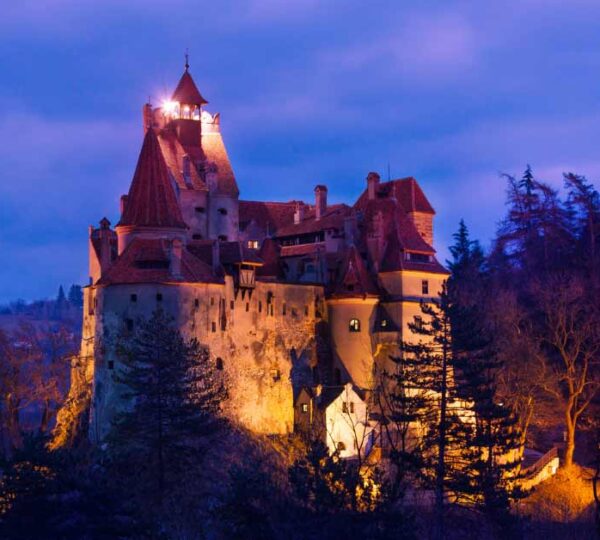
Bran Castle is 30 km from Brașov and gets marketed hard on the Dracula connection, which is mostly invented for tourists – the historical figure the legend borrows from, Vlad the Impaler, actually had stronger ties to Poenari Castle further south. That doesn’t make Bran not worth seeing. The building itself, perched on its rock outcrop with snow settling on the turrets, earns the visit regardless of which prince did or didn’t sleep there. I wrote a longer guide to visiting Bran Castle if you want the practical details: opening hours, ticket prices, and how to time your visit around the tour buses.
Before heading into the mountains around Brașov, know that Romanian law requires winter tires or snow chains on roads covered in snow or ice, generally enforced from around November through March – rental companies usually fit winter tires by default in this window, but confirm it when you book if you’re driving yourself.
Finish with the cable car up Tâmpa Mountain for the view over the old town’s red roofs against the snow. It runs year-round, weather permitting, and gets you back down before your legs feel it.

2. Bansko, Bulgaria
Bansko sits about 160 km south of Sofia, and the direct bus from Sofia’s Central Bus Station takes roughly 2.5 to 3 hours – driving yourself takes a similar amount of time once you’re clear of the city. Between the Pirin and Rila mountains, it’s Bulgaria’s biggest and most developed ski town, and the gondola running from the edge of town up into the ski zone covers about 6 km and takes around 25 minutes, which beats waiting on a shuttle bus in the cold.
The 2025/26 season ran from mid-December to mid-April, and a day lift pass for adults was priced around 65 BGN (roughly 33 EUR) – both the dates and the price shift a little each season, so check Bansko’s official ski site before you commit to specific days. Early February through mid-March is generally the busiest and liveliest stretch, once Bulgarians have had their first paycheck of the year, so book lift tickets and accommodation ahead if that’s your window.
Zoe’s take, since she’s skied both resorts: Bansko has the longer season and has historically been the cheaper option for lift passes and rentals, which makes it the better call for a first-time skier who doesn’t want an expensive way to find out they don’t like skiing. Weigh that against Poiana Brașov’s convenience if your trip is short – see the skiing comparison linked above.
Off the slopes, the old town is worth slowing down for. The cobbled streets near Nikola Vaptsarov’s house lead to a cluster of mehanas – traditional taverns – where the fireplaces run all winter and the menus lean on kavarma, a slow-cooked meat and vegetable stew, alongside the more familiar banitsa. Order the banitsa warm if you can; the cold version sold at bus stations doesn’t do it justice. Wash it down with rakia, and carry cash – plenty of the old-town mehanas still don’t take cards, especially away from the main tourist strip.

3. Rila Monastery, Bulgaria
A short drive from Bansko, though closer to Sofia (about 120 km, roughly two hours by car), Rila Monastery is the one stop on this list I’d put ahead of the ski towns if you only have a single day to spare in Bulgaria. It’s a working monastery founded by Ivan Rilski in the 10th century, and it’s a UNESCO World Heritage site.
Entry to the courtyard and the main church costs nothing and stays that way year-round; the museum charges a small fee, around 8 BGN, and winter opening hours run shorter than summer’s – the complex closes earlier in the afternoon between November and March, so don’t plan to arrive after lunch expecting a leisurely visit. There’s no ATM on site and card machines aren’t reliable inside the complex, so bring Bulgarian lev in cash for the museum ticket and the bakery by the entrance.
What the photos don’t tell you: the monastery sits deep in a narrow gorge, and in December the sun drops behind the ridge by early afternoon, so the courtyard goes from bright to shadowed faster than you’d expect. It also means winter visits, even midday ones, are colder than the number on your phone suggests. Bring a proper coat, not just a scarf.
If the coach-tour crowds at Rila put you off, and they thin out considerably in winter but weekends around Christmas and New Year still draw day-trippers from Sofia, Bachkovo Monastery near Plovdiv is Bulgaria’s second-oldest and empties out almost completely once the temperature drops. I’ve written more about both in a guide to Bulgaria’s most significant monasteries if you want to compare them before deciding.

4. Bâlea Lake, Romania
This is the one place on the list that genuinely changes shape depending on when you go, and it’s worth explaining properly since the last version of this article glossed over it. The Transfăgărășan (DN7C) closes to traffic on its high section every year, typically from late October until mid-June, which means you cannot drive to Bâlea Lake in winter, no matter how good your tires are.
What you can do is drive the open, lower part of the road from the Sibiu side up to Bâlea Cascadă, then take the cable car from there to the lake – a ride of roughly 15 to 20 minutes. Access only works from the north; there’s no way to reach Bâlea Lake from the Bucharest or Argeș side in winter, since that stretch of road sits entirely within the closed section. Cable car tickets have generally run in the 35 to 50 RON range one-way in recent seasons, though I’d confirm the current price before you go, since it tends to climb a little each year. The cable car also gets suspended in high wind, so build a buffer day into your plans if this is the main reason for your trip.
Once you’re up there, the frozen lake and the surrounding peaks are the payoff. Hotel of Ice, rebuilt every year from blocks cut directly out of the lake, usually opens in late December if the freeze is thick enough – it isn’t guaranteed every season, so don’t book it as your only accommodation without a backup. The interior stays around -2 to 2 degrees Celsius even when it’s far colder outside, and there’s a warmer chalet nearby if the ice rooms are more than you bargained for at 2am. Beyond the hotel itself, expect ice skating, sledging, and snowmobiling on the frozen lake surface. If it’s your first winter drive in the Carpathians, remember the tire law mentioned above applies here too, and the open stretch of road up to Bâlea Cascadă can still ice over even where it’s technically open.

5. Maramureș, Romania
Maramureș in the far north is the destination on this list that takes the most planning to reach, and it rewards that effort the most. The easiest approach is by car from Cluj-Napoca, about 3 to 3.5 hours to Sighetu Marmației, or by train via Baia Mare, which takes closer to five hours and runs less frequently in winter than the summer timetable.
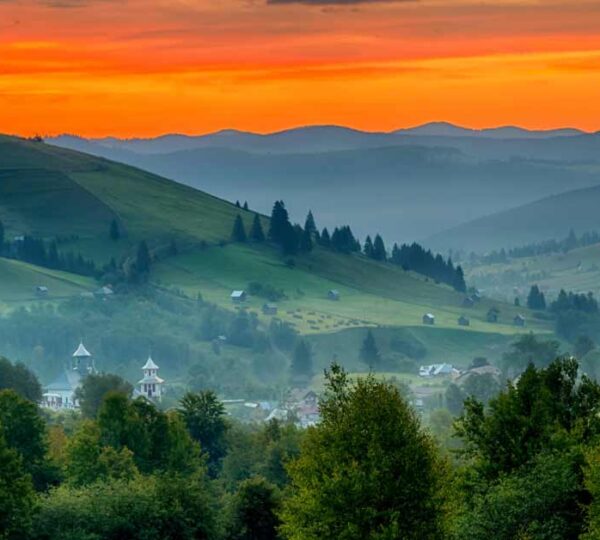
The wooden churches are the headline attraction, and for good reason. Eight of them across the region, including Bârsana and Ieud Deal – locally dated to 1364, among the oldest still standing – carry UNESCO World Heritage status for their construction without a single nail and their steep, shingle-covered spires. Snow on those roofs is the version of Maramureș that photographs best, and it’s also the quietest time to see them, since almost nobody visits the churches in January.
The Merry Cemetery in Săpânța, about 19 km from Sighetu Marmației, is the other reason people travel this far north. Its carved and painted wooden crosses, each one telling the story – sometimes gently mocking – of the person buried beneath it, take on a different tone under snow. Entry costs a few RON, cash only, and the village has limited card infrastructure generally, so plan your cash accordingly before leaving Sighet.
One correction I need to make here, because the earlier version of this article oversold it: the Mocănița steam train through the Vaser Valley runs its regular timetable from roughly May to November, not through winter. What it does run, in recent seasons, is a set of special holiday departures clustered around Christmas and New Year – dates like December 26-31 and the first two weeks of January have shown up in past schedules – but these fill up and shift year to year, so if riding the steam train through snow matters to your trip, contact Vișeu de Sus directly before building an itinerary around it, and have a backup plan for a spring or autumn trip if the dates don’t line up. I still link to the full rundown of the Vaser Valley line for anyone planning around the regular season instead.
Nights in Maramureș in January can drop well below -15°C, so pack layers accordingly – our guide to what to wear in Romania and Bulgaria in winter goes through the specifics. Stray dogs are also a real, if manageable, feature of rural Romania: keep your distance and don’t offer food, the same advice I’d give in any Romanian village, winter or not.

Two capitals worth the detour: Bucharest and Sofia
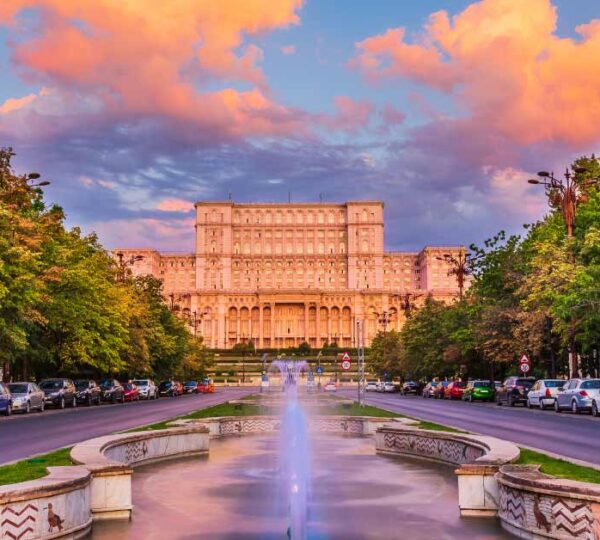
If your flights route through either capital, both are worth more than a layover in December. Bucharest’s main Christmas market spreads along the streets near the Palace of Parliament, generally from late November into early January, though the exact dates shift by about a week most years depending on when the first Sunday of Advent falls. Grab a chimney cake, still called kürtőskalács by the Transylvanian vendors most cities import for the season, and try the sarmale if market food alone doesn’t feel like dinner.
Sofia runs on a similar calendar. Its market sets up in the city center near the National Palace of Culture, and Zoe still goes most years for the mulled wine alone – greyano vino, she’ll tell you, a touch sweeter than the Romanian version. Roasted chestnuts are sold on nearly every corner in both cities from November through the New Year, and neither market charges entry, so it’s an easy stop even on a short layover.
I’ve put together a fuller list of markets in both countries, including smaller towns beyond the two capitals, in our guide to Christmas markets across Romania and Bulgaria.

Questions I get asked before people book
Is the Transfăgărășan open in winter?
No. The high section closes to traffic from roughly late October to mid-June every year. You can still reach Bâlea Lake by cable car from the Sibiu side, but not by driving the full road, and not from the south at all.
Do I need a car for all five places?
Not all of them. Brașov, Bansko, and Rila Monastery are all reachable by bus or organized transfer without your own car. Bâlea Lake and Maramureș are considerably easier with one, since public transport thins out badly in both areas once winter sets in.
Bansko or Poiana Brașov, if I only get to pick one ski trip?
I’d send a first-time skier to Bansko for the longer season and gentler introductory terrain. I’d send someone with only three or four days total, who wants to combine skiing with an old town and a castle without an extra flight, to Poiana Brașov instead. Neither is the wrong answer, they just solve different trips.
If you’d rather not coordinate five destinations across two countries yourself, this is close to what a custom Balkan Trails winter itinerary looks like in practice – built around the same logistics above, minus the part where you have to check a cable car’s wind status yourself.