

Most people I talk to who’ve traveled independently through Romania or Bulgaria say the same thing afterward: “I wish I’d known that before.” Not because the trip went badly – often it went fine – but because they spent real time and energy figuring out things a local could have told them in five minutes.
I’m not going to tell you that independent travel is bad, or that you can’t manage without us. You can. But there are specific, practical reasons why booking through a local operator changes the quality of what you experience – and I want to be honest about what those reasons actually are, rather than give you a list of vague reassurances.
Local knowledge that goes deeper than any guidebook
The most useful things I know about traveling in Romania and Bulgaria aren’t written down anywhere. They’re the result of years of running trips, talking to guesthouse owners, sitting at the right table in the right village, and occasionally getting things wrong. We also live there! I am romanian, and my wife Zoe, is bulgarian.
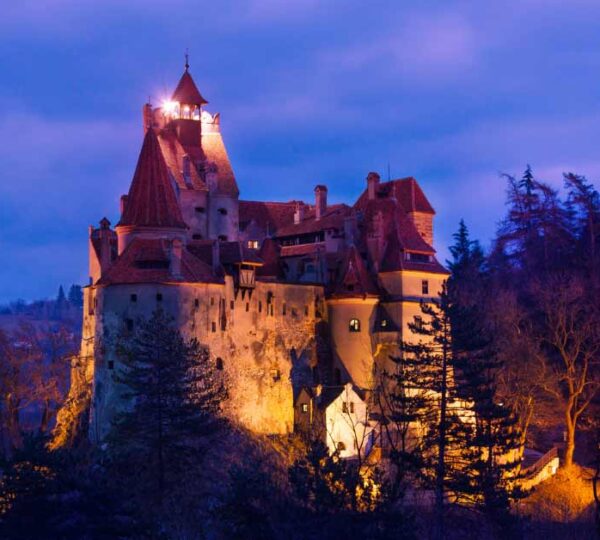
Guidebooks and travel blogs cover the major landmarks – Rila Monastery, Bran Castle, Brașov’s old town. What they don’t tell you is that the road to Poenari Fortress (Vlad the Impaler’s actual castle, not the Bran tourist version) involves climbing 1,480 steps and is genuinely worth the effort, while most Dracula-themed itineraries skip it entirely for the more photogenic but historically dubious Bran. They don’t tell you that visiting the Painted Monasteries of Bucovina in July means sharing the courtyard with four tour buses and you’d do better going in September when the light is softer and the crowds are gone. They don’t tell you which villages in Maramureș still have working wooden churches with active communities, versus which ones have become performance venues for tourist groups.
This is what I mean by local knowledge – not just knowing the names of places, but knowing which version of a place is worth your time, and when.
At Balkan Trails, we’re run by people born and raised in Romania and Bulgaria. No one here learned the region from a travel manual. You can see the full range of what that translates to in practice in our Romania travel guide and Bulgaria travel guide.

An itinerary built around you, not around what’s easy to sell
Package tours exist because they’re efficient to run. You get what’s bookable in bulk – the hotel with 40 rooms available, the restaurant that can handle 30 covers, the attraction that takes groups by appointment. None of that is necessarily bad, but it’s shaped by logistics, not by what would actually suit you.
Custom trips work differently. When you tell us you want to spend four days in the Apuseni Mountains rather than rushing through a highlights loop, we build that in – with accommodation in a local guesthouse rather than a generic hotel, a route that takes the DN75 rather than the motorway, and a guide who knows which local family does the best tuică in the valley.
We can often access experiences that simply aren’t available to independent travelers – a private ceramics workshop with a master potter in Horezu, access to a private wine cellar in Dealu Mare for an evening tasting, or a stay with a farming family in the Szeklerland villages that aren’t listed on any booking platform. These exist through relationships built over years, not through Airbnb.
Budget-wise, custom doesn’t mean expensive. Because we have direct relationships with local accommodation providers, transport operators, and activity organizers, we can often deliver better value than what you’d find booking the same components individually – especially in rural Romania and Bulgaria, where the best places don’t have a Booking.com listing. If you want a realistic sense of what a trip to this region costs, our budget guide to Romania and Bulgaria is a good starting point.

Logistics that would take you weeks to figure out
Here’s something most travel content doesn’t say plainly: transport logistics in Romania and Bulgaria require real research.
The CFR train network in Romania covers most of the country but runs on schedules that are difficult to navigate without Romanian, frequently delayed, and have booking quirks that catch foreign travelers off guard (InterCity seats must be reserved separately; some regional trains are cash-only on board). In Bulgaria, the train network is less useful for most tourist routes – getting from Sofia to Rila Monastery, for example, requires a combination of metro, bus from the Ovcha Kupel station, and a local connection that takes most of a day if you haven’t done it before.
Rural Romania has road quality that varies dramatically between marked routes. A road designated as a county road (DJ) might be perfectly paved or might be 18km of gravel and potholes depending on which county you’re in and when it was last repaired. We know which roads are genuinely driveable in a standard rental car and which ones require local knowledge.
Then there’s the question of timing. The Transfăgărășan road – one of the most spectacular drives in Romania – is typically closed from late October through late June due to snow. Most travel articles don’t mention that the opening date varies each year and is only confirmed a few weeks in advance by the road authority. We track this. We’ve had clients who planned around it independently and arrived to find the pass still closed.
We won’t choose your travel insurance or process your visa – those stay with you. But we’ll handle the rest, and we’ll flag the things that tend to surprise people before they become problems.
Language and culture: more practical than it sounds
Romanian and Bulgarian are not interchangeable, and neither are the cultural norms. They share some Orthodox Christian traditions and a general Balkan hospitality, but the differences matter when you’re actually there.
In Bulgaria, Cyrillic script is used everywhere – menus, road signs, bus schedules, shop fronts. If you can’t read it at all, navigating independently in smaller towns is genuinely difficult. Most younger people in Sofia and Plovdiv speak English reasonably well; in rural Rhodopes or the Strandzha region, that drops significantly. Learning to read the Cyrillic alphabet takes about two hours and makes an enormous difference – something worth doing before you arrive regardless of whether you’re traveling with us.
In Romania, Latin script makes things easier to read, but the language itself is harder to guess at than it looks. Romanian is a Romance language, closer to Italian and Portuguese than to anything Slavic, but regional dialects and the pace of rural speech can make simple interactions challenging without preparation.
Cultural specifics that catch people out: tipping in both countries is expected at around 10% in restaurants but is paid in cash directly to the server, not added to the card payment. In Orthodox monasteries and churches – which are among the most worthwhile things to visit in both countries – shoulders and knees must be covered regardless of the temperature outside; some monasteries provide wraps at the entrance but not all. Name days in Bulgaria are often celebrated more prominently than birthdays, and being invited to one is a genuine sign of local warmth, not a tourist performance.
A local guide absorbs all of this naturally. You’ll learn the context as you go rather than reading about it in advance and still getting it wrong in practice.
Safety – the real picture, not the reassurance version
Romania and Bulgaria are both safe countries by any reasonable measure. I’ve written about this in more depth in the dedicated Romania safety guide, and the same broadly applies to Bulgaria. Violent crime against tourists is rare. The safety concerns that do come up are almost all practical rather than personal.
The most common problems we see independent travelers encounter:
Taxi overcharging, particularly at Bucharest Henri Coandă Airport and Sofia Airport. In Bucharest, always use the Uber or Bolt app or take the pre-booked taxi from the official airport desk with a printed receipt showing the fixed rate. The unofficial taxis outside arrivals have been known to charge 10-15 times the correct fare to first-time visitors who don’t know better. In Sofia, the same applies – check that the meter rate displayed in the window is “1” (day rate) not “2” (night rate) before you get in, regardless of the time of day.
ATM skimming at standalone ATMs in tourist areas of both countries – use ATMs inside bank branches where possible, especially in Bucharest’s old town and Varna’s seaside strip during summer.
In Bulgaria’s mountain areas – particularly around the Rila Lakes trail and the Pirin peaks – weather changes faster than forecasts suggest. The 7 Rila Lakes loop is busiest in July and August, and the combination of crowds, sudden afternoon storms, and unprepared hikers causes problems every summer. Go early (before 9am if possible) and carry a layer regardless of the morning forecast.
These aren’t reasons to be anxious about traveling here. They’re reasons why having someone who knows the specific pressure points matters.
Access to experiences that don’t exist as products
This is the thing that’s hardest to explain in advance, but most consistently what clients mention afterward.
Some of the best things we offer aren’t bookable anywhere. An evening in a mehana in a Bulgarian village where the owner’s father plays gaida after dinner – not because it’s scheduled, but because that’s what happens when you’re the right guests with the right guide. A morning with a shepherd in the Transylvanian highlands during the summer transhumance, before the heat comes and the sheep move to higher pasture. A private early-morning visit to Voronet Monastery in Bucovina, before the day-trip groups arrive, when the painted exterior glows in the light the way the 15th-century muralists intended it to be seen.
These things happen through relationships and timing, not through booking platforms. We’ve been running trips in Romania and Bulgaria long enough that we know which doors open for us and when.
We’re also flexible in a way that structured tours aren’t. If you arrive in a village and want to stay an extra night because you’re not ready to leave, we can usually make that work. If the weather closes a mountain pass and the plan needs to change by the next morning, we have the local network to reroute without losing the whole day.
You can read more about what this looks like in practice in our post on what a custom Balkan Trails tour actually includes.
The simplest version of the argument is this: independent travel gives you freedom. A good local operator gives you access. The best trips usually combine both – and figuring out which parts of a Romania or Bulgaria trip actually benefit from local expertise, versus which parts you’re fine to handle yourself, is something we’re happy to talk through before you commit to anything.
Get in touch and we’ll start from there.