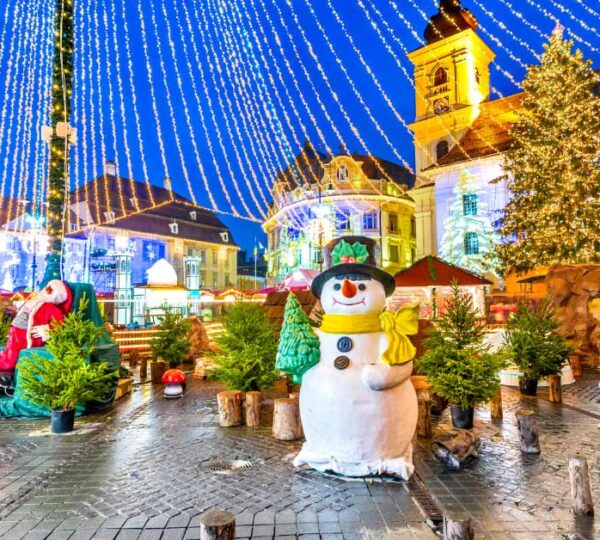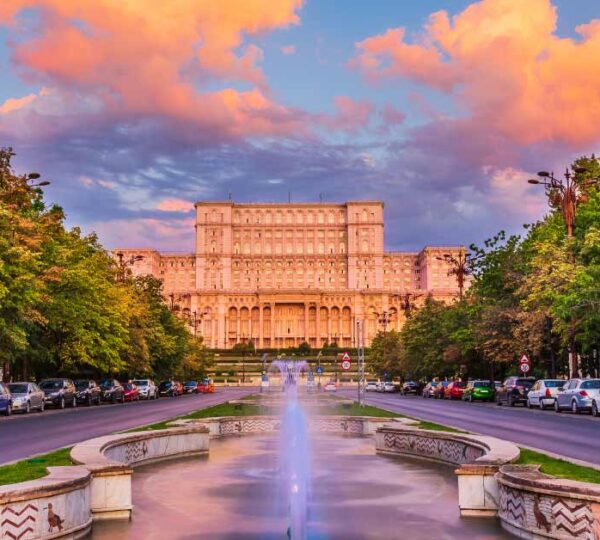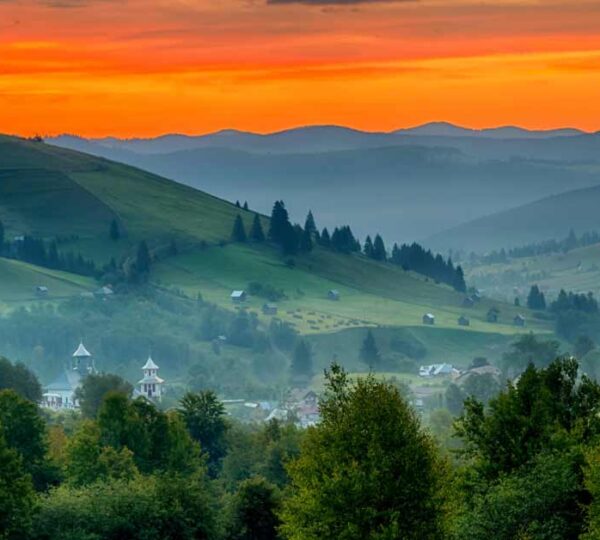

Romania has more castles, fortresses, and ruined citadels than most visitors expect – and most of them are almost completely ignored in favor of Bran. That’s a mistake. I’ve spent years driving through Transylvania, Moldavia, and the Carpathian foothills, and the variety here genuinely surprised me. Medieval Gothic keeps in industrial Hunedoara. Haunted Neo-Gothic manors tucked into Moldavian forest. A French Renaissance winery castle nobody talks about. A crumbling Baroque ruin that hosts one of Europe’s best music festivals.
This guide covers eight Romanian castles worth your time – plus one just across the Bulgarian border that belongs on any Romania-Bulgaria itinerary – with honest notes on what each one is actually like to visit, how to get there, what it costs, and whether it’s worth the detour.
One thing upfront: Bran Castle is not Dracula’s castle. Vlad III, the historical figure who inspired Bram Stoker’s Dracula, spent almost no time at Bran. His actual fortress – Cetatea Poenari, in the Argeș river gorge – is a 1480-step climb up a crumbling staircase and genuinely atmospheric. Worth mentioning because if “Dracula” is your main reason for coming to Romania, Poenari is far more connected to the real story than the polished tourist machine at Bran.
That said, Bran Castle is still worth visiting. Just go in knowing what it is.

Peleș and Pelișor Castles, Sinaia
Peleș is the one Romanian castle that fully earns its reputation. Built between 1873 and 1914 as a summer residence for King Carol I of Hohenzollern-Sigmaringen, it sits in a narrow Carpathian valley just above the resort town of Sinaia, surrounded by dense spruce forest. The architecture is German Neo-Renaissance – think a Bavarian hunting lodge scaled up to palace proportions – and the interior is extraordinary: roughly 160 rooms, carved ceilings, Murano glass, and a weapons collection that would take an entire afternoon to properly look at.
What I’d tell you before you go: arrive early. By 11 AM on any summer weekend, the queue for the guided tour of the upper floors is already long, and you cannot explore those floors independently. The ground floor is accessible without a guide and still impressive, but if you want the full experience, book tickets in advance through the official website – they do sell out in peak season.
Pelișor, the smaller castle 200 meters uphill, is easy to miss and often skipped. Don’t skip it. Built for Crown Prince Ferdinand and Queen Marie, it was decorated by Marie herself in a mix of Art Nouveau, Celtic, and Neo-Romanian styles – a fascinatingly personal space compared to the formal grandeur of Peleș. The Golden Room, Marie’s private chamber, is covered floor-to-ceiling in gilded Byzantine motifs and is unlike anything else in Romanian castle architecture.
Opening hours (as beginning of 2026 – verify before visiting): both castles open Thursday-Sunday 9:15 AM-5:00 PM, Wednesday 10:00 AM-5:00 PM, closed Monday and Tuesday. Entrance to the full Peleș (ground floor + guided upper floors) runs around 150 RON; Pelișor is around 30 RON. Prices at both castles are listed in RON at the ticket office – not EUR, despite what some older guides say.
Sinaia is 150 km from Bucharest, roughly 2 hours by car on the A3/DN1 corridor – pleasant drive but heavily congested on Friday afternoons and Sunday evenings. CFR Interregio trains from Bucharest Nord to Sinaia run several times daily, take about 1h45m, and cost 40-55 RON second class (check CFR Călători for current schedules). The train drops you in the center of town, and it’s a 20 minute uphill walk or a short taxi ride to the castles.

Bran Castle, Bran
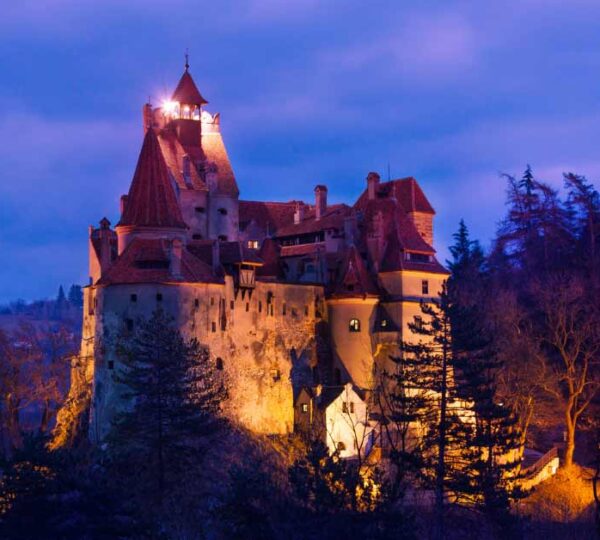
Yes, Bran Castle is touristy. The village below it has more Dracula souvenir stalls than I’ve seen anywhere in Transylvania, and in July the parking lot is chaos. But the castle itself – perched on a limestone rock, with its towers and inner courtyard, the warren of small rooms connected by narrow staircases – is genuinely atmospheric, especially if you come early or in the shoulder season.
The history is real even if the Dracula connection is overstated. The castle was a strategic military fortress from the 14th century, then a customs post, then a royal residence. Queen Marie of Romania loved Bran and spent significant time here – her furniture and personal effects are still displayed in the rooms, which gives the interior a more intimate feel than many fortress museums.
The Dracula angle: Vlad III Tepeș likely passed through Bran, possibly used it briefly, and may have been held here very briefly – historians dispute it. The castle does evoke the atmosphere of Stoker’s novel, which is probably enough for most visitors.
Practical notes: Bran is 30 km from Brașov, easily done as a half-day trip. Maxi-taxi buses from Brașov’s Autogara 2 (Bartolomeu station) run frequently and take about 45 minutes. Entrance costs around 60-70 RON for adults (verify current prices at castelulbran.ro). The outdoor museum in the village below – a collection of traditional houses – is included in the ticket and worth 30 minutes. Opening hours vary by season: summer opens at 9:00 AM, winter at 9:00 AM Monday from noon; plan for 1.5 to 2 hours inside.
For everything you need to know before visiting, our complete guide to Bran Castle covers logistics, booking, and what to realistically expect.
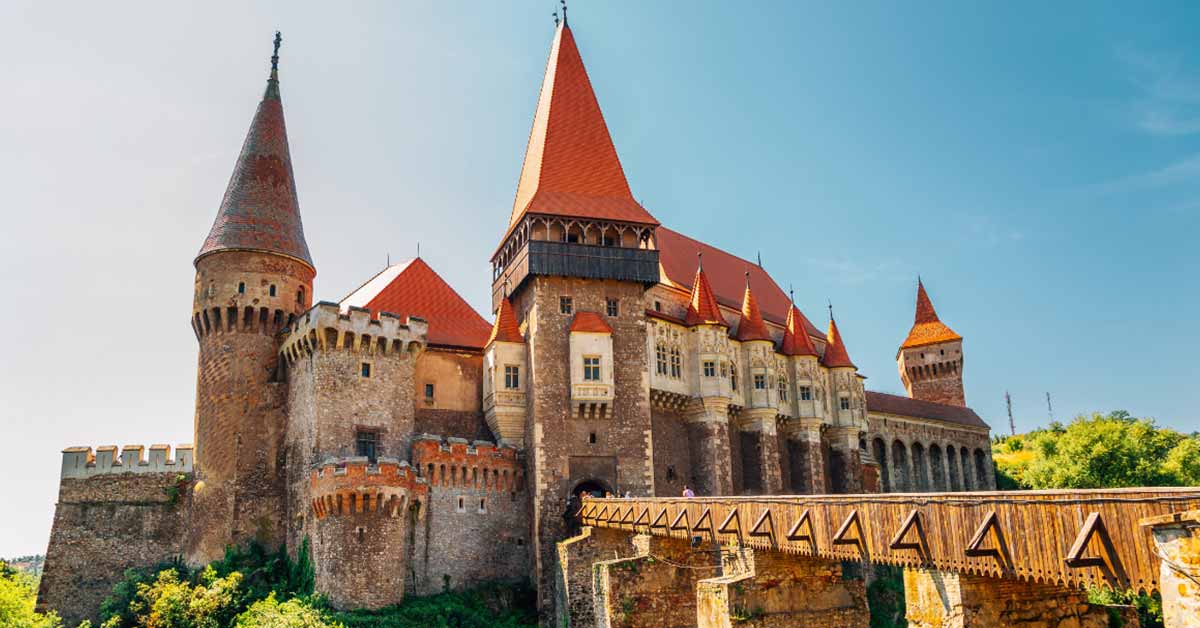
Corvin Castle, Hunedoara
Corvin Castle – Castelul Corvinilor in Romanian, or Hunyadi Castle if you’re reading Hungarian sources – is the one that genuinely shocked me the first time I saw it. It rises out of Hunedoara, an industrial town in western Transylvania, surrounded by the rusted hulks of former steelworks. The contrast is jarring and somehow makes the castle more dramatic, not less.
Built from the 14th century onward by the Hunyadi family – John Hunyadi, regent of Hungary, commissioned most of what you see – it’s a proper Gothic fortress with a drawbridge, a dry moat, towers, and a Knights’ Hall with 15th-century red marble columns. The bear pit in the courtyard was supposedly where Vlad III was imprisoned for several years in the 1460s – the story is credible enough to be worth knowing, though you’d be right to treat it with some skepticism.
What sets Corvin apart from Peleș or Bran is how it feels: a working medieval fortress, not a palace. The courtyards are uneven stone, the staircases are steep and worn, the rooms are authentically dark and cold in spring. If you have children who are old enough to manage stairs without supervision, this is the castle they’ll remember longest.
Hunedoara is 270 km from Brașov, 170 km from Cluj-Napoca. No direct train to the castle – the nearest station is Hunedoara city, from which it’s a 2 km walk or short taxi ride. By car on the A1/DN7 from Sibiu or Deva it’s more practical. Opening hours: Monday 12:00-8:00 PM, Tuesday-Sunday 9:00 AM-8:00 PM. Entrance is around 40 RON for adults; guided tour in English or another foreign language adds approximately 70 RON for the group (not per person – worth splitting with other visitors if you can).
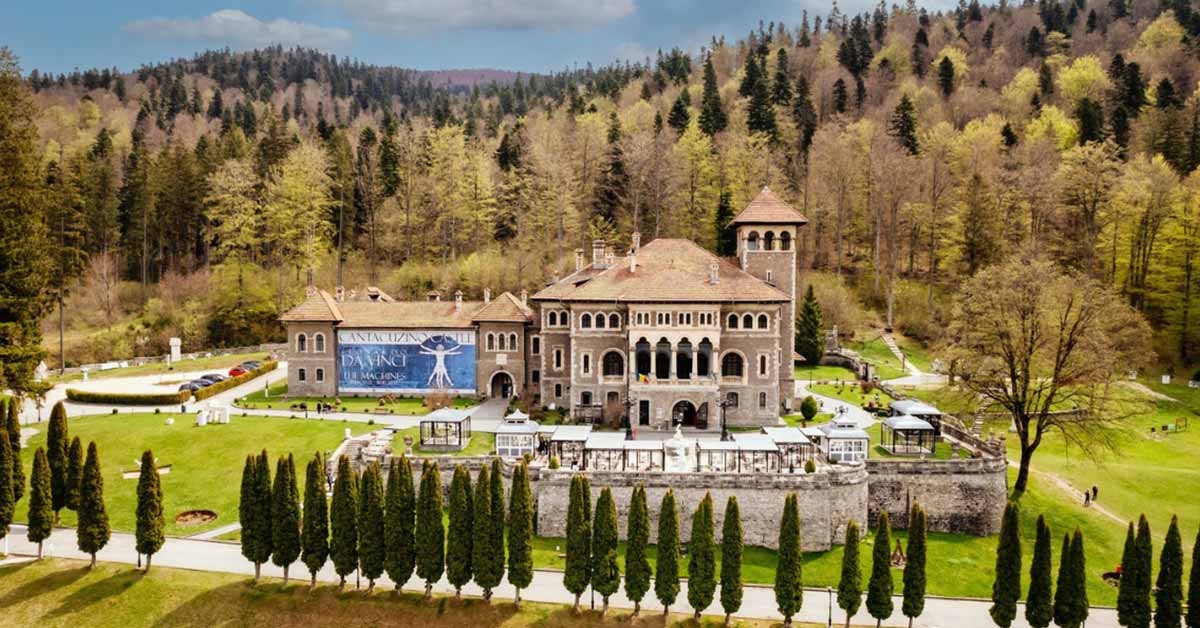
Cantacuzino Castle, Bușteni
The Cantacuzino Castle sits on a forested hill above Bușteni, a small mountain resort 40 km north of Brașov on the road toward Sinaia and Ploiești. Built in 1911 by Prince Gheorghe Grigore Cantacuzino, it combines Romanian Neo-Brâncovenesc elements with French-influenced eclecticism – a mix that sounds confused on paper but works beautifully in person.
The interior is the main draw: painted hallways, stained glass windows filtering afternoon light onto period furniture, marble staircases, white stone fireplaces. The terrace offers a direct view of Caraiman Peak and the Heroes’ Cross above the Bucegi massif – one of the better Carpathian panoramas you can see from a castle courtyard.
If you recognize the exterior, you might have seen it in Tim Burton’s Netflix series “Wednesday” – several scenes were filmed here in 2021. It brought a wave of new visitors, which has meant more crowding on weekends.
Open Monday-Sunday 10:00 AM-7:00 PM. Entrance around 75 RON, covering the castle, the art exhibition, and the sculpture garden. Bușteni is served by CFR trains from Brașov (around 35-40 minutes, multiple departures daily) – more convenient than driving if you’re staying in Brașov, as parking near the castle is limited and the uphill walk from town is steep.
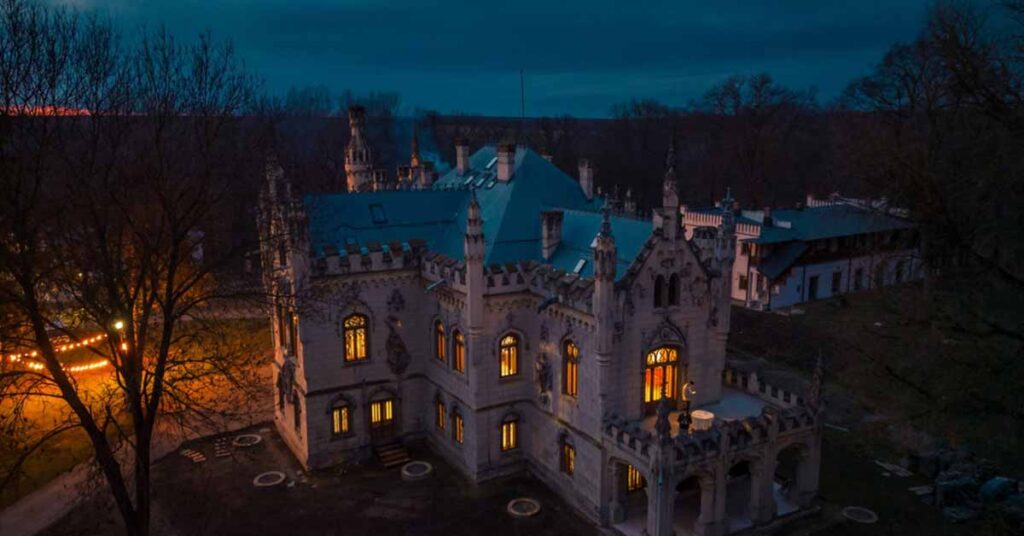
Sturdza Castle, Miclăușeni
This is the one most people have never heard of, and it’s the answer I give whenever someone asks me which Romanian castle surprised me most.
Sturdza Castle sits in the village of Miclăușeni in Iași County, a Neo-Gothic manor built at the turn of the 20th century by the Studza family – one of the oldest Moldavian noble families, with roots going back to the 17th century. It’s 65 km from Iași, deep in the Moldavian countryside, surrounded by a park of old oak and linden trees.
The building is remarkable: stone tracery, tall pointed windows, ornate columns, painted ceilings. The central marble staircase and the library hall are particularly well-preserved, and the atmosphere is genuinely more “Moldavian Gothic” than anything in Transylvania – quieter, more melancholic, with fewer tour buses. The Sturdza library was once one of the most important private collections in Romania; much of it was lost or destroyed in World War II, and the emptied shelves are their own kind of monument.
One critical logistical note: you must make a reservation at least 24 hours in advance by phone before visiting. This is not optional – unannounced visitors are turned away. Check the official website for contact details before you go.
Opening hours: Monday 10:00 AM-4:00 PM, Tuesday-Friday 11:00 AM-6:00 PM, weekends 12:00-6:00 PM. Entrance around 20 RON – one of the best-value castle visits in the country. There is no regular public transport to Miclăușeni; a car is essential. If you’re already planning to visit Iași, it’s worth the 65 km detour.
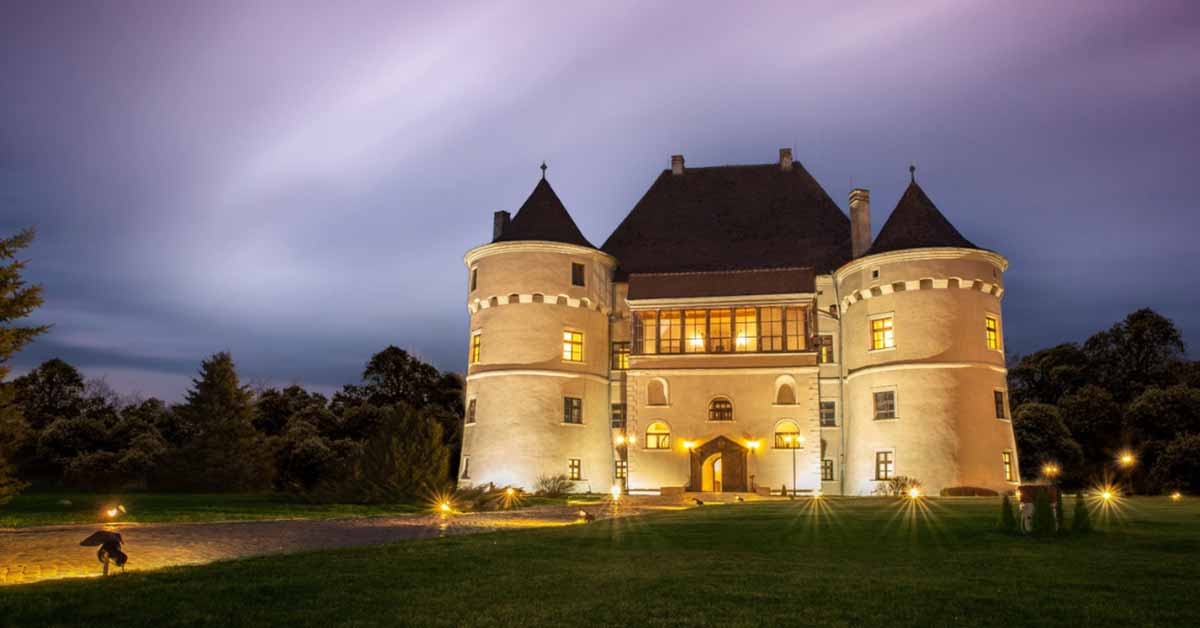
Jidvei Castle (Bethlen-Haller), Jidvei
The Bethlen-Haller Castle sits inside the Jidvei estate in Alba County, Transylvania, adjacent to one of the most productive wine estates in Romania. Built in French Renaissance style from the early 1600s, expanded over two centuries by the noble Bethlen family, it’s a long way from any standard tourist circuit and much better for it.
The castle itself is modest in scale – more country manor than fortress – but the proportions are elegant, the gardens are well-kept, and the setting amid Transylvanian vineyards is unusually pleasant. The main reason to come is the combined castle-and-wine-cellar experience: a guided tour of the castle followed by a tasting in the Jidvei wine cellars, which hold some of the best white wines produced in Romania. The Jidvei winery is particularly known for its Fetească Regală and Fetească Albă – varieties you won’t find in most wine shops outside Romania.
Open Tuesday-Sunday, with guided tours at 11:00 AM, 1:00 PM, and 3:00 PM. Castle-only entrance around 40 RON; castle plus wine cellar tour around 80 RON. The estate is 81 km from Sibiu and 181 km from Brașov, making it a natural stop on a Transylvania road trip between Sibiu and Cluj.
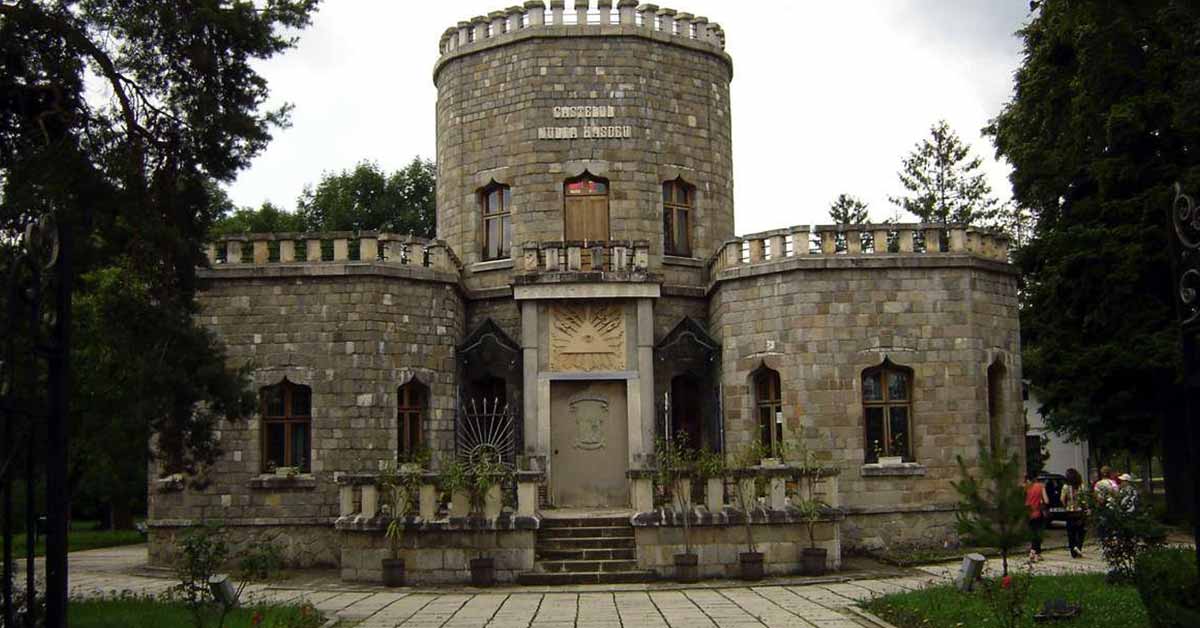
Beware of “ghosts” at the Iulia Hașdeu haunted Castle
The story behind this one is unlike any other castle in Romania.
Bogdan Petriceicu Hașdeu was one of the great 19th-century Romanian intellectuals – historian, linguist, writer. His daughter Iulia showed exceptional talent from childhood; at 16 she became the first Romanian woman admitted to the Sorbonne. Two years later, in 1888, she died of tuberculosis.
Hașdeu built this castle in Câmpina between 1893 and 1896 not as a residence but as a spiritualist temple – a space designed specifically for attempting to contact his daughter through seances and esoteric practices. He claimed to receive architectural instructions directly from her spirit. Whether you take the spiritualism seriously or not, the resulting building is singular: Neo-Gothic exterior, rooms filled with occult symbols, manuscripts, Iulia’s paintings and manuscripts, her piano.
The castle’s atmosphere is not manufactured Gothic like some tourist sites. It’s genuinely strange – a grief monument built by a brilliant man who refused to accept his daughter’s death, and it reads that way in every room.
Located 97 km from Bucharest in Prahova County. Open Tuesday-Sunday 9:00 AM-5:00 PM. Entrance around 12 RON. This is a state museum with minimal investment in tourism infrastructure – the experience is more “county museum” than “heritage attraction,” which is actually part of its appeal. Check the official museum site for current hours before visiting, as they can change.

Banffy Castle, Bonțida
Banffy Castle is a ruin – deliberately and magnificently so.
Twenty-seven kilometers from Cluj-Napoca in the village of Bonțida, the Banffy estate was once called “the Versailles of Transylvania” for its Renaissance and Baroque architecture and formal gardens. The Banffy family – Transylvanian Hungarian nobility – built and expanded it from the 16th through the 19th century. During World War II, retreating German forces burned and looted much of it. What remained was used as a stable and machinery depot during communism.
Today it stands in considered partial ruin, under ongoing restoration. You can walk the courtyards, see the scale of what it was, and observe conservation work in progress. The partially restored chapel and the main facade give enough to understand what made this place remarkable; the rest is honest devastation that says something real about 20th-century history in Transylvania.
Banffy is also the site of Electric Castle, an electronic and alternative music festival held annually in July, which draws 200000+ visitors over five days. Outside festival season it’s a quiet site. Open daily 9:00 AM-7:00 PM; entrance around 3 RON – essentially symbolic.
If you’re staying in Cluj-Napoca, this is an easy half-day excursion by car. There’s no direct bus service; the nearest train stop at Bonțida is on a slow local line – car is the practical option. Worth pairing with the Cluj-Napoca city guide if you’re planning the area.
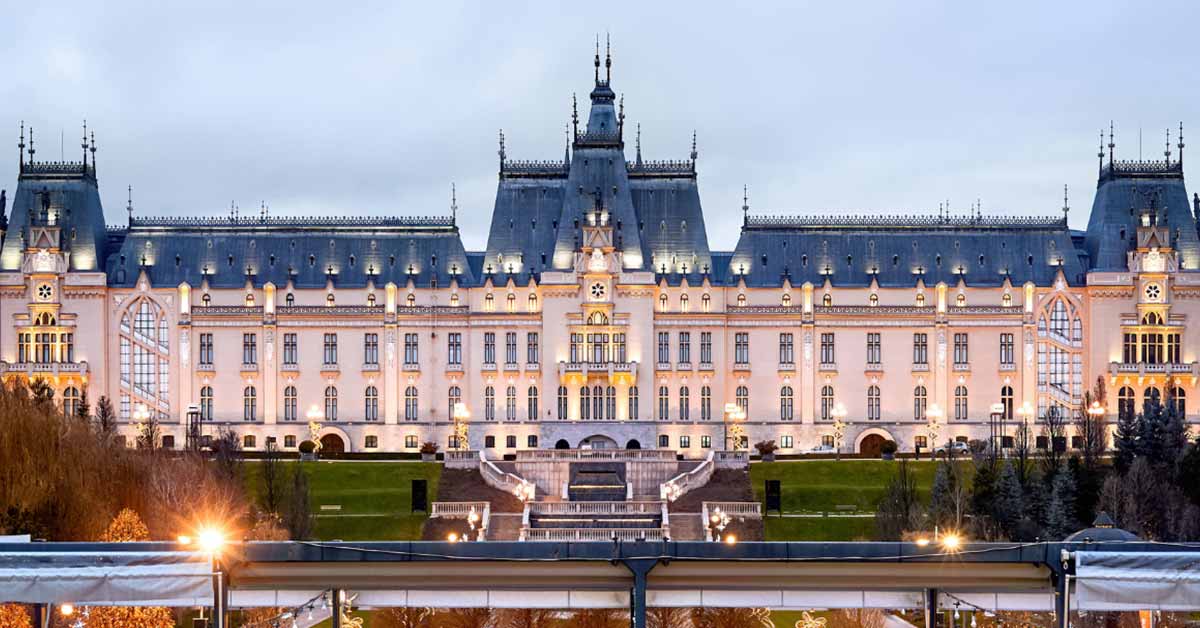
Palace of Culture, Iași
Strictly speaking this is not a castle, but it earns a place in this guide. The Palace of Culture in Iași is the most extraordinary piece of Neo-Gothic civic architecture in Romania – a monument to Moldavian ambition built between 1906 and 1925 on the site of the old Moldavian royal court.
The scale alone is startling: over 7,000 square meters of footprint, a 60-meter clock tower, carved stone facades, stained glass, Venetian mosaic flors. The Hall of Voivods on the first floor – a gallery of painted portraits of every Moldavian ruler from the medieval period – is the single room in Romania where the full sweep of the country’s pre-modern history feels most tangible. The Henri Coandă Hall, formerly the jury courtroom, is modeled loosely on Westminster Hall and has acoustics to match.
Four separate museums occupy the building: History of Moldova, Science and Technology, Fine Arts, and Ethnography. A combined ticket covers all of them plus the building itself, around 45 RON. The Clock Tower is accessible only on guided tours at 10:40 AM and 11:40 AM (Wednesday-Sunday) and requires a same-day reservation at the ticket office – plan your morning around it if you want to go up.
Open Wednesday-Sunday 10:00 AM-5:00 PM. For context on the wider city, the Iași travel guide covers what else to do while you’re there.

Bonus – Balchik Palace and botanical gardens, Bulgaria
This one is technically in Bulgaria, on the Black Sea coast near the city of Varna – but it belongs in a Romanian castles guide because it was built by Romania and embodies one of the stranger episodes in the region’s 20th-century history.
Queen Marie of Romania – the granddaughter of both Queen Victoria and Tsar Alexander II, and probably the most charismatic figure in Romanian royal history – fell in love with this stretch of Bulgarian coastline when the region of Southern Dobruja was briefly Romanian territory (1913-1940). Between 1926 and 1937, she built a summer residence here: a cluster of white stone buildings in a Moorish-influenced style, surrounded by what became one of the most unusual botanical gardens in southeastern Europe.
The garden is the real reason to come. Over 3000 plant species, including a cactus collection of more than 1000 square meters with specimens that have no business surviving on the Black Sea coast. The combination of terraced gardens stepping down to the water, the white architecture, the old-growth trees, and the sea view is unlike anywhere else I’ve been in the Balkans. It’s best visited in late April to May (spring bloom) or September-October (less heat, fewer crowds than peak summer).
Marie loved the place so much that she requested, in her will, that her heart be kept here after death. It was, until 1940 when Southern Dobruja was returned to Bulgaria – her heart was then transferred to Bran Castle and is now part of the National History Museum’s treasury in Bucharest. That detail says something about how complicated Balkan history tends to get.
Balchik is 50 km north of Varna, easily reached by bus from Varna’s main bus station (around 1 hour, several departures daily). From Bucharest it’s 300 km – feasible by car but a long day trip; better to combine with a stay in Varna or on the Bulgarian Black Sea coast. Open 8:00 AM-8:00 PM in summer, 8:00 AM-5:00 PM in winter. Entrance around 15 BGN (approximately 7-8 EUR at the pegged rate).
Planning your castle itinerary: a few honest comparisons
If you have three days in central Romania and want the best combination of castles: Peleș plus Cantacuzino (both accessible from Sinaia/Bușteni in a single day) is the strongest pairing for architecture. Add Bran on a second day, combining it with a morning in Brașov.
If you have a week and a car, the western Transylvania circuit – Corvin Castle in Hunedoara, Jidvei on the way east, Banffy for the afternoon near Cluj – covers very different architectural and historical ground and involves almost no overlap with the standard tourist trail.
Sturdza Castle in Moldavia and the Hașdeu Castle in Câmpina are both for people who want something quieter and stranger. Neither will be the best castle you’ve ever seen architecturally. Both will stay with you longer than most.
For practical travel planning – budgets, seasonal considerations, and how to structure a Romania trip from scratch – the Romania travel guide and the affordable Romania and Bulgaria trip planning guide are good starting points.
If you’d rather not plan it yourself, send us a message and we’ll put together a custom Romania tour around the castles and regions that interest you most.