

I grew up two hours from the Carpathians and still find reasons to go back most months of the year, so these are the five mountain attractions I send people to, with the logistics most articles skip.
The range isn’t as tall as the Alps, but it still has marked trails with nobody on them and a road, the Transfăgărășan, that Top Gear once called the best driving road in the world. Whether it’s the Transfăgărășan, the Transalpina over the Parâng mountains, or the wilder ground of Retezat, Romania’s mountains reward people who plan a little rather than just show up. If it’s your first trip to the region, our Transylvania guide is a good place to start.
Visit Peleș Castle in the Carpathians
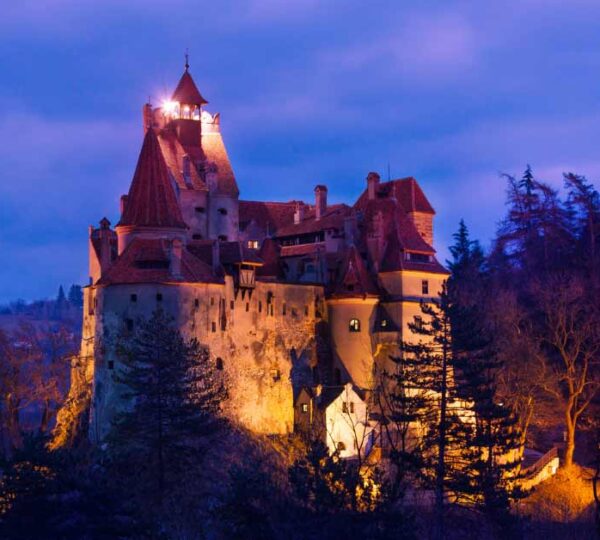
Peleș Castle sits in the Bucegi foothills above Sinaia, built for King Carol I between 1873 and 1883 as a summer residence. The over 160 rooms range from a Moorish smoking room to a hall paneled in cherry wood, with stained glass, carved oak and imported armor that survived because the communists turned the place into a museum instead of stripping it. Compare that to Bran Castle, marketed as Dracula’s home despite Vlad the Impaler almost certainly never sleeping there: Peleș never needed the myth.
Since December 2025, ticketing changed completely: tickets sell only online at bilete.peles.ro or from SelfPay machines by the gate, the staffed booths are gone. A standard adult ticket runs around 100 RON, reduced to near 25 RON for students and pensioners, free under age 7. Entry is capped at 2000 visitors a day at Peleș and 1500 at Pelișor, the smaller castle three minutes away, so book two or three days ahead in July and August.
The museum closes Mondays and Tuesdays year round, and shuts entirely for conservation cleaning each year, Peleș from 2 November to 1 December, Pelișor from 28 September to 3 November. There’s no on-site parking, so leave the car in central Sinaia and walk about 15 minutes up through the park. Full current hours and tickets: Peleș Castle’s official visiting page.
Bucegi Natural Park has trails right behind the estate, and the cable car up to 2000 meters gives you the panorama without the climb. For more, our guide to Romania’s castles covers the rest worth the detour.

See Bâlea Lake and the Transfăgărășan highway
The Transfăgărășan climbs through the Făgăraș mountains in a long chain of switchbacks, topping out around 2034 meters at Bâlea Lake, a glacial lake pinned between granite walls. Top Gear called this the best driving road in the world; expect traffic behind slow buses on the hairpins in summer.
The alpine section only opens roughly June to late October: snow and avalanche risk close the road above Bâlea Cascadă on the north side and Piscul Negru on the south the rest of the year, and the reopening date shifts with how fast the snow clears, so don’t assume it’s open in spring just because the calendar says so.

Outside that window, Bâlea Lake is still reachable by cable car from Bâlea Cascadă: 3700 meters of cable climbing from about 1200 meters to over 2000 meters in around 15 minutes. Prices have shifted a few times recently and land somewhere between 30 and 80 RON per leg depending on season, so check balealac.ro before you go.
The cabin at Bâlea Lake serves a decent ciorbă and mămăligă, and the terrace is worth ten minutes if the weather holds. Trails range from a flat 20-minute loop to full ridge routes, the cliffs draw climbers, and the light on the water is best in the first two hours after the cable car opens.

Hike to see the Sphinx and Babele in the Bucegi mountains
The Sphinx and Babele are rock formations on the Bucegi plateau, shaped by wind and freeze-thaw cycles into forms locals have argued over for generations: from the right angle the Sphinx resembles a face, and Babele (“the old women”) looks like a cluster of stone mushrooms. As of 2026 both are fenced off and climbing on them is banned, a response to erosion from decades of tourists walking directly on the rock.
The easiest way up is the cable car from Bușteni, climbing from about 880 meters to roughly 2206 meters at the Babele station in around 15 minutes. Expect around 100 to 115 RON one way as of early 2026, check teleferic.ro since prices shift, and note the cable car is wind-sensitive and shuts down above a certain gust speed. From the top, it’s 1.5 to 2 hours on foot to Crucea Caraiman, the memorial cross visible from town. A slower route climbs from Sinaia via the Cota 2000 cable car and a plateau trail, skipping the Bușteni queues.
Visit between April and September. Outside that window the plateau turns alpine, with ice underfoot even on a clear day, and some routes need crampons and an ice axe rather than hiking boots.

The Sphynx
Discover Sarmizegetusa Regia, the Dacians’ legendary fortress
Sarmizegetusa Regia was the most important Dacian site in Romania, the capital of the Dacian kingdom for roughly a century and a half, built from the second half of the 1st century BC on a defensible ridge in the Orăștie mountains with easy access to iron ore. It’s not the same site as Ulpia Traiana Sarmizegetusa, the Roman colonial capital built after Dacia fell; the two get mixed up constantly. It’s also one of six Dacian fortifications on the UNESCO World Heritage list.
Head toward Orăștie (you’ll pass Orăștie Fortress on the way, worth five minutes) and follow the signposts through mountain villages to the parking lot. Parking is free, and it’s about 845 meters on foot to the ticket booths, a shaded 10 to 15 minute walk; strollers don’t work inside, so bring a baby carrier. Entrance costs 15 RON for adults and 5 RON for students, pensioners and children, plus an optional 20 RON audio guide, which I’d get since the panels alone won’t explain much. Two marked circuits run through the site; walking both takes 1.5 to 2 hours, so plan 2.5 to 3 hours total once you count the approach.
The Sacred Area centers on an andesite altar once used for sacrifices, plus the Large Sanctuary, a circular structure often compared to Stonehenge. Most of the temples are down to column bases now. In winter the site stays open on a shorter 10:00 to 15:00 schedule, weather permitting.

Explore Piatra Craiului National Park, a 25km limestone ridge
Piatra Craiului is a single limestone ridge about 25 kilometers long and 7 kilometers wide, running southwest to northeast, with the highest point, Vf. La Om, at 2238 meters. The rock is limestone, not the Făgăraș granite, and the shapes are sharper, more eroded.
The most accessible entry point is Fântâna lui Botorog, 4 to 5 km from Zărnești center on a road that’s paved to the edge of town and gravel for the rest, fine for any car. The classic loop from there runs through the Zărnești Gorges (Cheile Zărneștiului), a limestone canyon about 5 km long where the walls close to just 5 to 6 meters apart in places, up to Cabana Curmătura at 1470 meters and back: 12 km round trip, about 660 meters of climbing, 5 to 6 hours with breaks, rated easy to moderate. Routes on to Vf. Ascuțit (2150m) or Vf. La Om need real gear and aren’t a casual add-on.
Park entry costs 5 RON for a 7-day pass or 20 RON for a full-season pass (1 May to 31 October), paid by SMS or at ticket machines around Zărnești; kids under 14 and local residents don’t pay. The visitor center, 1 km toward Plaiul Foii, is worth its 5 RON fee: an interactive exhibit with a touch-screen relief map.
The numbers on what lives here are unusual for a park this size: 35 invertebrate species found nowhere else on Earth, 216 butterfly species, over 100 bird species and more than 40% of Romania’s mammal species. Of the more than 1170 plant species recorded in the park, around 180 are rare or threatened enough to sit on Romania’s Red List, among them the Garofița Pietrei Craiului, the park’s symbol, along with wild orchids, edelweiss and great yellow gentian.
Go in June for wildflowers or September for quieter trails; August weekends bring more crowds than the gorge trail was built for. Muntii Nostri has the fullest list of marked routes beyond the loop above.
For something calmer, the Libearty Bear Sanctuary in Zărnești, run by the NGO Millions of Friends, spans 70 hectares and holds more than 130 rescued brown bears in enclosures with pools and climbing trees, a long way from the cages many came from. It sits about 30 km from Brașov; visits run about two hours in a small guided vehicle, cost around 90 RON per person as of this year, require booking in advance, and don’t admit children under 5.

Planning a trip around these five
These five are the ones I keep coming back to, and the ones I point friends toward first when people ask about the Carpathians. If you want help turning them into an actual itinerary instead of a scattered list, that’s literally what Zoe and I do at Balkan Trails.