
Located in central Transylvania where the Mureş River cuts through a wide agricultural plain, Alba Iulia is one of those Romanian cities that rewards visitors who arrive with more than a passing interest in history. It’s not a weekend destination for the beach crowd, and it’s not on the typical Bucharest–Braşov–Sighişoara tourist loop that most foreign visitors tick off. That’s exactly why it deserves more attention.
Last time I visited Alba Iulia was in late September, arriving by train from Cluj-Napoca — a 1h45m CFR journey that costs around 30–40 RON (roughly €6–8, as of 2024) depending on the class, with trains running several times daily. The city surprised me immediately. The restored Vauban fortress — which takes up a significant portion of the upper town — is genuinely impressive in a way that photographs don’t quite capture, and the number of international visitors was far lower than I expected for a UNESCO-adjacent site of this caliber.
If you’re planning a trip to Transylvania and you have even a half-day to spare, Alba Iulia should be on your list. If you have a full day, it repays that investment fully.
How to get to Alba Iulia

Alba Iulia has its own train station, Gara Alba Iulia, connected by CFR Călători to Cluj-Napoca (roughly 1h45m), Sibiu (about 1h20m), and Braşov (around 3 hours, often with a change). There is no direct motorway into the city, but the DN1 and A10 corridor makes driving from Cluj-Napoca straightforward — about 75 km, just over an hour by car.
From Bucharest, the total distance is approximately 340 km. By CFR train it takes around 5–6 hours; by car on the A1 motorway toward Sibiu then DN1 north, closer to 3h30m in normal traffic.
The train from Sibiu is the most scenic option — the route follows the Mureş valley and costs under 25 RON for a second-class seat. If you’re already visiting Sibiu, Alba Iulia makes an excellent day trip in that direction.
Parking within the Cetatea Alba Carolina is possible and, when I visited, free. The main pedestrian entrance is through the III-rd Gate (Poarta a III-a), and the walk from the lower parking area to the central plaza takes under 10 minutes.
Why Alba Iulia is historically significant, not just “interesting”
There’s a tendency in travel writing to call every Romanian city “historically significant,” which says very little. Alba Iulia’s claim is specific and verifiable.
The site has been continuously occupied for roughly seven thousand years. The oldest evidence, a Neolithic settlement, dates to around 5000 BC, discovered in the northern part of what is now the modern city. An Iron Age earthwork fortress was excavated about four kilometers away, along the Mureş.
The Romans established their legionary camp Apulum here in 106 AD when the XIII Gemina Legion set up permanent garrison following Emperor Trajan’s conquest of Dacia. Apulum grew into the administrative capital of Dacia Superior – one of the most important Roman settlements north of the Danube. The Southern Gate of this Roman camp, the Porta Principalis Dextra, is still partially visible in situ within the fortress grounds. The foundations of the two flanking towers are exposed at ground level, clearly labeled, and walkable – one of the few Roman military structures in Romania where you can stand on the actual excavated stonework.
The city’s modern Romanian name derives from medieval Latin: the Hungarian name “Gyulafehérvár” (meaning “white castle of Gyula”) was latinized to “Alba Iulia” sometime around the 10th–11th century, with early documentation in Hungarian chronicles from the 950s.
Then comes 1599 – the event that every Romanian schoolchild learns. On November 1st of that year, Michael the Brave (Mihai Viteazul) entered Alba Iulia after his military victories over Transylvania, Wallachia, and Moldavia, briefly uniting the three Romanian principalities under one ruler for the first time. The union lasted barely a year before political maneuvering undid it, but the symbolic weight of 1599 echoes across Romanian national identity to this day.
The culminating moment came on December 1st, 1918, when 1228 elected delegates from across Transylvania gathered in what is now the Union Hall (Sala Unirii) and voted to unite Transylvania with the Romanian Kingdom. That vote, formally called the Alba Iulia Resolution, is the legal and symbolic foundation of modern Romania’s borders. December 1st is Romania’s National Day, and every year the city holds significant celebrations. If you plan to visit in late November or early December, expect large crowds and a festive atmosphere unlike any other time of year.
The Alba Carolina Fortress – What to actually see and how long it takes

The fortress you see today, the star-shaped Vauban fortification known as Cetatea Alba Carolina, was constructed between 1715 and 1738 under Habsburg rule, designed by the military engineer Giovanni Morando Visconti. It was built on top of and enclosing the medieval fortifications, which themselves enclosed the Roman camp. You are, quite literally, walking over layers.
Plan at least 3 hours for the fortress alone. The interior is large enough that casual walkers underestimate it. Most of the key sites are within the citadel walls, connected by pedestrian routes.
The route of the Three Fortifications
This is the official itinerary connecting the three historical layers. It runs roughly 2.5 km through the fortress and takes 1.5–2 hours at a moderate pace, including stops.
The Gateway to the Citadel (Poarta I)
The seven gates of Alba Carolina are each named and numbered; the III-rd Gate is the main tourist entrance with its Baroque sculptural program intact. Nearby, the former Principality Mint operated from 1714 for close to two centuries before the building was repurposed as a prison in the 19th century. The layers of function – monastery, mint, prison – in a single structure over 700 years is itself instructive.
The Southern Gate of the Roman Camp (Porta Principalis Dextra)
I found this more moving than I expected. The gate was built in 106 AD. Standing next to the exposed foundations – rough cut stone, fitted by Roman military engineers – with a modern Romanian city street visible 50 meters away is a genuinely disorienting experience.
The Artillery Platform
Three 18th-century bronze cannons are installed here. Every Saturday at noon, a ceremonial flag-raising on the Citadel walls is accompanied by a live salvo from these cannons using an early 18th-century firing technique. If your visit falls on a Saturday, time your arrival at the Artillery Platform for 11:45. The ceremony lasts about 20 minutes.
The Armory (Sub-Bethlem Bastion)
Housed in what was originally a medieval guard room and later converted into a Habsburg bakery (two enormous bread ovens functioned here until the early 20th century), the reconstructed Armory displays authentic weapons, armor, and shields in a stone-vaulted space. The juxtaposition of the ovens’ former footprint with the weapon displays is odd but interesting. Admission is included in the general fortress ticket.
The main monuments inside the fortress
St. Michael’s Catholic Cathedral (Catedrala Romano-Catolică Sfântul Mihail)
This is the oldest and most architecturally significant building in Alba Iulia, and one of the most important examples of Romanesque and early Gothic architecture in all of Romania. Construction began in the early 13th century, roughly contemporary with Notre-Dame de Paris, and the building reflects the same transitional Romanesque-Gothic style, round arches in the nave, pointed arches beginning to appear in the choir.
Inside, the cathedral holds the sarcophagus of János Hunyadi (Iancu de Hunedoara), the Hungarian-Romanian military commander and regent, who died in 1456 after holding the Ottoman siege at Belgrade. His tomb, along with those of his brother and son Ladislaus, is in the south aisle. Queen Isabella of Hungary and her son John Sigismund Zápolya are entombed on the opposite side. The density of 15th-century funerary monuments in a single space, restored but not Disneyfied, is remarkable.
No admission charge for the cathedral itself. Photography permitted without flash.
The National Museum of Unification (Muzeul Național al Unirii)
Housed in the “Babylon” building, a Romantic-style military structure from 1851–1853, this is among the five most important history museums in Romania. Two floors, over one hundred rooms, with permanent collections covering Dacian, Roman, medieval, and modern Romanian history.
The section covering the 1918 Great Union is particularly strong, with original documents, period photographs, and personal items from delegates. The Roman Dacia section has one of the more comprehensive collections of Apulum-era artifacts in the country: coins, tools, inscriptions, sculpture fragments. Allow 90 minutes minimum.
Admission: approximately 20–25 RON per adult (verify current price on the museum’s official site before visiting, as it varies). Closed Mondays.
The Orthodox Cathedral of the Coronation (Catedrala Încoronării)
Built between 1921 and 1923 specifically for the coronation of King Ferdinand and Queen Maria on October 15th, 1922, this cathedral was designed in the neo-Romanian style, drawing on the architectural vocabulary of the Wallachian church tradition rather than Byzantine or Western models. The bell tower reaches 58 meters.
This is the only Romanian Orthodox cathedral built explicitly as a coronation church, an architectural status comparable to Westminster Abbey, though on a smaller scale. Entry is free.
The Union Hall (Sala Unirii)
A short walk from the cathedral, the Union Hall is the actual room where the 1,228 delegates voted on December 1st, 1918. The original documents and flags carried by the regional delegations are on permanent display. The building is modest by European ceremonial standards, a plain Habsburg-era structure, which somehow makes the significance of what happened inside it more legible, not less.
The Bathyaneum Library, housed in a repurposed Trinitarian church from the 1720s, is another stop worth making if you have an interest in rare manuscripts. The collection includes the Codex Aureus (9th century), the Lorsch Gospels (12th century), and several significant Romanian-language printed texts from the 17th century. The library also housed Romania’s first astronomical observatory, established here in 1792. Access to the manuscript reading room is restricted to researchers, but the main library hall is open to visitors.

Practical notes – Things most articles don’t tell you
The fortress is larger than you expect. First-time visitors frequently underestimate the walking distances. Comfortable shoes are not optional. The cobblestone surfaces inside the fortified zone are authentic and uneven.
Crowds are concentrated. The III-rd Gate plaza and the area immediately around the Coronation Cathedral are the busy zones. Walk 10 minutes deeper into the fortress, toward the Roman excavations and the Armory, and you’ll typically have the space to yourself, even in July.
September and October are the best months to visit. The Mureş valley produces notable local wines, the Vinul de Apulum brand has its roots here, and the autumn light on the fortress walls in the afternoon is unlike anything you’ll get in peak summer. The ceremonial Saturday event also draws smaller crowds in autumn.
The city has a working university population (Universitatea “1 Decembrie 1918”) which means the lower town has cafés, restaurants, and a general bustle that makes it feel less like a museum piece. Strada Mihai Viteazul in the lower town has several good lunch options under 40 RON for a full meal.
December 1st celebrations (Romania’s National Day) are held here. If you’re visiting for the commemorations, book accommodation at least 6–8 weeks in advance; the city fills completely. Cluj-Napoca (100 km) becomes a reasonable base if Alba Iulia hotels are full.
Where to stay
Alba Iulia is compact enough to cover in a day trip from Cluj-Napoca or Sibiu, but staying overnight lets you experience the fortress in the early morning before tour groups arrive.
Within the fortress itself: Hotel Apulum and the Vila Vino guesthouse are centrally located options at the upper-mid range (250–400 RON/night as of 2024 — verify current rates directly). For budget travelers, the lower town around the train station has pension options in the 100–180 RON range. Airbnb availability is moderate but not abundant.
If Cluj-Napoca is your base, a day trip is perfectly viable: the 7:15 AM CFR departure from Cluj-Napoca Gara arrives in Alba Iulia by approximately 9:05 AM (verify the current schedule on cfrcalatori.ro before traveling), giving you the fortress almost entirely to yourself for the first two hours.
A note on food and drink
The Taberna De Gustibus event, a recreation of Roman-era dining and customs in the fortress, runs periodically through the year, not as a permanent daily restaurant. Check the city’s official tourism events calendar (albaiulia.ro) before visiting if this is specifically what you want to see, as it is scheduled for particular weeks, not daily. When running, it serves dishes reconstructed from Roman-period culinary records: lamb preparations, braised meats, and dishes incorporating legumes and herbs that predate modern Romanian cuisine by fifteen centuries.
For everyday eating, the lower town is your friend. Romanian standbys, ciorbă de burtă, sarmale, mici, are available at standard prices (30–50 RON for a full meal with a beer). The local wine scene has been growing; Vinul de Apulum produces Fetească Neagră and Sauvignon Blanc from the Alba wine region, and bottles are available at the fortress gift shops and city wine bars for around 25–40 RON.
If you want to understand Romanian cuisine more broadly before or after your trip, we have a detailed piece on Romanian culinary traditions and dishes worth trying.
Is Alba Iulia worth the journey?
I’ll be direct: Alba Iulia is not for everyone. Travelers who want nightlife or the well-groomed Austro-Hungarian charm of Braşov or Sibiu will find it underwhelming. The city itself, outside the fortress, is unremarkable.
But if you have any genuine interest in the historical thread that connects ancient Dacia, Roman Apulum, medieval Transylvania, and modern Romania, this is the place where all those threads converge. The restored fortress, the Roman excavations, the cathedral, and the Union Hall together form something genuinely rare: a place where you can walk the actual ground on which specific, consequential history happened. Not a reconstruction. Not a theme park version. The actual site.
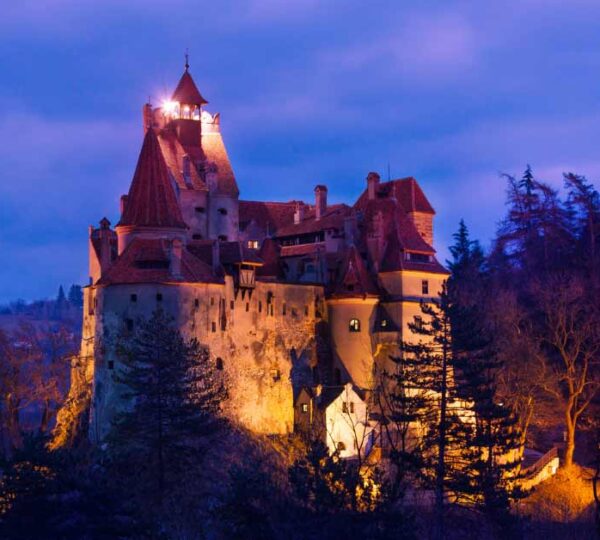
For a first-time visitor to Romania trying to understand what the country is and why it is the way it is, I’d recommend Alba Iulia over Bran Castle on any given day. Bran is more famous, but Bran Castle’s Dracula connection is largely a tourism construction. Alba Iulia’s claim to significance is the real thing.
Our Romania tours include Alba Iulia with a local guide who can open access to areas of the fortress that are closed to independent visitors, including sections of the underground passages between the bastions. If you want to go beyond the standard route, that access makes a meaningful difference.