
Romania has more wild brown bears than any other EU country, current counts range from about 8000 to over 10000 depending on whose survey you trust, and rising conflict between bears and people has turned hunting quotas into a genuinely contested political issue: a 2026 law raising the kill quota to 859 preventive plus 110 intervention permits is currently being challenged at the Constitutional Court.
Libearty doesn’t touch that debate. Every bear here already came out of captivity, not out of the forest, and that distinction matters if you’re trying to understand what you’re actually visiting.
The sanctuary itself sits in true Transylvanian woodland above Zărnești: oak and hazel rather than the pine you get higher up.
Wild bears forage through these same mountains for food and shelter, which is part of why the conflict I just mentioned happens at all.
Why visit the bear sanctuary in Romania?
Libearty is currently home to more than 130 rescued bears, and the sanctuary has taken in over 180 bears in total since it opened, on 69 hectares of oak and hazel forest in Brașov County. The land wasn’t simply donated: in 2005, a public-private partnership between the Millions of Friends Association, World Animal Protection, and Zărnești Town Hall secured a 49-year lease on the site, and it’s run today by “Milioane de Prieteni” (Millions of Friends), a Romanian NGO.
TripAdvisor has given Libearty a Certificate of Excellence and ranked it among the world’s most worthwhile places to visit, based on visitor reviews, and it’s widely cited as Europe’s largest bear sanctuary. That reputation brings real numbers through the gate every year. If you want more forested parkland after this, Romania’s national parks cover a lot more ground than just Zărnești.
Rescue and rehabilitation efforts at Libearty
Most bears here came from cramped cages, circuses, or restaurants and roadside inns that kept a bear out front as an attraction. Neglect and abuse were the norm before the rescue, not the exception. At Libearty, they get large, forested enclosures built to resemble the wild, and the staff’s first job is medical and psychological recovery, not entertainment.
The story of Maya
One bear started all of this. In 1998, Cristina Lapis, who later founded the Millions of Friends Association, found a female bear named Maya living in a filthy cage at a hotel courtyard near Bran Castle. For four years, Lapis and her husband drove out regularly to feed Maya and campaign for better animal welfare laws in Romania. Maya never recovered from the psychological damage of captivity, and she died in Lapis’s arms on 11 March 2002. Her death is what actually built the sanctuary: in 2005, the first two rescued bears, Cristi and Lidia, arrived and stepped onto grass for the first time in their lives.

Photo credits @ https://millionsoffriends.org/
Life at Libearty
The bears here swim, climb trees, and raise cubs the way they would in the wild. Food includes bread with honey among other treats, and vets are on call. Most importantly, they have real distance to cover: this isn’t a paddock, it’s dozens of hectares of forest they can actually walk through.
Not every resident came from a cage. Teo, a seven-year-old female, spent ten months defending two cubs while foraging near houses in a Brașov neighborhood before local authorities had the family relocated to Libearty. It’s a reminder that the wild-bear conflict I mentioned earlier and the sanctuary’s rescues aren’t always separate stories.
Exploring Libearty sanctuary
This is not a zoo, so you can only visit with a guide, and the schedule changes by season, so check the official site before booking. The sanctuary is closed every Monday for maintenance; it’s open Tuesday through Sunday, with weekends busier and priced slightly higher. Entry hours also shift by season: mornings only, generally somewhere between 9:00 and 11:00, with slightly more entry slots in spring and summer than in winter.
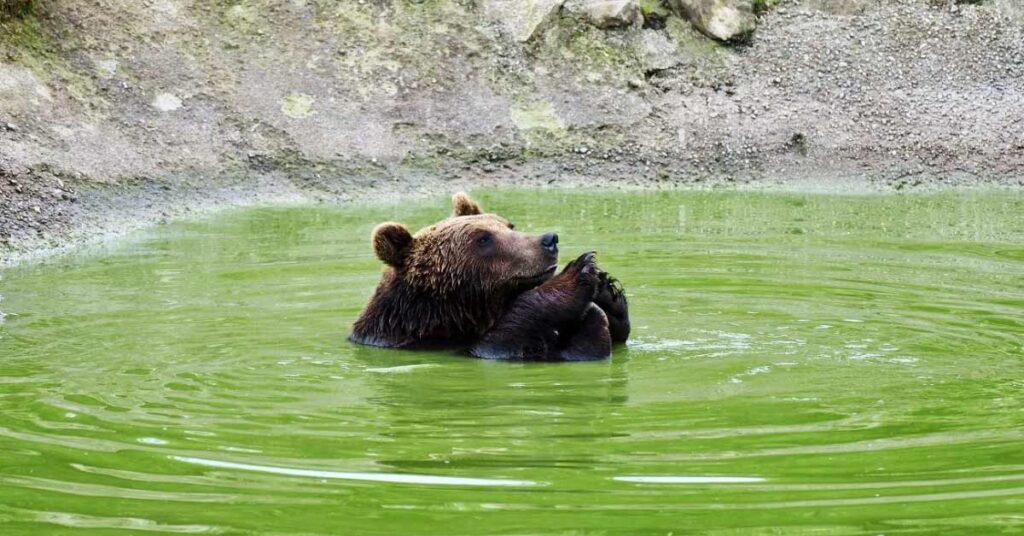
Types of tours you can book
The classic tour runs about an hour on a 2km forest path with your guide. Current adult pricing runs from 90 RON in winter up to 100 RON on summer and weekend dates, with reduced rates for children (45 to 55 RON) and students (70 to 80 RON), so it’s worth checking the exact week you’re visiting.
The private tour gets you your own guide on a 2.5km route for about 1.5 hours. It now costs 200 euros for the group plus the standard day ticket per person, booked at least 72 hours ahead and paid in full by bank transfer or PayPal before the visit.
The VIP tour covers 4km over about two and a half hours and adds the Teddy Bear Museum, the observation deck and the bunker, areas closed to regular visitors. It runs 200 euros per group plus 50 euros per adult and 25 euros per child (5 to 18), also booked 72 hours ahead.
The Super VIP tour is the only one done by vehicle rather than on foot, now a specially adapted train instead of the car used previously, and it isn’t offered on Sundays. It still runs about two and a half hours and includes the museum, the bunker, the observation platform and the “friendship park.” Current cost is 600 euros total for up to eight people from the same group, booked at least 72 hours ahead by phone or email.
Good to know
Every tour opens with a short documentary on the conditions the bears came from and the founder’s push to rescue every captive bear in Romania. Full visiting rules are on the sanctuary’s official page, and it’s worth a look before you go. Smoking is banned throughout, and visitors with a certified disability get free entry, though the paths aren’t realistically wheelchair or crutch accessible.
Bringing any camera beyond a phone costs an extra 50 RON, and full-price weekend rates apply on public holidays even if they fall midweek. The 2km walk gets hot in summer, so bring water and a hat, or aim for May or another shoulder month if your dates are flexible.
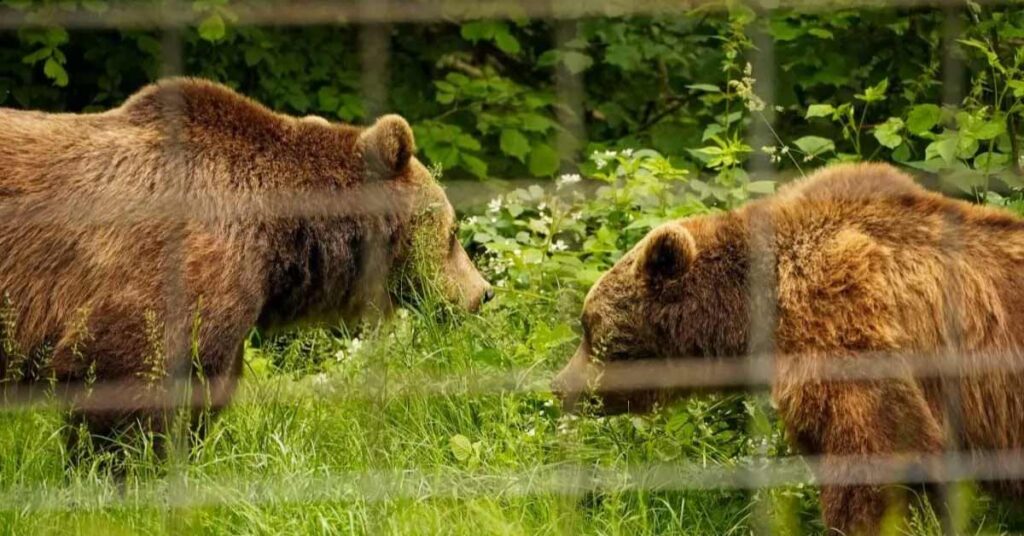
How can you help the bear sanctuary?
You can adopt a bear from 5 euros a month (60 euros a year), which gets you a printed certificate after twelve months. Companies can adopt for 600 euros a month, with the bear’s name and the company’s logo displayed on-site.
Libearty takes no government funding; every ticket, donation and piece of merchandise goes straight to the bears. Running the place costs the Association somewhere between 95000 and 120000 euros a month, which is worth knowing before you assume a 90 RON ticket covers much. The guided tours themselves are part of the funding model too: more than 40000 people take a tour here every year, and the sanctuary treats that as education as much as income.
Sharing what you’ve seen matters too. In 2022, Libearty took in Masha, a bear evacuated from a war zone in Ukraine after a 30-hour drive to the border; National Geographic covered the rescue. Masha had spent nearly two decades in a circus, and she only got three weeks of freedom at Libearty before a stroke took her, but those three weeks were the first time in her life she could walk on grass.
Make a stop at Libearty with Balkan Trails!
Touring the sanctuary itself is handled by the sanctuary’s own guides, but getting there from wherever you’re staying is the part we can help with. We usually build it into a longer loop through the region rather than a standalone day trip. Contact us for a custom trip to Romania with Libearty worked in as one stop among others.
P.S. Until you book, there’s a livestream from inside the enclosure running most of the time: Sanctuarul de urși Libearty Zărnești.