
Every time someone asks me to sanity-check their Romania and Bulgaria budget, I end up saying the same thing: there’s no single number that works, because the gap between a rural guesthouse and a Sofia city-center hotel is bigger than most people expect.
This guide is the version of that conversation I’d have with you over coffee – real ranges, what’s actually changed recently, and where the money goes if you’re building a trip to Romania and Bulgaria on a real budget rather than an unlimited one.
Why visit Romania and Bulgaria
Honestly, one article can’t cover every reason to visit these Balkan countries – at some point you just have to go and see the painted monasteries, the mountain villages, and the old towns for yourself. What I can tell you is that neither country requires a big budget to do well. Flights, food, accommodation, and getting around all cost less here than in Western Europe, and the gap is still wide enough to matter even after a few years of inflation.
Before any of that, though, it’s worth understanding what’s actually happened to money in this region lately – because it changed in a real way this year.
Currency and money: what’s changed for 2026
Romania still uses the Romanian Leu (RON). Bulgaria doesn’t use the Bulgarian Lev anymore – Bulgaria adopted the euro as its official currency on January 1, 2026, at the fixed rate of 1 EUR = 1.95583 BGN, and the lev stopped being legal tender at the start of February. If you’re used to older guides (including earlier versions of this one) quoting BGN prices, ignore them – Bulgaria now runs on euros exactly like Greece or Germany, and if you’re coming from anywhere in the eurozone, there’s no exchange step in Bulgaria at all anymore.
Romania’s leu still floats, and it’s worth checking the rate close to your trip rather than trusting any number printed here. As a rough anchor: in mid-September 2026, 1 EUR was trading around 5.25 RON, and 1 USD around 4.55 RON – both have drifted meaningfully since the 4.95 RON and 4.56 RON figures floating around from 2023, so budget on the higher side rather than the lower one. Romania’s inflation has also been running close to 9% annually through early 2026, which is worth factoring into any of the price ranges below – treat them as a starting point, not a ceiling.
Cards work fine in most cities – hotels, restaurants, and supermarkets in Bucharest, Sofia, Cluj, and Plovdiv almost all take contactless now. Rural guesthouses, small family-run restaurants, and market stalls are a different story, so keep some cash on hand outside the bigger cities. ATMs are common and reliable in both countries, but watch for the “convert to your home currency” prompt some machines offer at withdrawal – decline it and pay in RON or euros; your card issuer’s exchange rate is almost always better than the ATM’s on-the-spot conversion. A local SIM or eSIM is also worth sorting out on arrival – prepaid data is cheap in both countries and usually beats roaming through a foreign carrier.

Planning your budget: flights
Timing matters more than almost anything else on this list. Flights and accommodation both run noticeably cheaper in shoulder season – April to May, or September to October – than during the July-August peak, when Black Sea coast hotels and Transylvanian guesthouses alike raise their rates and availability tightens. If your dates are flexible at all, that flexibility is worth more to your budget than any single booking trick below.
Finding cheap flights
Flexibility on dates does more for your flight budget than almost anything else, and fare comparison sites are worth the five minutes it takes to check a few before booking directly.
For budget carriers into the region, eSky is a solid first stop, and it also covers the bigger non-budget airlines for comparison. Kayak is a reliable all-rounder for a second opinion. And when Momondo is in the mood to be useful, it has a trick the others don’t: it surfaces nearby airports that might beat your original search – just double check you and anyone you’re traveling with are looking at the same airport before you book.
Are there strings attached?
Budget fares usually mean nonrefundable, unchangeable tickets, so reading the fine print before you book matters more here than it would on a full-fare ticket.
Baggage is the other catch. On most budget carriers, checked-bag fees rise the closer you get to departure, so pay for bags at booking rather than at the airport. A second carry-on, an oversized bag, or odd items like baby equipment often cost extra too, and European carry-on size limits are frequently smaller than what US or long-haul carriers allow – check the specific airline’s policy rather than assuming your usual carry-on will fit.
Travel insurance
Worth having, not because something will definitely go wrong, but because when it does, it’s rarely cheap: a medical issue, a cancelled leg of the trip, lost luggage, or an emergency flight home can all run into real money without it. It’s a small cost against a genuinely large downside.

Finding your accommodation
Accommodation is where Romania and Bulgaria still clearly beat Western Europe. A 3-star hotel here used to average $25-52 a night, against $110+ for the same standard further west – those Balkan figures have crept up with inflation, but the gap to Western Europe hasn’t closed. For the true shoestring end, hostel dorm beds run somewhere around $10-15 a night in most cities – that’s the floor of the accommodation range in the budget breakdown further down. Bigger cities and heavily touristed areas run higher than smaller towns and rural areas, which is true in both directions of travel within the region too.
Airbnb is worth checking, both for savings and for a more local feel to your stay. An entire apartment can still often be found around €40-50 a night depending on the city, and booking one instead of a hotel can save meaningfully over a longer trip. If you want something more distinctive than an apartment, look for a rural cabin, a traditional home, or a boutique stay – a place like the Viscri Blue Traditional House gives you a very different trip than a city-center hotel does, and Viscri itself is one of the Saxon villages worth building a day around regardless of where you sleep. You’ll find plenty of these if you go looking. Browse Romania’s listings for converted rural homes and cabins first.
For a more city-based boutique stay, Bulgaria’s options tend to lean that direction more often – though both countries have exceptions in each direction. We’ve also written about what makes a trip feel less like a checklist and more like an actual experience, which is worth a read if unique stays are part of why you’re coming.
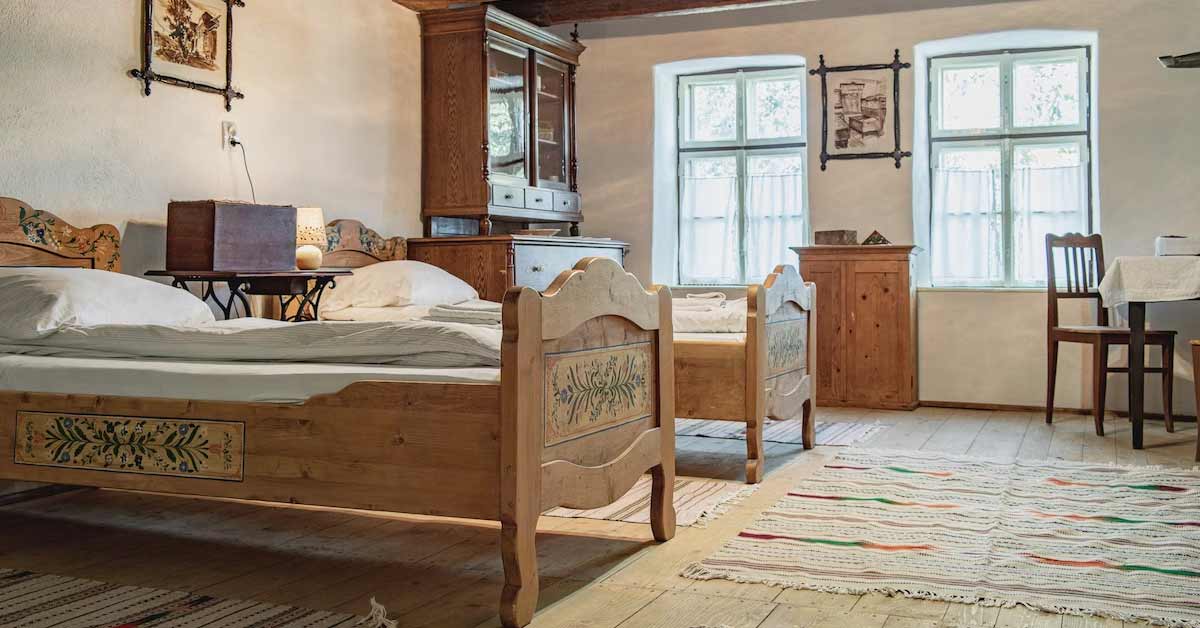
Viscri Blue Traditional House – Airbnb
Transportation in Romania and Bulgaria
Public transport is cheap and reliable in the major cities – expect around $2 for a metro two-trip card and roughly $0.65 for a single bus or tram ticket, though these creep up gradually like everything else.
Skip the street-hailed taxis – the ones parked outside train stations and tourist sites overcharge tourists as a matter of course. Bolt and Uber both work well in Sofia, Bucharest, and most other major cities; download the apps before you land, since they sometimes run discounts for new users.
Renting a car makes sense for reaching rural areas or moving between cities on your own schedule – budget around $23 a day for a rental, though that number moves with season and city. Or, if you’d rather not deal with logistics at all, that’s the whole point of working with an operator – here’s why some travelers choose to book through a local operator rather than piecing a trip together themselves.

Exploring Balkan food
Local cuisine
Balkan food is hearty, generous, and cheap relative to what you get. A burek or a strong Turkish-style coffee for breakfast can run as little as €1, and that’s not an exaggeration – it’s a genuinely low-cost way to start the day.
For a proper taste of the region, look for ciorbă (Romanian sour soup), sarmale (Romanian cabbage rolls), banitsa (Bulgarian cheese pastry), and kavarma (Bulgarian stew) at traditional restaurants. If you want to try cooking a few of these yourself, we’ve put together simple versions of a few Romanian dishes that don’t require tracking down obscure ingredients. There’s a Bulgarian equivalent too, for the same reason.
Fast food options – sandwiches, pljeskavica, kebabs – run $2-5 and fill you up without much ceremony. A sit-down mid-range meal with a starter and main averages around $10. And if you’re cooking for yourself, groceries cost roughly half of what the same meal would cost at a restaurant, which can bring a full day of eating down to $10-15 if you’re being deliberate about it.
A few reference prices for daily spending:
- Traditional meal in a capital city: $8-20
- Coffee in Romania or Bulgaria: $1.65-4.31
- Bottled water at a supermarket: $0.50-0.70
- Beer at a restaurant: $1-4
These held up reasonably well as of early 2026, but treat the low end of each range as increasingly optimistic given recent inflation, especially in Romania – budget toward the middle of the range rather than the floor.

Cultural attractions and landmarks
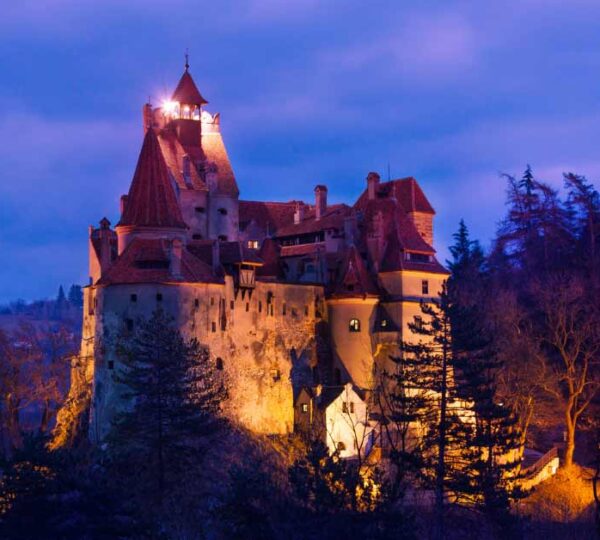
Good news for anyone watching their activity budget: most of the region’s major sights are either free or ask for a modest voluntary donation. Museum and heritage site entry fees stay reasonable too. Bran Castle is proof of that on the Romania side – one of the most-visited paid sites in the country, and still not an expensive one to enter.
The Rila Monastery makes the same case in Bulgaria: a modest entry cost, and frescoes worth far more than what you paid to see them.
Both countries also run cultural events worth building a day around – jazz concerts, folk performances, art exhibitions – and traditional markets and fairs are a good source of handmade goods in wool, wood, and metal that make better souvenirs than most shop-bought options.

Bran Castle – Dracula’s Castle
A few specific events worth planning around:
- Festivalul Iei – a celebration of the traditional embroidered Romanian blouse, with masterclasses from local artisans, plus jewelry, pottery, music, and food on the side.
- Rovinhud Wine Show – held every November in Timișoara, Romania, with tastings of Romanian reds and whites, barrel tastings, winemaker dinners, and bottles to take home.
- The Sighișoara Medieval Festival – running since 1997, so treat any specific “X years running” figure you see elsewhere as already out of date. Expect medieval dances, theater, workshops, and parades of knights and troubadours, all inside the Sighișoara Citadel, a UNESCO World Heritage Site since 1999.
- The International Fair of Arts and Crafts in Varna – known locally as Bulgarika, running since 1996 at the Seaside Garden, usually in August; check Varna’s official events page for current dates rather than relying on any single year’s listing.
- The International Fair of Traditional Crafts at the Etar Museum in Bulgaria, focused on preserving traditional craft skills and bringing artisans together from across the country and beyond.

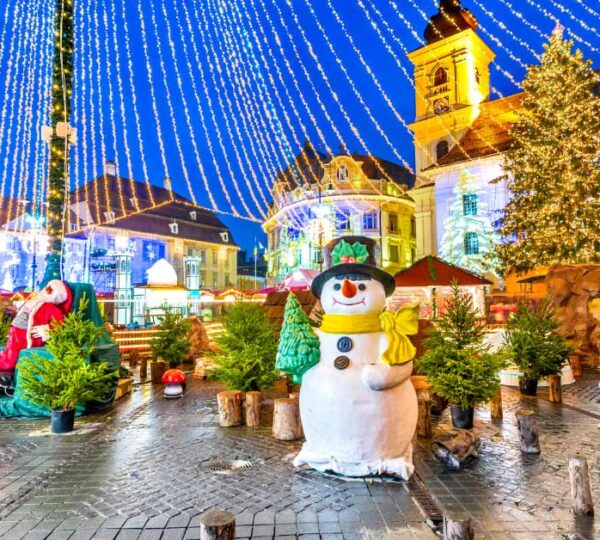
Sighisoara Medieval Festival
Souvenir costs
For authentic pieces at fair prices, shop at local markets and artisan boutiques rather than the shops clustered right outside major attractions.
Rough price ranges for Romanian souvenirs:
- Ie (traditional embroidered shirt): $50-300
- Wine: $8-20
- Traditional painted eggs: $2-10 each
- Horezu ceramics: around $30, depending on the piece
- Homemade jams: $5-10, depending on the vendor (and occasionally free, if a grandmother at a market decides she likes you)

Hand-painted wooden eggs
Understanding tipping culture
Tipping is relaxed in both countries – nobody expects it, but it’s appreciated. Around 10% is typical in restaurants when the service has been good. A relatively recent rule requires staff to ask whether you want the tip included on the card receipt when you pay, so don’t be surprised by the question. Rounding up the fare covers tipping for rideshare drivers, and it’s polite to tip hotel staff who help with luggage and guides who add real value to a tour. If you want a number rather than a feeling, this calculator gives a reasonable starting point.
Which country is actually cheaper?
If you’re choosing between the two on cost alone: Bulgaria tends to run very slightly cheaper day to day outside Sofia, while Romania’s cost varies more by region – a Transylvanian mountain town can be cheaper than Bucharest, or pricier than either, depending on how touristy that specific spot has become. Neither country is dramatically cheaper than the other once you’re actually spending money on the ground. The bigger cost driver is which cities and regions you pick, not which country you’re in.

Total cost of a trip to Romania or Bulgaria
Rolling the categories above into daily figures, and assuming you’re splitting accommodation and car rental costs with a travel companion:
- Accommodation: $20-75 / night
- Transport: $5-20 / day
- Food: $30-60 / day
- Activities: $10-20 / day
- Entertainment: $5-15 / day
Flights and travel insurance aren’t included in these numbers.
One practical upside of Bulgaria’s euro adoption: if euros are already part of your trip somewhere else, Bulgaria no longer needs a currency of its own – you’re just spending down the same euros, rather than needing to seek out leva specifically for one country and nothing else.
The Balkans work for a range of budgets, and a genuinely affordable trip here is realistic without cutting corners on what you actually see and eat. A bit of research before you go, especially on what’s changed recently, goes a long way.
If you want help building a Romania and Bulgaria trip around a specific budget, get in touch and we’ll put together something that fits what you actually want to do.
Happy travels!