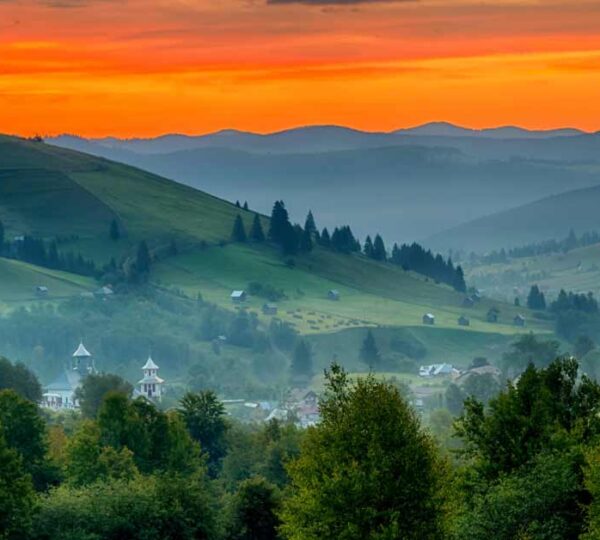

There is a moment on the Vaser Valley line, somewhere between the second and third hour, when the locomotive has climbed deep enough into the forest that the last village has disappeared behind a bend and the only sounds are the engine, the river, and birds – where it becomes genuinely hard to believe this is still 2026. No road runs parallel to this stretch of track. No phone signal either. The trees close in on both sides of the narrow-gauge railway, the Vaser River runs cold and green below the embankment, and the steam drifts back through the open carriage windows smelling of coal and pine.
That’s what the Mocănița is. Not a tourist attraction in the managed, landscaped sense, a working piece of industrial history that has been repurposed for visitors without losing the rawness that made it interesting in the first place.
This guide covers all six Mocănița routes currently operating or in active restoration in Romania, where they run, how to get there, what to expect, and which ones I’d prioritise if you have limited time. For the bigger picture of what Maramureș and the Carpathians offer beyond the train, our guide to Maramureș and Bucovina and our Carpathian mountain experiences guide are good companions to this one.

What is the mocănița (steam train)?
Mocănița (roughly: “the shepherdess” or “the little mountain one” – the name comes from mocan, the word for a Transylvanian shepherd) refers to Romania’s narrow-gauge forestry railways, built from the late 19th century onward to extract timber from Carpathian valleys that wheeled vehicles couldn’t reach. The track gauge is 760mm, just under half the standard European gauge, which allowed the railways to follow river valleys and climb gradients that standard-gauge lines couldn’t manage.
Most of Romania’s forestry railways were dismantled after 1989 when timber transport shifted to trucks. The lines that survive do so because communities, volunteers, and increasingly tourists kept them alive. Some still use the original steam locomotives from the interwar period, burning coal and wood as they always did. Others have modernised the rolling stock while keeping the routes intact.
The Vaser Valley line at Vișeu de Sus is by far the most famous and the most visited. But there are five other operating or nearly-operating lines across the country, each with its own character and its own reasons to go.
1. Vișeu de sus – The Vaser Valley line, Maramureș
This is the one to prioritise if you can only do one. The Vaser Valley (Mocănița Văii Vaserului) is the longest of Romania’s surviving forestry railways, running approximately 43 km from Vișeu de Sus into the Vaser Valley, climbing through some of the most intact old-growth forest in the Carpathians. It is, as far as I can verify, the last working narrow-gauge forestry steam railway in Europe that still uses the line for both timber transport and tourist services – though the timber function has become secondary.
The ride: The standard tourist excursion runs around 6–7 hours return. The locomotive pulls open wooden carriages (some enclosed, some open-sided – check when booking) along the left bank of the Vaser River, stopping at a turnaround point deep in the valley for a lunch break before the return descent. The scenery in the upper valley is exceptional: primary beech and fir forest, the river running clear over limestone, occasional clearings where the foresters’ cabins are still standing.
When to go: The line runs from March to November. Autumn – mid-September through October – is when I’d go. The beech forest turns gold and amber across the valley slopes, the air is cold enough to make the steam dramatic, and the summer crowds have thinned. July and August bring the most visitors; book well in advance for those months. Spring (April–May) is also excellent – the forest is intensely green and the river runs high from snowmelt, which makes the valley feel even more alive.
Getting there: Vișeu de Sus is in northern Maramureș, about 70 km east of Sighetu Marmației on DN18 and then DN17C. By car from Cluj-Napoca the drive is approximately 3.5 hours. There is a CFR train station in Vișeu de Sus (the line from Sighetu Marmației or Vișeu de Jos), and the steam train departure point, at Strada Cerbului 5, is about 15 minutes on foot from the CFR station.
Tickets and practicalities: As of 2025, adult tickets were in the range of 100–180 RON for the full-day excursion depending on carriage class and season. The prices on the original article (35–64 RON) reflect older pricing; verify current rates and book in advance at infoviseudesus.ro. Bring layers regardless of the starting temperature – the valley gets significantly colder as you climb, and the open carriages offer no shelter from wind. Cash is useful for food and drinks at the turnaround stop.

2. Crișcior-Brad, Hunedoara County
The Crișcior–Brad Mocănița is a very different proposition from the Vaser Valley – shorter, slower, and more about heritage and local context than wilderness scenery. The line covers 7 km between Crișcior and Brad in Hunedoara County, western Transylvania, and runs twice a week, typically Thursdays and Fridays (confirm before travelling, as this changes seasonally).
The main appeal here is pairing the train ride with the Muzeul Aurului (Gold Museum) in Brad – one of the most significant collections of native gold specimens in Europe, with pieces extracted from the Apuseni Mountains across several centuries of mining. The Brad area was one of the most productive gold-mining regions in the Roman Empire (the Roșia Montană mines are 35 km to the north), and the museum puts that history in material form in a way that’s genuinely engaging, not just display-case archaeology.
On Thursdays, the timing coincides with the Brad market, which runs along the road adjacent to the railway route. The market sells local produce, household goods, and occasionally livestock – it’s a functioning rural market, not a tourist experience, which makes it more interesting.
Capacity is 130 seats; a return ticket was 20 RON for adults and 10 RON for children as of the most recent published pricing – verify at cfi.ro before visiting as fares are updated periodically. Getting to Crișcior requires a car or a connection via Deva (the nearest large CFR hub, about 60 km southwest on DN76).

3. Teaca-Râciu, Bistrița-Năsăud / Mureș
The Mocănița Transilvaniei (Mocănița of Transylvania) runs 35 km between Teaca commune in Bistrița-Năsăud County and Râciu in Mureș County, making it the longest of the tourist-oriented lines after the Vaser Valley. The landscape it crosses is distinctly Transylvanian: rolling hills, mixed forest, open meadows, and the kind of agricultural countryside that looks more like the 1950s than the 2020s once you’re away from the main road.
This line has a strong following among Romanian families – it’s positioned more as a day-out experience than an adventure tourism product, which means the atmosphere on board is relaxed and genuinely local. If you want to watch Romanian families enjoy a traditional day trip rather than being part of a tourist group, this is the line for it.
Services run primarily in May–June and then again in late summer and autumn, with special themed excursions around certain holidays. Check the current calendar at mocanitatransilvaniei.ro – the schedule changes year to year and booking in advance is strongly advised for the popular autumn departures. Teaca is accessible by car from Bistrița (about 25 km on DN17A) or by CFR regional train on the Cluj-Napoca – Dej – Bistrița line.

4. Moldovița–Argel (Huțulca Line), Suceava County
The Huțulca line in Bucovina is the oldest of the surviving Mocănița railways, with a history going back to 1888 – it predates Romania as a unified state. The original line ran 24 km from Moldovița to Rosoca through the Moldovița Valley, built by the Austro-Hungarian forestry administration to extract timber from the Obcina Mare ridge.
The current operating section is 12 km, running daily (subject to the minimum 10-passenger requirement) through the Moldovița Valley. The setting is emphatically Bucovina: dense mixed forest, small Orthodox churches visible from the line, and the particular atmosphere of a region that has changed less than most of Romania over the past century. If you’re already visiting the Painted Monasteries of Bucovina – Moldovița Monastery is 3 km from the railway’s starting point – this train is a natural pairing for a full day in the valley. Our guide to Romania’s most beautiful monasteries covers the full Bucovina circuit.
A practical note: The Huțulca line’s minimum passenger requirement (10 people) means that solo travellers or small groups may find departures uncertain if they arrive without advance coordination. Contact mocanitamoldovita.com before making the journey specifically for this train – a round trip from Iași or Suceava to find the train not running is a frustrating outcome that’s easily avoided.

5. Sovata-Câmpu Cetății, Mureș County
The Sovata Mocănița covers 14 km between the spa town of Sovata and Câmpu Cetății, running through the eastern Transylvanian hills on a two-hour return journey. It operates on coal and hardwood fuel – no diesel backup – and runs daily in the warmer seasons except Mondays, again subject to a minimum passenger threshold (typically 15 people).
Sovata itself is an interesting base. It’s best known for its heliothermal lake, Lacul Ursu, a salt lake where the surface water is cold but the deeper layers are significantly warmer due to salt concentration absorbing solar heat. The combination of a Mocănița ride and an afternoon at Lacul Ursu makes for an unusual full day in a part of Transylvania that most international tourists don’t reach.
The approach from Târgu Mureș (about 50 km on DN13A) is straightforward by car; there’s no direct CFR connection to Sovata. Check current ticket prices and departure times at mocanitasovata.ro – the fares have changed since the original article was written and the minimum-passenger policy means flexibility on departure times.

6. Sibiu-Agnita, Sibiu County (restoration in progress)
The Sibiu-Agnita narrow-gauge railway through the Hârtibaciu Valley is not yet a tourist product in the full sense, but it deserves mention because it’s coming, and when it does, it will be one of the most accessible heritage railways in Romania given Sibiu’s existing tourism infrastructure.
The line originally ran 63 km through the Hârtibaciu Valley connecting Sibiu to Agnita, built between 1896 and 1910. It closed to regular service in 2001. Since then, a partnership between Romanian volunteers and the Transylvania Railway Association – with support that included funding championed by Prince Charles before his accession – has been restoring the line section by section. Currently, a 7 km stretch is operational for short demonstration rides, and the workshops at the Sibiu end are accessible for visits.
Why it matters beyond the current 7 km: The Hârtibaciu Valley it crosses is one of the last intact Saxon agricultural landscapes in Transylvania – fortified churches, long-lot Saxon village layouts, and hay meadows that host some of Europe’s highest wildflower diversity. A fully restored line through this landscape would be exceptional. Progress updates and visit information at sibiuagnitarailway.com. If you’re visiting Sibiu, the restoration workshop is worth an hour of your time. Our guide to discovering Sibiu covers what to do with the rest of your time in the city.

Which Mocănița should you choose?
If this is your only Romania trip and you want the most immersive experience: go to Vișeu de Sus. The Vaser Valley is in a different category from the other lines, the journey length, the depth into wilderness, and the quality of the scenery make it genuinely memorable in a way the shorter lines aren’t. Plan at least two nights in Maramureș around it; arriving for a single day and leaving is a waste of the region.
If you’re already in Transylvania with limited time: the Teaca–Râciu or Sovata lines are the most practical add-ons, depending on whether you’re in the northern or eastern part of the region. Neither requires a significant detour.
If you’re doing a Bucovina monastery circuit: add the Huțulca line at Moldovița, it’s 3 km from the monastery and connects naturally to a full day in that valley.
For the most committed railway historians: Crișcior–Brad for the Gold Museum pairing, and a visit to the Sibiu–Agnita restoration workshops for the active preservation story.
Practical notes for all steam train lines
What to wear: Dress in layers regardless of the season. Steam trains are colder than the ambient temperature in open carriages; mornings in Maramureș can be 5–8°C even in September. A waterproof outer layer is useful since valleys create their own rain.
Photography: Bring a lens cloth. Steam and smoke deposit a light film on glass. The best light on the Vaser Valley line is typically in the first two hours of the morning departure – the sun angles through the valley from the east and the steam is at its most dramatic in cool morning air.
Booking: All lines benefit from advance booking, the Vaser Valley line in particular. Do not assume you can turn up and buy a ticket, especially in July–August and during the October foliage period. Check each operator’s website directly (I’ve listed them above) as booking windows and availability vary significantly.
Combining with a Romania tour: If you’d rather have the logistics handled, several of our private Romania tours include the Vaser Valley Mocănița as part of a broader Maramureș itinerary. It’s the kind of experience that benefits from a local guide who knows the valley and can give the history its proper context, which a timetable on a website cannot.