
Harvest season is the one time of year I can predict, almost to the week, what a rural kitchen in Romania or Bulgaria is going to smell like. This isn’t really a festivals listicle, though there are festivals in it – it’s more a guide to what’s actually happening in both countries between late August and November, and which of it is worth building a trip around.
Harvest lands in autumn for the obvious agricultural reasons – crops ripen, the weather cooperates, everyone’s getting ready for winter – but that’s not really the interesting part. The interesting part is what communities do with it once it arrives, and that looks different enough between Romania and Bulgaria, and even between regions within each country, that it’s worth going through separately.

Romania’s harvest season
The wine tradition
One of the older customs still practiced in Romanian vineyards: winemakers deliberately leave the last grapes on the vine, as an offering to God and to the birds. You’ll hear this explained matter-of-factly at a tasting, not as a performance for tourists – it’s just what’s done. Most of the harvest itself is mechanized now, but plenty of producers still stomp the first batch of grapes by foot, less for efficiency than for keeping the process connected to how it’s always been done.

Regional harvest festivals
A handful of these are worth knowing by name and rough date, since none of them are on the scale of a Christmas market and most tourists never hear about them.
Ziua Recoltei (“Harvest Day”) runs in the village of Remeți, in Maramureș, typically late September into early October. It’s a genuinely local event – folk bands, traditional dancing, and a crowd that’s mostly people from the surrounding villages rather than visitors.

The Cabbage Festival takes over Mosna, a small commune in Sibiu County, every October. Mosna built its reputation on cabbage growing generations ago, and the festival is still built around it: local growers show off their harvest, and the food stalls lean heavily on cabbage-based dishes, for better or worse depending on how you feel about cabbage.
Baia Mare, a larger city in the Maramureș region, runs a Chestnut Celebration with music, performances, and art exhibits alongside the seasonal food – more of a cultural weekend built around a seasonal excuse than a harvest festival in the strict sense.
Răvășitul Oilor, held in Bran, marks something different: the descent of sheep from the mountain pastures at the end of the grazing season, not a crop harvest at all. Expect cheese, lamb pastrami, wine, and pălincă, with folk music and dancing built around producers showing off a year’s worth of work. Of the four, this one has the most genuine ceremony to it – it’s tied to an actual seasonal event (the flocks coming down) rather than being a festival built to celebrate a product.

Of the four, Răvășitul Oilor is the one I’d prioritize if you can only fit one into a trip – Ziua Recoltei and the Cabbage Festival are both genuinely local and worth a detour if you’re already in the area, but neither has the same built-in ceremony as watching flocks actually come down off the mountain after a season away. The Chestnut Celebration is the most purely urban of the four, closer to a cultural festival with a seasonal theme than a harvest event in the traditional sense – fine to catch if you’re already in Baia Mare, not worth restructuring a route around.
Halloween, Romanian-style
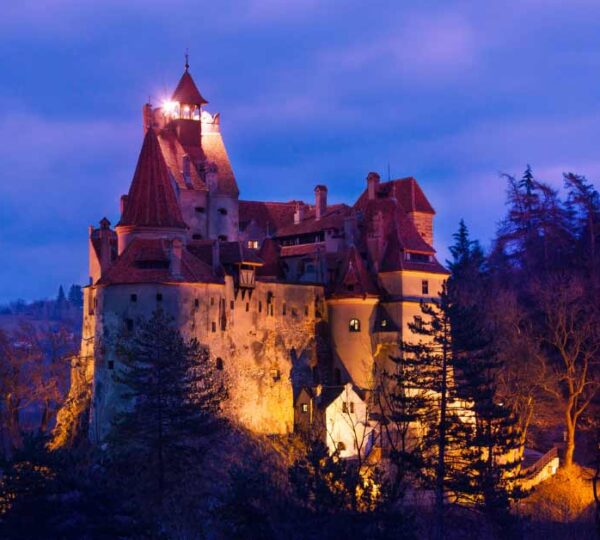
Halloween has caught on in Romania in a real way – pumpkin carving, decorating, costumes, the whole thing – which makes sense once you remember this is the country most associated with Dracula in the first place. Bran, unsurprisingly, leans into it hardest, and a visit to the Bran Castle area around late October comes with genuinely spooky theming rather than a half-hearted seasonal nod.

Bulgaria’s harvest season
If you’re in Bulgaria between August and October, you’ll see the same instinct at work as in Romania: households preparing fruit and vegetables for winter, in ways that have barely changed in generations.
Sevlievo’s Pumpkin Festival
Sevlievo, in central Bulgaria, has grown enough of a reputation for pumpkins that locals half-jokingly call the town Tikvenburg – tikva being Bulgarian for pumpkin. The festival itself started in 2006 and has grown every year since: pumpkin-growing competitions, pumpkin dishes (Zoe swears by the pumpkin banitsa specifically), and the kind of small-town energy that doesn’t show up in generic Bulgaria guides.
Pavel Fest
Less pumpkin, more tomatoes and peppers – Pavel Fest started as a project by former teachers and community organizers trying to revive the village of Pavel’s agricultural identity, and it’s grown into a genuine celebration of Bulgarian produce and cuisine, backed by local landowners rather than a tourism board. Some people call it the Feast of the Pepper, which isn’t official but isn’t wrong either. It’s a smaller, more local affair than Sevlievo’s festival – worth folding into a route if you’re already passing through central Bulgaria in October, though not a reason on its own to reroute a trip.

How families actually prepare
Beyond the named festivals, most of what defines autumn here happens in home kitchens rather than on a stage – and it’s genuinely one of the better reasons to book a rural guesthouse over a city hotel this time of year, since you’re more likely to actually see it happening rather than reading about it afterward.

Walk through the Bulgarian countryside in September or October and you’ll run into lyutenitsa being made – a spread of ripe tomatoes, red peppers, and eggplant that shows up at nearly every meal afterward, whether on bread, alongside grilled meat, or in a sandwich. It’s as much a part of Bulgarian cuisine as any restaurant dish, and the smell of peppers roasting over an open flame is one of those things that’s hard to describe until you’ve actually stood next to it. If you’re curious enough to try making it yourself, we’ve put together a simple version that doesn’t require a Bulgarian grandmother’s exact ratios.

Romanians do the same thing with different results: pickled vegetables, and zakuska, a cooked spread of eggplant, mushrooms, or beans that plays roughly the same role lyutenitsa does across the border. Fruit becomes jam, compote, and juice, most of it destined for winter baking. We’ve done the same for a few Romanian dishes, if you want to try your hand at it before or after the trip. Across both countries, cucumbers, cabbage, cauliflower, and peppers all go into jars for the same reason – a taste of autumn that lasts well past the season itself.

When to actually go
If you want to catch the most of this in one trip, early-to-mid October is the sweet spot in both countries. By then the Cabbage Festival is running in Mosna, Sevlievo’s pumpkin competitions are underway, foliage is close to peak in the Carpathians and the Rila range, and you’ve still got a reasonable window before Răvășitul Oilor and the later harvest events wrap the season up in late October and November. Go earlier, in September, and you’ll catch the tail end of the wine harvest and Ziua Recoltei, but miss most of the pumpkin and cabbage events entirely.
Other things worth doing in autumn
Fall is the most visually striking season in the Balkans, and the harvest traditions above are only part of what’s worth planning a trip around.
Wine tasting: Cricova, in Moldova, is an enormous underground network of tunnels lined with wine barrels – genuinely one of Europe’s largest cellars, though access isn’t available every day, so it needs planning ahead.
In Bulgaria, Prisoe Winery makes Chardonnay, Merlot, and Cabernet Sauvignon with a distinctly local terroir behind them.
Horse riding: available in both countries. New Sinca, a small village in the Transylvanian hills, is a solid base in Romania.
In Bulgaria, trails run near Plovdiv, Albena, and through the Rhodope Mountains.

Hiking: the Carpathians, especially around the Transfăgărășan and Transalpina roads, offer routes for most fitness levels – more on that in our guide to Romania’s national parks.
In Bulgaria, the Rila range is the equivalent draw, with the Seven Rila Lakes and Musala Peak, the country’s highest point – covered in more depth in our piece on Bulgaria’s national parks.
Steam train rides: one of the better ways to actually see the color change, riding through dense Carpathian forest rather than just looking at it from a trailhead. We’ve written a full guide to the routes still running – find it here.
Urban autumn: Bucharest, Sibiu, Sofia, and Plovdiv all run concerts, artisan markets, and performances through the season. In Sibiu, it’s worth checking the dates for the Potter’s Fair before you plan around it, since small annual fairs like this shift more than big festivals do.
Sofia has Sofia Biting Docs for documentary film.
Bucharest, meanwhile, has the George Enescu Festival, one of Europe’s major classical music events. The festival itself runs in odd years – 2025, 2027 – while even years like 2026 get the related George Enescu International Competition instead, both landing in late August through September, so there’s something on the calendar most years either way.
Autumn here is genuinely a working season as much as a scenic one – the harvest happens whether or not anyone’s watching, and most of what’s listed above is the byproduct of that, not a show staged for visitors. That’s a large part of what makes it worth catching.
If you’d rather have someone build the itinerary around whichever of this actually interests you, that’s the kind of thing we put together on our custom tours. Get in touch and we’ll work out a version of Romania and Bulgaria that fits what you actually want to see.