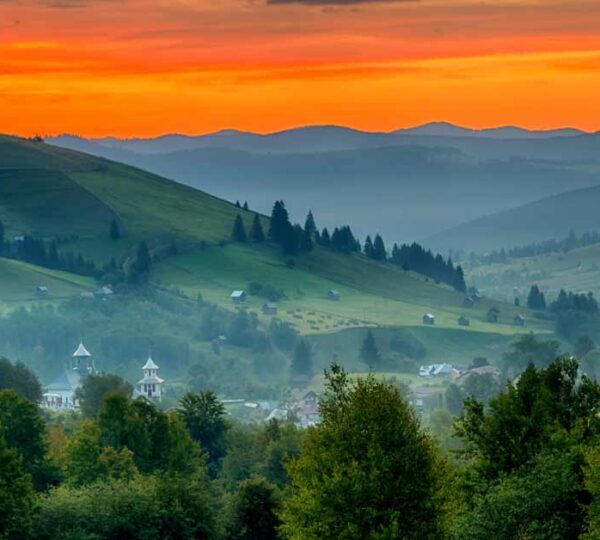

I’ve spent enough years leading photography-friendly tours through Romania and Bulgaria to know the real secret behind most travel photos worth keeping: it’s not the camera, it’s showing up at the right spot at the right hour, with two or three habits sorted well enough that you’re not thinking about them when the moment happens.
This isn’t a general photography course. It’s the specific stuff I tell clients before we walk into Bran, Sighișoara, Rila, or Veliko Tarnovo – habits that work whether you’re carrying a phone or a full mirrorless kit, plus the exact spots in the Balkans where each one pays off.

Know your camera (or phone) before you need it
Get familiar with your device before the trip, not during it. On a phone, find where portrait mode and night mode live, and practice adjusting exposure by tapping the screen and sliding your finger up or down. This matters more than people expect inside Orthodox monasteries, where interiors are kept dim on purpose and flash is usually restricted near the frescoes – a phone that overexposes automatically will blow out detail you can’t get back afterward. Knowing your night mode before you’re standing in front of a five-hundred-year-old wall painting is what saves the shot.
If you’re on a proper camera, auto settings are a fine place to start, but spend an afternoon at home shooting ordinary objects in different light so you understand how it reacts before you’re relying on it at Corvin Castle with ten minutes before the tour group moves on.
The rule of thirds is easier than it sounds
Imagine your screen split into a 3×3 grid, and put your subject on one of the lines or intersections instead of dead center. Turn on gridlines in your settings and leave them on – you’ll stop thinking about it within a day.
At Peleș Castle’s inner courtyard, this is the difference between a photo that looks like everyone else’s and one that doesn’t. Most visitors center the fountain and the main façade head-on. Step to one side instead, put a turret on the left third of the frame, and the same building suddenly has depth. See our guide to Sinaia and Peleș Castle for the best angles to try it from. The same trick works on a Black Sea sunset in Nesebar – put the horizon on the lower third instead of slicing the frame in half, and the sky does the rest of the work.

Angles the Balkans practically ask for
Instead of shooting everything at eye level, try three moves: get low, get high, use reflections.
Get low at Corvin Castle in Hunedoara – crouch on the wooden bridge leading up to it and shoot upward. The towers stop looking like a postcard and start looking like the fortress actually felt to walk into.
Get high at Sighișoara’s Clock Tower, which you can climb for a small entry fee. The view over the citadel’s tiled roofs is the shot people ask about afterward.
Use reflections at Bâlea Lake on the Transfăgărășan in summer, when the water sits still enough to mirror the peaks, or in Plovdiv’s old town after rain, when the paving stones of the Roman stadium turn into a second sky. Your phone’s size makes this kind of experimenting easy – crouch by a puddle without a second thought.
Choose your base for the view, not just the bed
Skip trekking across town for the scenic shot when your room could already have it. Veliko Tarnovo is the clearest example in the region – guesthouses along the old streets climbing above the Yantra gorge look straight across at Tsarevets Fortress, and coffee on the terrace at sunrise gets you the photo everyone else queues for a tour-bus stop to get. Our guide to Veliko Tarnovo covers where to stay for that exact view.
Rila Monastery goes a step further: you can arrange to stay overnight in one of the monastery’s own simple guest rooms, usually in person rather than online. That means your evening and morning light happen once the day-trip buses are gone and the courtyard is quiet again.

A tripod earns its weight, or improvise one
A tripod isn’t just for professionals – it’s what turns a shaky night shot into a usable one, and compact phone tripods are cheap and small enough to disappear into a bag.
Use one for group photos, so you’re not always the one missing from the picture; for low light, where even a steady hand blurs; and for long exposure – Belogradchik’s rock formations at dusk, lit from the side, reward a tripod and a ten-second exposure far more than any handheld shot could. Our guide to Bulgaria’s fortresses and ancient cities has more on visiting Belogradchik itself. Worth checking first: most Romanian and Bulgarian monastery churches restrict tripods along with flash, mainly to keep foot traffic moving through small spaces.
No tripod on you? Rest the phone on a wall, a fence post, or your own backpack. It works nearly as well, and it’s already in your bag.

Shoot the story, not just the view
Wide shots set the scene – a market in Plovdiv’s Kapana district, a quiet stretch of Black Sea coast, snow settling over the Bucegi ridge. Close-ups carry the texture – the grain of a carved wooden gate in Maramureș, hand-painted eggs sold outside a Bucovina monastery at Easter, the enamel on a bottle of Bulgarian rose oil. Candid shots carry the people – a vendor mid-laugh, a kid chasing pigeons across a main square, someone’s grandmother sweeping a step at seven in the morning before the tourists arrive. Our guide to Maramureș and Bucovina is a good place to start if that kind of close-up detail is what draws you.
Put those three types together from a single place and you end up with more than a nice photo – you end up with the actual visit.
Getting over the awkwardness of photographing strangers
Photographing people can feel awkward if you’re new to it, and it’s worth knowing this changes by country and by setting. In rural Maramureș or the Rhodopes, an older villager might wave you off entirely, while someone else will happily pose if you ask first and offer to show them the result on your screen afterward – a small gesture that changes the whole interaction. A phone draws far less attention than a large camera with a long lens, particularly around churches and markets where people are used to tourists but not always used to being photographed up close.
Start in quieter places or early mornings before the crowds build, and remember that most people are too busy with their own day to notice you – the ones who do are usually just curious, not bothered.

A few more things worth packing and knowing
Carry a spare battery and memory card. Rural guesthouses in Maramureș or the Rhodopes don’t always have accessible outlets, and a day spent between monastery frescoes and mountain views eats through both faster than an ordinary sightseeing day does.
Don’t underrate your phone. Modern phone cameras handle most travel scenes well on their own. For quick fixes, Snapseed handles exposure and color in under a minute, and it’s free. Most of what you shoot on a phone won’t need more than that. But for finer control over color grading, Lightroom is worth the extra taps.
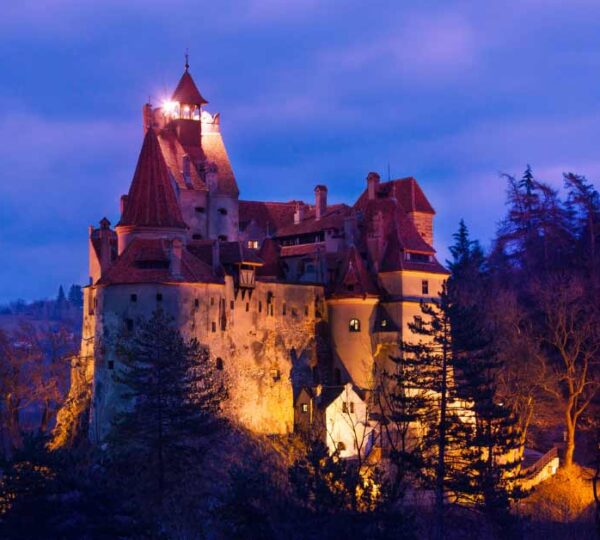
Chase the golden hour. The hour after sunrise and before sunset gives soft, warm light that flatters both portraits and landscapes – more on the golden hour here. In the Balkans that means Bran’s towers against the Bucegi ridge at sunrise, or Nesebar’s old town glowing over the water in the day’s last light. For mountain photography without city light pollution, dawn over the peaks near Rila is hard to beat – our guide to Bulgaria’s national parks covers a few more spots worth the early start.
Notice the small things. The cobblestones of Sighișoara, the tiled roofs over Plovdiv’s old town, the carved gates of a Maramureș farmhouse – these carry as much of a place as the big landmark shot does.
Keep it simple. You don’t need a perfectly symmetrical composition every time. Shoot what actually catches your eye.

Romania and Bulgaria through a lens
Romania alone gives you fairytale castles, medieval streets, and steam trains threading through forest valleys. Bulgaria answers with ancient fortresses and mountain light that changes by the hour. Several of the region’s oldest monasteries still hold frescoes that have barely changed in six centuries.
If you’d rather have it planned around your own interests than a fixed group schedule, we build custom photography-friendly routes through Romania, Bulgaria, or both. Get in touch with Balkan Trails, a trusted tour operator, and we’ll build the stops around your golden hours, not the bus timetable.
Corvin Castle – Romania