

I get some version of the packing question before nearly every autumn booking, and the honest answer is that it depends more on where in Romania or Bulgaria you’re going than most guides let on. A week in Sofia and a week in the Carpathians in the same October call for a different bag entirely.
Autumn here runs roughly September through November, and the weather across that stretch is genuinely unpredictable – not “pack a light jacket just in case” unpredictable, but sunny at breakfast, sideways rain by mid-afternoon, especially in the mountains. Below is what I actually tell people to pack, and why this season is worth building a trip around in the first place.
Why autumn is one of the best times to visit Romania and Bulgaria
Autumn is one of the better windows to visit Romania and Bulgaria, for a few concrete reasons.
Foliage and scenery
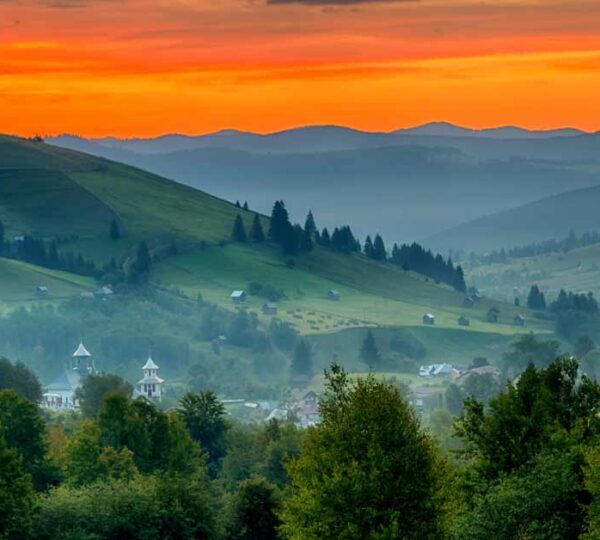
By early to mid October, the Carpathians and the Rhodope forests turn – deep red and orange through the beech and oak stands, gold in the birches. The Bucovina painted monasteries, covered in our guide to Maramureș and Bucovina, are one of the better places to see it, since the frescoed monastery walls sit right against forested hillsides that hold the color for two to three weeks before the leaves drop. Further south, Bulgaria’s Rila and Pirin ranges turn a few weeks later than the Carpathians, a gap that comes down to elevation and how the slopes face the sun rather than latitude alone.

Cultural celebrations
Autumn is also when both countries lean into harvest traditions rather than performing them for visitors. In Romania, wine regions like Dealu Mare and Cotnari run harvest festivals through September and October, and Toamna la Voroneț, at the painted monasteries in Bucovina, pairs the Orthodox religious calendar with the same forest color mentioned above.
Zoe drags me to the Sevlievo Pumpkin Festival most years – a mid-October event in central Bulgaria with street processions, pumpkin carving, and more pumpkin dishes than seems reasonable for one town. It isn’t on most tourist itineraries, which is exactly why she likes it. We’ve written more on what’s actually worth catching this time of year in our guide to autumn traditions in Romania and Bulgaria.

Fewer crowds
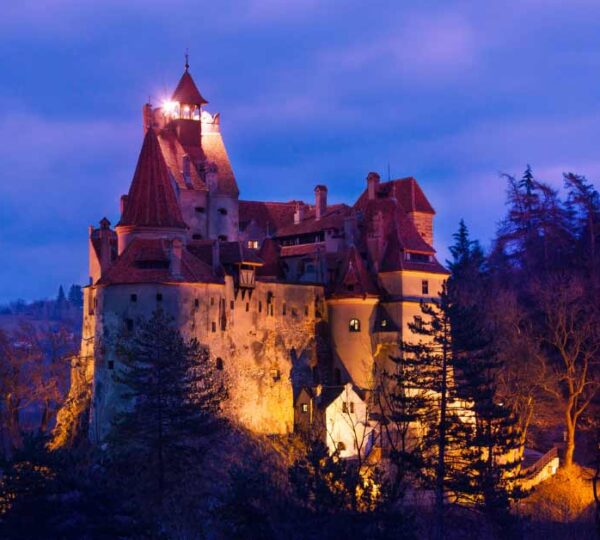
October and November also mean you can get into places without queuing. Bran Castle, which needs timed tickets and real patience in August, is a walk-straight-in visit most October weekdays. The trade-off is that some smaller guesthouses and rural restaurants start cutting their hours once the summer season winds down, so it’s worth confirming opening times before building a whole day around one stop.
Temperature ranges: Romania and Bulgaria in autumn
The month-by-month pattern matters more than the exact numbers, since conditions vary a lot by region. As a general baseline for lowland areas like Bucharest and Sofia:
- September: daytime highs around 20-25°C (68-77°F), nights cooling to 10-15°C (50-59°F).
- October: daytime highs of 15-20°C (59-68°F), nights around 5-10°C (41-50°F).
- November: daytime highs of 10-15°C (50-59°F), nights near 0-5°C (32-41°F).
Those numbers shift meaningfully depending on where you actually are. Transylvanian towns like Sibiu and Brașov, sitting higher than Bucharest, typically run three to five degrees cooler at the same point in the season, and the first frost usually reaches them before it reaches the capital. Bulgaria’s Black Sea coast holds onto summer longer than Sofia does – early September on the coast can still feel like a Romanian August, though the water turns too cold to swim comfortably by mid-month.
Rain matters more than temperature for what you actually pack. Autumn showers in the Balkans tend to be short and sudden rather than steady all-day rain, so a compact umbrella or a waterproof jacket you can stuff into a daypack does more for you than a heavy raincoat you’ll wear half the trip and carry the rest.

What to pack for an autumn visit
Layering is the whole strategy – not one jacket that does everything, but pieces you can add or strip depending on whether you’re in a sunny square at noon or a shaded monastery courtyard at four.
Walking shoes
Cobblestones are the real hazard here, not mud. The old town streets in Sibiu, Sighișoara, Plovdiv, and Veliko Tarnovo are all cobbled and uneven, and they get slick fast once it rains. Water resistance matters less than actual tread – a shoe that’s technically waterproof but has a smooth sole will still put you on the ground on a wet slope. Break shoes in before you travel; a blister on day two of a two-week trip is a bad trade for footwear that looked fine in the shop.

Waterproof and windproof jacket
A jacket with sealed seams and a hood earns its space in the bag. Balkan autumn rain rarely lasts long, but it shows up without much warning, and something that folds down small matters more than a jacket loaded with features you won’t use.

Scarves, hats, and gloves
Beyond keeping you warm, a scarf doubles as the shoulder cover you’ll need at monasteries and churches, which saves packing a separate shawl. A hat and light gloves are worth having by late October, especially at altitude, where the temperature drop from valley to ridge can be sharper than the forecast suggests.
Accessories
Sunglasses still earn their place – low autumn sun is more of a glare problem than summer’s overhead sun ever is. A crossbody bag or small backpack with a zip you can actually see is the practical choice for markets and old town squares, where pickpocketing risk, low but not zero, rises in dense crowds.

Dressing for different occasions
Sightseeing in old towns: jeans or trousers, a long-sleeve layer, and shoes that can handle a few hours on cobblestones. Sighișoara’s citadel and Veliko Tarnovo’s old quarter are both steep as well as uneven, so grip matters more than style here.
Outdoor adventures: hiking the Bucegi or Piatra Craiului ranges in Romania, or Rila and Pirin in Bulgaria, calls for real hiking boots rather than walking shoes, plus a wind layer for altitude even on a day that’s warm lower down.
Monasteries and churches: covered shoulders and knees are expected at places like Rila Monastery and the Bucovina painted monasteries. A scarf plus trousers or a longer skirt covers it without needing a separate outfit for the day.

Packing tips
For the broader logistics – what to bring regardless of season, how to pack light without leaving things behind – we’ve put together a separate packing guide that covers it in more depth than makes sense to repeat here. The autumn-specific point is simpler: pack for layers, and don’t assume the temperature in Bucharest or Sofia tells you anything about the temperature in the mountains two hours away.
If you land without enough warm layers, hand-knit wool socks and sweaters are easy to find at markets in Maramureș and in most mountain towns generally, and usually cost a fraction of what the same thing goes for at home.

Final thoughts
A Romania trip built around September calls for one kind of packing list – lighter layers, still short sleeves some afternoons in Bucharest.
A Bulgaria tour built around late October calls for another, especially once you’re inland from the coast. Altitude and coastline change the equation more than the calendar month does – that’s really the only rule worth remembering here.
If you want help building an itinerary that matches what you’re prepared to wear (or the other way around), get in touch and we’ll sort it out with you.
Happy travels!