
If you plan to travel to Romania or Bulgaria in winter, you’re probably wondering how cold is it actually, and what do I really need versus what am I hauling around for nothing? The honest answer is that it depends heavily on which of these countries’ winters you’re packing for, since a Bucharest Christmas market and a day on the Bansko slopes call for genuinely different kits. Here’s what I’d actually pack for each, with real numbers instead of “dress warmly.”

What winter actually feels like, place by place
Bucharest averages around 5°C during the day in December, dropping to about -2°C overnight, and January runs a degree or two colder still. That’s city-cold, not mountain-cold: a solid coat handles most of it.
Brașov and the mountain towns are a different story – December days average around 1°C with nights near -6°C, and January regularly sees highs of -1°C and lows around -9°C. If you’re doing the winter destinations I’ve written about elsewhere – Poiana Brașov, Bâlea Lake, Maramureș – this is closer to what you’ll actually experience than the Bucharest numbers above.
Sofia sits close to Bucharest’s range, averaging around 6°C by day and -2°C overnight in December. Bansko town itself is milder than you’d expect at around 2-3°C, but the ski zone above town sits at 2000-2600 meters, and temperature drops roughly 6-7°C for every 1000 meters of elevation gain – so expect the top of the lifts to run 10°C or more colder than the town center, before wind chill.
The Black Sea coast is the mildest of the bunch – Varna averages around 5-8°C by day in December and rarely drops far below freezing overnight, though the wind off the water makes it feel colder than the number suggests.
Daylight is also shorter than most people plan for: Brașov gets around 8.5 hours of daylight in December, with sunset by roughly 4:30-5pm – build your itinerary around that rather than assuming you have until evening to sightsee.
Romanian authorities close mountain roads when conditions demand it – the Transfăgărășan, for instance, shuts entirely from around late October to mid-June – and Bulgaria does the same on its higher passes. Check road status the morning you’re driving, not the week before.

The layering system
Layering is the actual answer to “how do I pack for weather this variable,” and it comes down to three parts:
- Base layer: moisture-wicking thermal tops and bottoms, in wool or synthetic fabric – not cotton, which holds sweat against your skin and stops insulating once it’s damp
- Mid layer: a fleece or insulated layer that traps warm air; this is the piece you add or remove as the temperature or your activity level changes
- Outer layer: a waterproof, windproof shell, since wind chill in the Carpathians and Pirin/Rila mountains does more damage to comfort than the raw temperature does

Bottoms and footwear
Bottoms:
- Thermal leggings or base-layer pants (merino wool or synthetic) under whatever you’re wearing on top
- Waterproof outer trousers if you’re doing anything beyond city sightseeing – hiking, sledding, or a day at altitude
Footwear:
- Insulated, waterproof boots with real tread – cobblestone streets in old towns like Sibiu, Brașov, and Veliko Tarnovo get genuinely slick with ice, not just mountain trails
- A backup pair of casual, warm shoes for indoor time, since walking around in ski boots or heavy hikers all evening gets old fast
- Extra socks – merino wool holds up better over a wet day than cotton, which stays damp and cold once soaked
- Insulated insoles or boot warmers if you’re doing a full day outdoors in the cold, particularly at altitude

Accessories
- A warm hat that covers your ears – most heat loss on a cold day happens through your head and neck, not your hands
- Gloves: a thin liner glove under a waterproof shell glove or mitten gives you more flexibility than one thick pair, especially if you need to use your phone
- A neck gaiter or buff, which doubles as a face shield in wind and as a scarf in town
- Sunglasses or ski goggles for anything at altitude – snow reflects a large share of UV light back up at you, so glare at 2000+ meters is worse than it looks, even on an overcast day

Dressing for specific activities
Where you’re actually going changes what matters most:
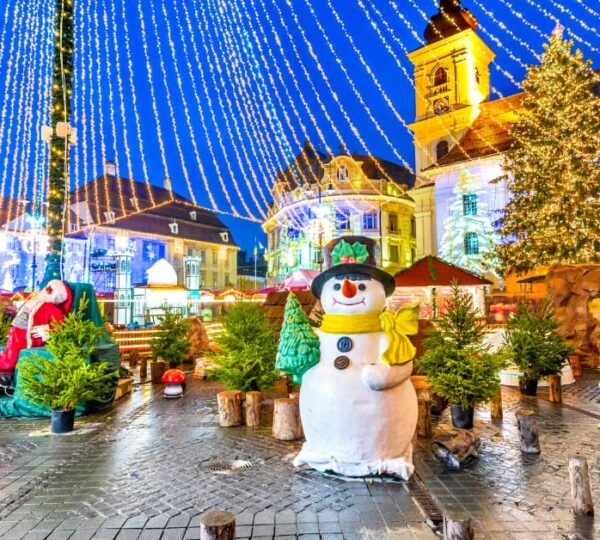
Cities and Christmas markets (Bucharest, Sofia, Brașov’s old town): a warm coat, scarf, and good boots cover most of it. You’ll be walking on pavement and stopping frequently for mulled wine, so you don’t need technical mountain gear here – just enough insulation to stand still comfortably.
Skiing (Poiana Brașov or Bansko): proper ski-specific insulated jacket and pants, since you’re stationary on lifts as often as you’re moving, and standing still in wind at altitude is where cheap gear fails first.
Bâlea Lake and the Ice Hotel: the cable car up is exposed and often windy, and you’ll be outside far more than the “hotel” framing suggests – dress for the mountain temperatures above, not for Sibiu’s town-center numbers.
Rural areas and villages – Maramureș, Bucovina, and anywhere you’d go to see the winter traditions I’ve covered separately, like Comănești’s Bear Dance or Kalofer’s river horo – mean standing outdoors in the open for extended periods, often before sunrise. Layer as if you’re not moving much, because you won’t be.
If you’re renting a car for any of this, Romanian law requires winter tires or chains on snow-covered roads, generally enforced November through March – most rental companies fit these automatically in that window, but confirm it. Bulgaria’s requirements are less standardized nationally, so ask the rental company directly rather than assuming the same rule applies.

A packable checklist
For a week covering a mix of the above:
- 3-4 base layer tops and bottoms (thermal, wool or synthetic)
- 1-2 mid layers (fleece or light insulated jacket)
- 1 waterproof, windproof outer shell or coat
- 1 pair insulated waterproof boots, broken in before you travel
- 1 pair casual indoor/backup shoes
- 5+ pairs wool or synthetic socks
- Warm hat, 2 pairs gloves (liner + shell), neck gaiter
- Sunglasses or goggles if you’re doing anything at altitude
- Small first aid kit with any prescription medication
- A refillable insulated bottle – plastic bottles left in a car or outside can freeze solid
For general trip-packing beyond the winter-specific gear above, our broader packing checklist covers the rest (documents, chargers, the usual).

Notes for older or less mobile travelers
A few specifics worth planning around rather than generic caution:
Old-town cobblestones ice over fast and unevenly – Sibiu’s Piața Mare, Brașov’s Piața Sfatului, and Veliko Tarnovo’s hillside streets are all genuinely uneven underfoot even without ice, so trekking poles or a solid cane aren’t overkill there, they’re practical. Budget more time than you think for these areas, since rushing on uneven, icy stone is where falls happen.
With sunset around 4:30-5pm through December, plan your outdoor time earlier in the day and treat the evening as indoor time by default rather than trying to stretch sightseeing into the dark.
Cold, dry mountain air dehydrates faster than people expect, so drink water on a schedule rather than waiting to feel thirsty, and keep it in an insulated bottle rather than a bottle that’ll freeze if left in a car overnight. Build in a spare day or two if your itinerary includes anything at altitude – snow can slow a day down in ways a summer itinerary never accounts for.

Balkan Trails can help
Packing right solves half the problem; the other half is knowing which of these places actually needs the technical gear and which just needs a warm coat. If you’d rather not guess, email us at Balkan Trails and we’ll build the itinerary – and the packing list that goes with it – around what you’re actually doing each day.