I’ve been taking travelers through Transylvania for over three decades, and I still get asked the same question before every tour: “Is it really as good as everyone says?” My honest answer is yes – but not quite for the reasons most travel articles tell you.
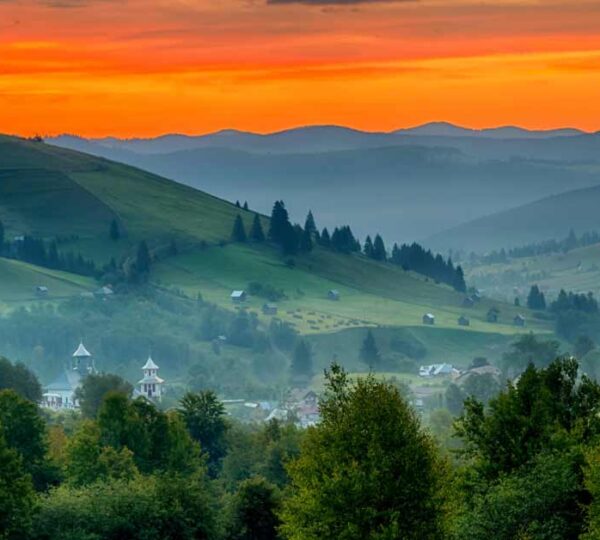
Transylvania is not a Dracula theme park. It’s a region of medieval Saxon towns, steep Carpathian passes, communist-era hydroelectric lakes, and villages where horse carts still slow down traffic on a Tuesday morning. If that sounds appealing, you’re going to love it. If you came specifically for vampire tours, Bran Castle will do the job – but don’t stop there.
This guide is everything I’d tell a friend planning their first Transylvania trip: where to fly in, how to get around, where to base yourself, what to eat, what to skip, and which roads are genuinely worth your time.
How to get to Transylvania
Transylvania sits in the geographic center of Romania, which means there’s no single obvious entry point – and that’s actually one of its advantages.
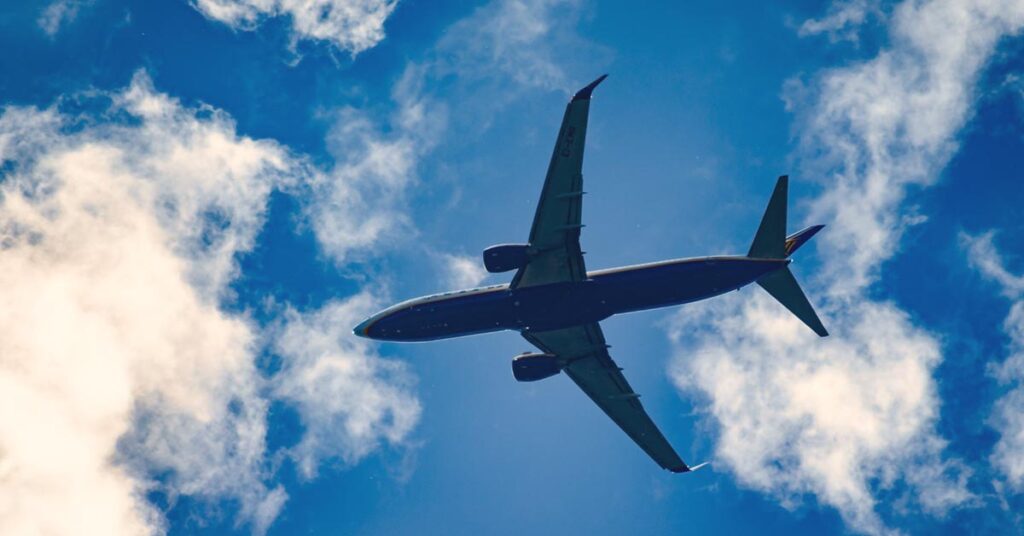
By air
The most convenient option for most international travelers is flying into Cluj-Napoca (airport code CLJ, officially Aeroportul Internațional Avram Iancu). Direct flights connect Cluj to major European hubs via Lufthansa, Air France, Wizz Air, and Tarom. Cluj sits on the northwestern edge of the region, making it a natural starting point for a Transylvania loop.
Bucharest Henri Coandă International Airport (OTP) is the largest hub and has the widest flight selection. From Bucharest, you’re looking at roughly 3 hours to Brașov by train or about 2.5 hours to Sibiu by car. Many travelers fly into Bucharest, spend a night, then head north or northwest into Transylvania – which is a perfectly reasonable approach, especially if you want to see Bucharest as part of a broader Romania itinerary.
Sibiu International Airport (SBZ) serves routes via Lufthansa and Wizz Air and drops you directly into the heart of Transylvania. Brașov Airport (GHV) opened recently and is expanding its routes – worth checking if you plan to base in Brașov.
By train
Romania’s national railway (CFR Călători) connects all major Transylvanian cities, though I want to be upfront: Romanian trains are slow and sometimes delayed. The Bucharest Nord to Brașov InterCity takes around 2.5 hours on the faster services (check CFR Călători at cfrcalatori.ro for current schedules and tickets). Bucharest to Cluj is roughly 5-6 hours depending on the service. These are comfortable journeys – just don’t plan tight connections. Bring food, book your seat in advance on intercity routes, and enjoy the view through the Prahova Valley.
By bus or car
Flixbus operates routes between Bucharest and several Transylvanian cities. Local maxi-taxi services (shared minibuses) fill in the gaps between smaller towns efficiently and cheaply. If you’re renting a car, the DN1 and A3 motorway from Bucharest toward Cluj are well-maintained, but many secondary roads in the mountain zones, particularly in the Apuseni and on smaller routes to villages, require some patience and a decent suspension.
Where to base yourself in Transylvania
This is the decision that shapes your whole trip. The right base depends on what you want to prioritize.
Brașov
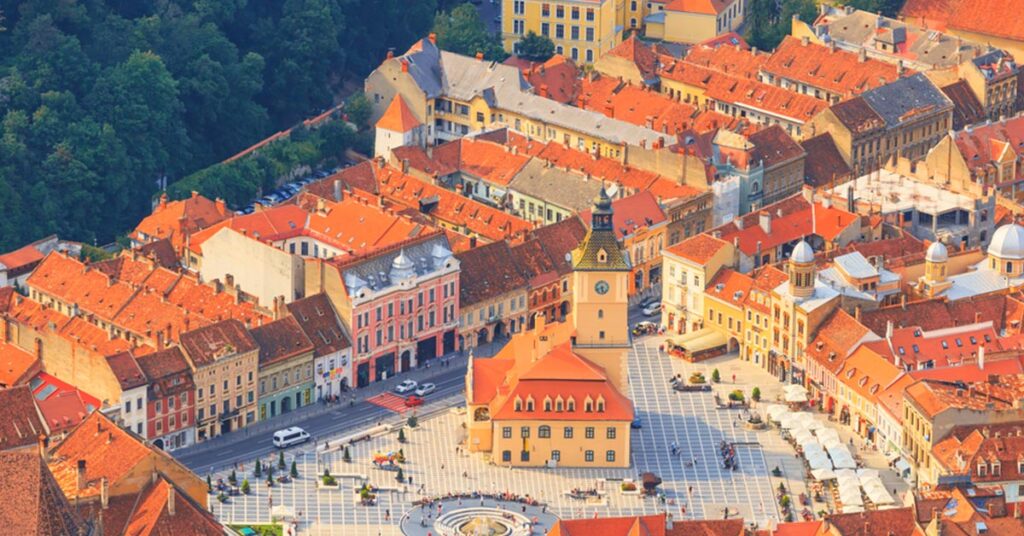
Brașov is the most popular base, and with good reason. It’s compact enough to explore on foot, lively enough to feel like a real city rather than a museum piece, and sits within day-trip range of Bran Castle, Sinaia, and the Transfăgărășan. The old town centers on Piața Sfatului, and hiking up to the Hollywood-style BRAȘOV sign on Tampa mountain takes about 40 minutes from the old town – it’s a legitimate viewpoint, not just a selfie spot.
Winter is big here. Poiana Brașov, 12km from the city center, is the most developed ski resort in Romania, with gondola access and groomed runs suitable for intermediate skiers. Lift tickets in 2025 were around 200-250 RON/day. The resort crowds quickly during Romanian school holidays in February – if you’re coming to ski rather than to mix with families from Bucharest, go in January or early March.
A word about Bran Castle: it’s worth visiting, but I want to correct the most persistent misunderstanding in Transylvania tourism. Bran Castle has almost no proven connection to Vlad Țepeș (Vlad the Impaler). The fortress he actually used was Cetatea Poenari – a ruined hilltop stronghold about 90km southwest, requiring a 1,480-step climb to reach. Most tour groups never go there. We do, and it’s a completely different experience from the gift shop chaos at Bran.
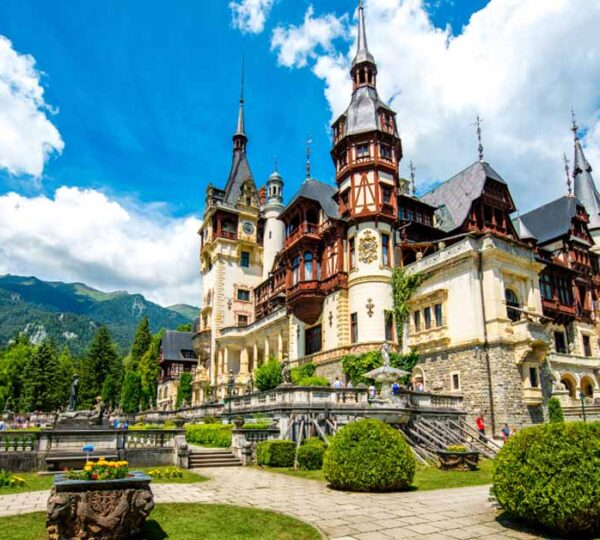
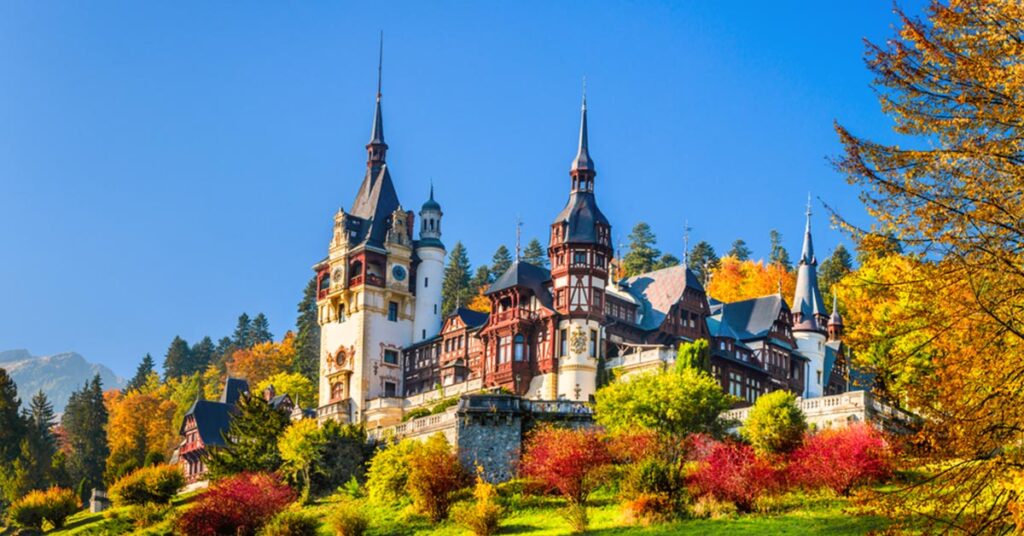
From Brașov, Sinaia is 45km south along the E60/DN1, about 40 minutes by car or direct train. Peleș Castle – the neo-Renaissance royal summer residence – is genuinely one of the most impressive castle interiors I’ve seen in Romania. Budget 2 hours minimum and book tickets in advance in peak season (July-August entry queues can be 1-2 hours).
Sibiu
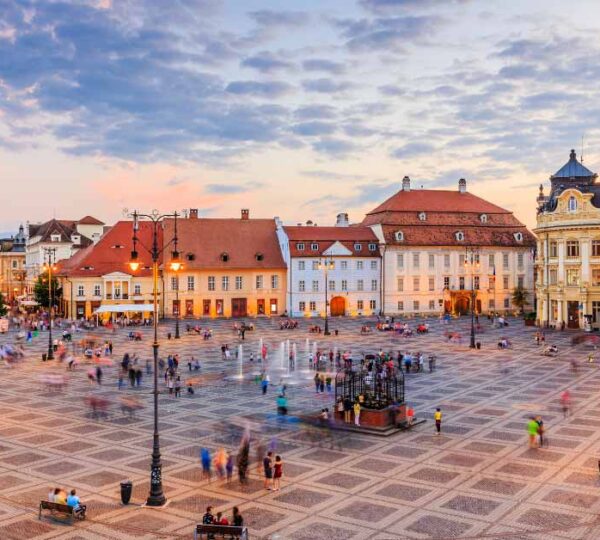
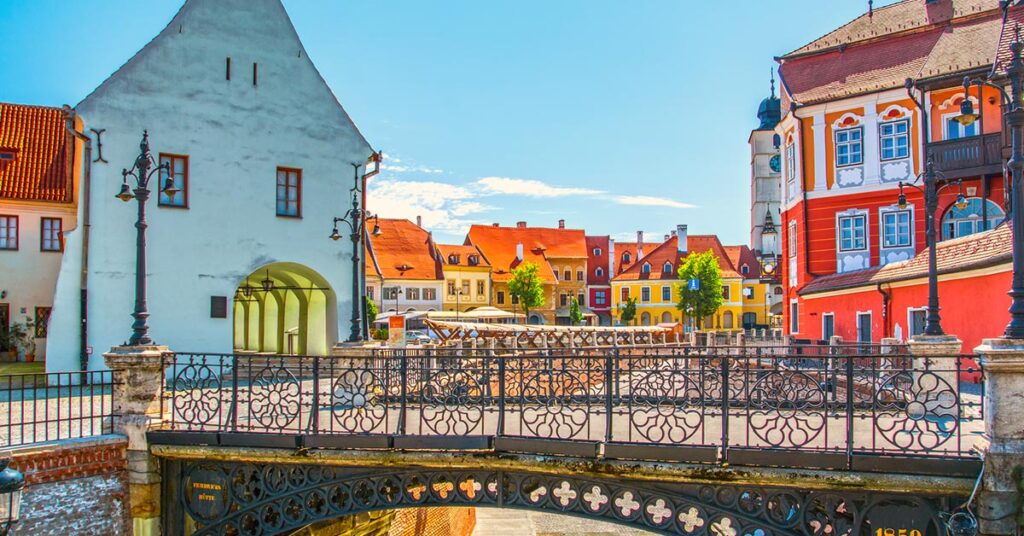
Sibiu is my personal recommendation for travelers who want depth over breadth. It’s smaller than Brașov, more authentically preserved, and has a walkable old town around Piața Mare that feels genuinely medieval rather than tourist-renovated. The Brukenthal National Museum is one of the oldest and best art museums in Romania – undervisited, unhurried, and free on the first Wednesday of each month.
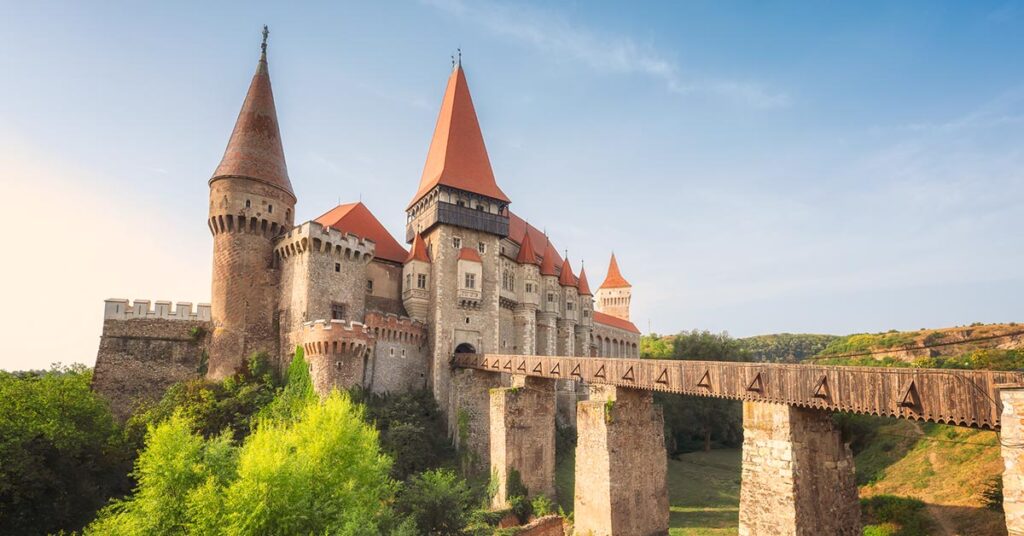
Corvin Castle (Castelul Corvinilor) is 2 hours west of Sibiu near the city of Hunedoara. Gothic towers, a functioning drawbridge, and dungeons – it’s exactly as dramatic as it sounds and consistently underrated compared to Bran. The medieval festival held here in late July is worth building a trip around if the timing works. Entry is around 60 RON for adults.
Sibiu is also the logical gateway for the Saxon villages – Biertan (UNESCO World Heritage Site), Viscri, Saschiz – and for exploring the broader Transylvania region.
Cluj-Napoca
Cluj is the largest city in Transylvania and the one that feels most alive year-round. It’s a university city – about a third of the population is students – and that energy shows in the coffee culture, the music scene, and the general lack of tourist infrastructure that can make other Transylvanian cities feel curated. If you want a base that functions as a real city rather than a travel postcard, Cluj is your answer.
The Untold Festival in early August transforms Cluj into one of the biggest electronic music events in Europe – if you’re not attending, accommodation prices spike dramatically and it’s a difficult week to be in the city.

Where to stay in Transylvania
Accommodation in Transylvania ranges from city hotels to village “pensiuni” (guesthouses) to some genuinely interesting alternative options.
Realistic price ranges:
- Budget hostel or basic guesthouse: 150-250 RON/night (~30-50 EUR)
- Mid-range guesthouse or 3-star hotel: 250-450 RON/night (~50-90 EUR)
- Boutique or 4-star hotel in Sibiu or Brașov: 450-700 RON/night
For something different: The Raven’s Nest near the Apuseni mountains offers restored 19th-century village houses with genuine outdoor access. It’s not cheap, but it’s the kind of place where guests stay two nights and extend to four. Viscri Village – a Saxon village with a UNESCO-listed fortified church – has several restored homes for rent, including Viscri 125 B&B. King Charles III has famously owned property in Viscri, which has brought attention to the area without overwhelming it (so far).
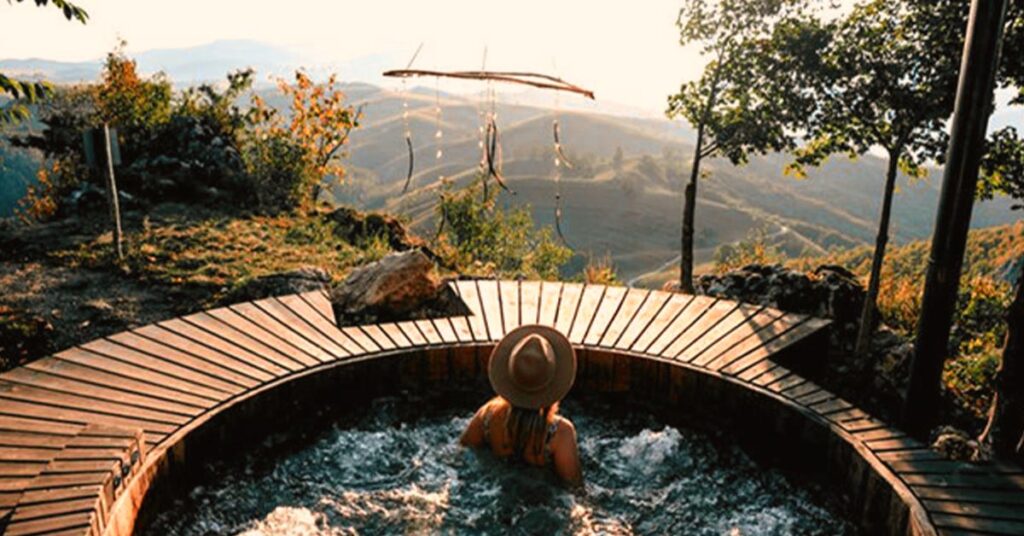
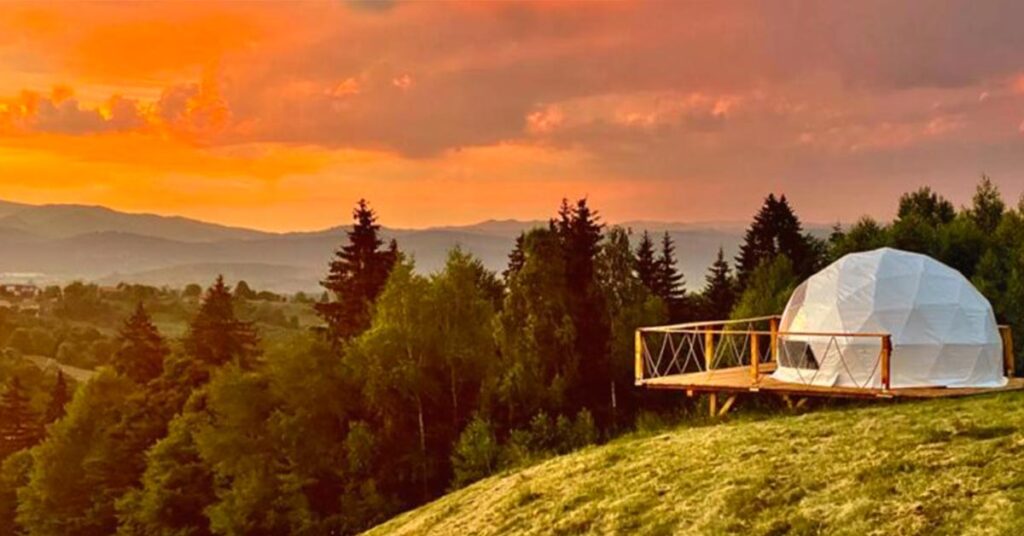
Nomad Eco Village near Brașov is an eco-glamping concept with transparent dome structures and hot tubs. Popular with Romanian couples on weekends – book well in advance for Friday and Saturday nights.
Dealu Verde guesthouse leans heavily into hobbit-house aesthetics and has become something of a phenomenon on Instagram. The themed rooms are exactly what they look like in photos.

What to eat and drink in Transylvania
Romanian food rewards the curious and occasionally bewilders the cautious. Here’s what I actually order, and what’s specific to this region.
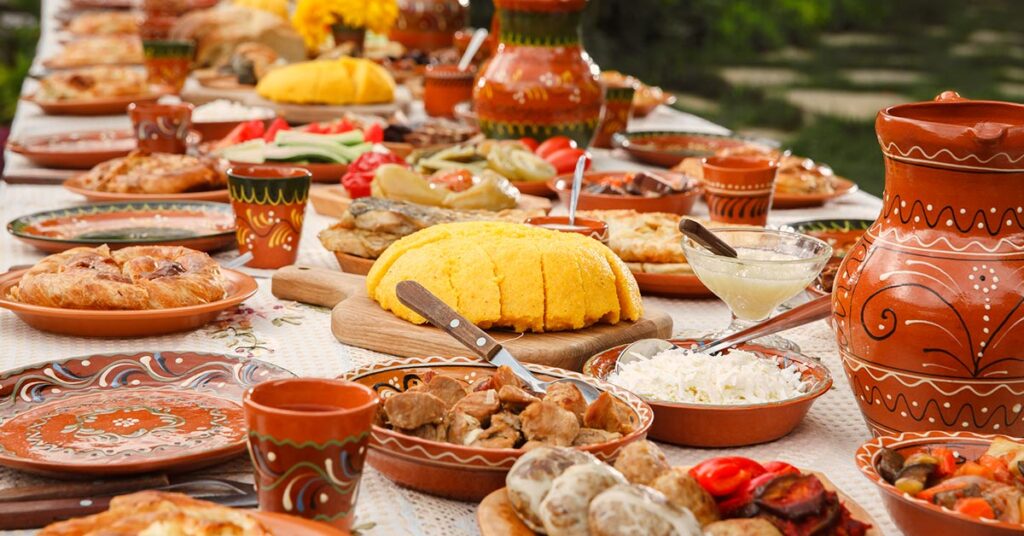
Sarmale – cabbage rolls stuffed with minced pork and rice, served with mămăligă (polenta) and smântână (sour cream). The version made with sour (fermented) cabbage is the one to seek out. Every household makes these slightly differently; a pensiune’s homemade sarmale will almost always be better than a restaurant version.
Bean soup in bread (ciorbă de fasole) served in a hollowed loaf of bread is a Transylvanian presentation you’ll see throughout the region. The smoked pork flavor in the soup comes from mostly small pieces of slănină (cured fatback) – don’t let that put you off.
Bulz – polenta grilled around a core of brânză de burduf (sheep’s cheese packed in pine bark), served with sour cream and sometimes bacon. The pine bark-aged cheese has a sharp, almost funky flavor that you either immediately love or need a second try to appreciate. Ask for it without bacon if you’re not eating meat.
Goulash – the Hungarian cultural influence is woven into Transylvanian cooking. A proper gulaș made in a bogracs (kettle cauldron) over an open fire is a different thing from what most restaurants serve. If you see it listed as a “festival dish” or “kettle goulash” cooked on-site, order it.
Papanași – fried doughnuts with sour cream and jam. The Transylvanian variant uses local fresh cheese (brânză de vaci) for a lighter texture than the national version. The version at Crama Sibiul Vechi in Sibiu is consistently excellent, as of my last visit in spring 2025.

Pălincă – double-distilled fruit brandy, usually plum (prune) or apricot in this region. Between 40-65% alcohol, typically offered as a welcome drink at guesthouses. The homemade versions from private producers are stronger than what’s commercially bottled. Drink it slowly and eat something first.
A note on vegetarian/vegan dining: Transylvania’s traditional food culture is heavily meat-based, and outside of Cluj and Brașov city centers, plant-based options are limited. Cluj has a solid enough restaurant scene (check Tripadvisor’s vegetarian filter for Brașov for options) but smaller towns require some flexibility.
The Transfăgărășan – what you actually need to know
Every guide mentions the Transfăgărășan. Most don’t tell you the practical details that matter.
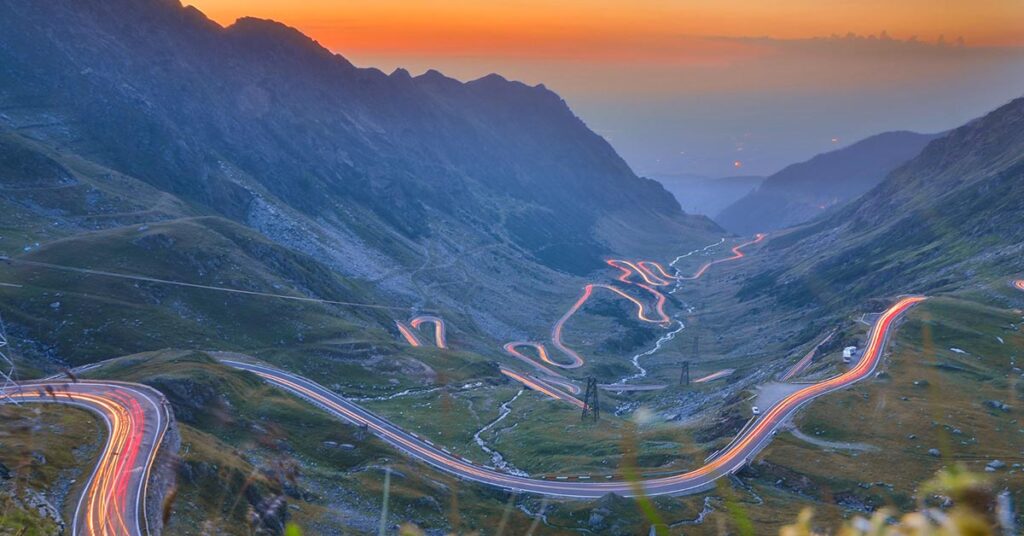
The road is closed from roughly November to late June, depending on snowpack. The specific open date varies year to year – as example, in 2024, the Bâlea Lac section opened in late June. Check the CNAIR road authority website before planning a trip around it. Do not assume it’s open because it’s summer.
The best stretch is the southern section, from the Argeș valley climbing north to Bâlea Lac at 2042m altitude. The northern descent to Cârțișoara is less dramatic. If you’re driving up from Sibiu, you’re approaching from the north – consider doing the full loop by descending south toward Curtea de Argeș and coming back a different way.
Bâlea Lac at the summit sits on a glacier cirque and has a cable car running year-round. In winter, the Ice Hotel (Hotelul de Gheață) is built fresh each season from the lake ice – rooms book out months in advance, typically 800-1200 RON/night, and the experience is genuinely unusual enough to justify it once.
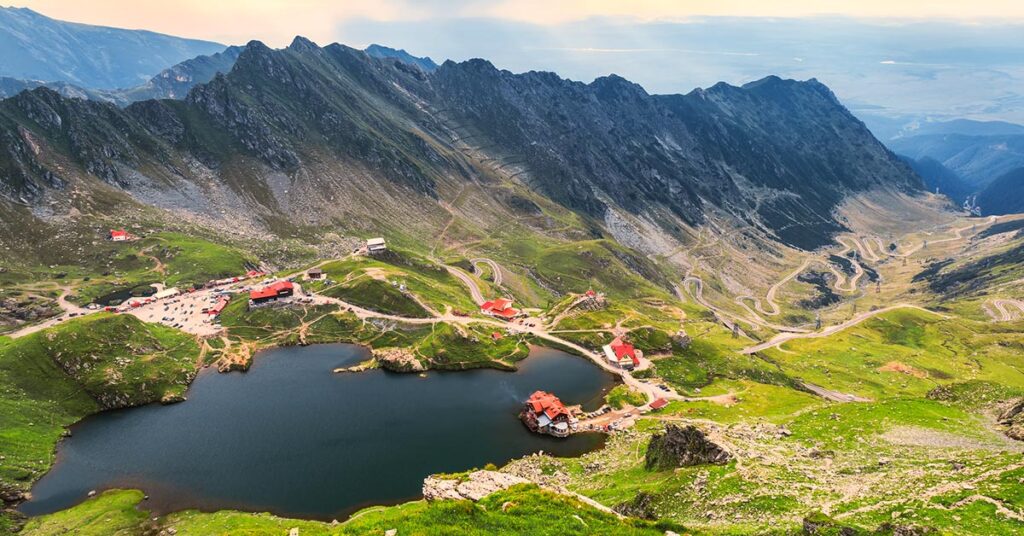
August on the Transfăgărășan is a traffic jam. Seriously – Romanian holiday season plus European road-trippers plus motorcyclists equals standstill queues at Bâlea Lac on any weekend. If you have flexibility, go on a weekday, or in September when the road is still open and the crowds thin noticeably.
Hiking in Transylvania
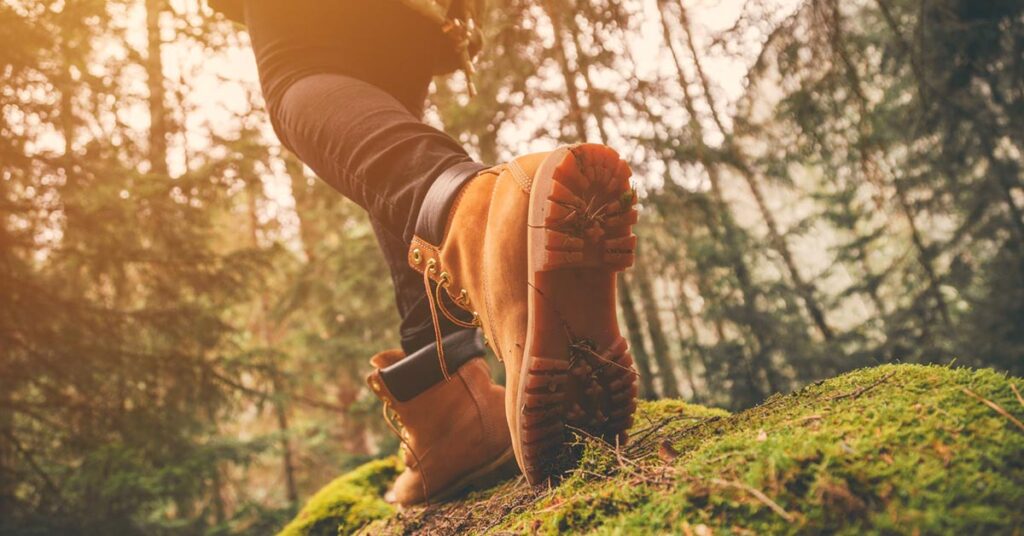
The Carpathians cross the southern edge of Transylvania, and the hiking is genuinely good – but preparation matters more here than in most alpine regions I’ve walked.
Bears are real. Romania has one of the largest brown bear populations in Europe. Most hiking trails in the Bucegi, Piatra Craiului, and Făgăraș ranges are in active bear habitat. Hiking in a group, making noise, and carrying bear spray (available at outdoor shops in Brașov) are reasonable precautions, not paranoia. I’ve encountered bears on trail twice in 20 years – neither incident was dangerous, but both required us to change our route.
Piatra Craiului National Park, accessible from Zărnești (25km from Brașov), is the best single-day or two-day hiking area in Transylvania for my money. The limestone ridge offers dramatic views and legitimate technical challenge on the north face. The marked trails are well-maintained and the park has several cabane (mountain huts) for overnight stays.
The Bucegi Plateau, accessible by cable car from Sinaia or Bușteni, offers easier high-altitude walking with extraordinary views. The plateau is essentially flat once you’re up, which makes it accessible for hikers who don’t want sustained steep climbing.
For route discovery and condition reports, Outdooractive’s Transylvania section is a reliable resource. For current trail conditions in season, the Romanian mountain rescue service (Salvamont) publishes bulletins by region.
Practical things to know before you go
Currency:
Romania uses the Romanian Leu (RON), not the Euro. Cards are widely accepted in city hotels and restaurants, but cash is essential for markets, rural guesthouses, smaller village coffee shops, and entrance fees at some smaller attractions. Get RON from a bank ATM rather than exchange counters.
Getting around within Transylvania:
The best way to see multiple areas is by car. Renting at Cluj or Brașov airport is straightforward. Road quality varies significantly – DN1 and E68 between major cities are fine; smaller county roads (DC- and DJ-designated routes) to villages range from decent to rutted. Google Maps sometimes routes you through village roads that don’t match their description in wet weather.
Connectivity:
Romania has genuinely fast mobile internet and widespread Wi-Fi. A Romanian SIM (Digi or Orange) will cost around 30-50 RON for a month with a data package – practical if you’re spending more than a week.
When to go:
- May-June: Best for hiking, green landscapes, fewer crowds, Transylvanian wildflower meadows at peak bloom. My top recommendation.
- July-August: Hot, busy, expensive at peak destinations. Worth it if your schedule requires it; just book accommodation months ahead.
- September-October: Excellent. Autumn color starts in late September, wine harvest season is active in Dealu Mare to the south, and the Transfăgărășan is still open through mid-October typically.
- December-February: Ski season. Christmas markets in Sibiu and Brașov (late November-December) are legitimately atmospheric, not just tourist spectacle.
Wi-Fi speed:
Romania consistently ranks among the fastest in Europe for fixed broadband and mobile data. Digital nomads travel specifically for this. It’s not a selling point anymore – it’s just the baseline.
If you’d like broader context before planning, our article on when to visit Romania and Bulgaria covers seasonal patterns in more detail.

The Libearty Bear Sanctuary in Zărnești
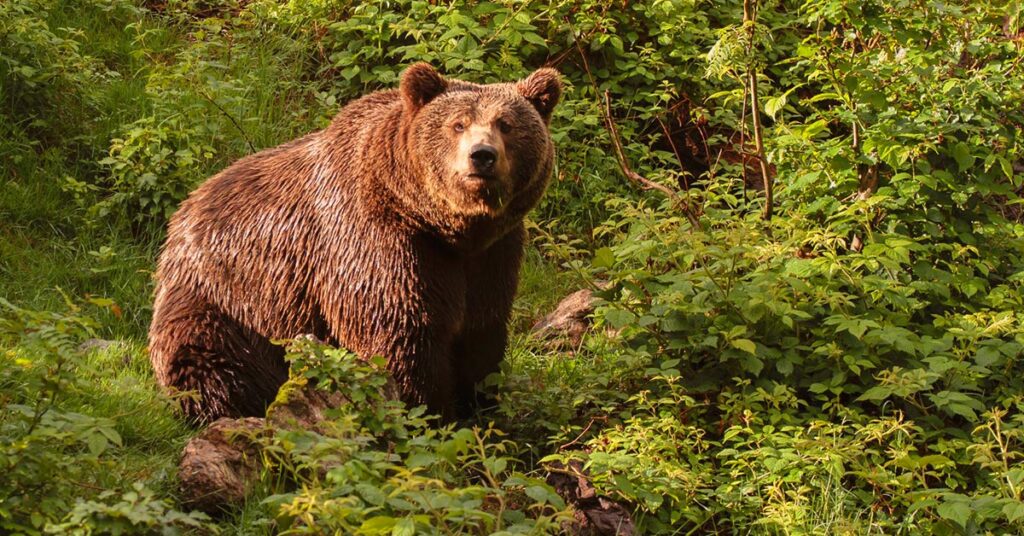
One stop I recommend adding to any Transylvania itinerary – especially for families or anyone who cares about animal welfare. Libearty Bear Sanctuary in Zărnești (about 30km from Brașov) is the largest brown bear sanctuary in the world, housing bears that were rescued from captivity – circus bears, bears kept in concrete pits at roadside restaurants (a practice that existed across Romania for decades), bears confiscated from illegal owners.
A visit takes 2-3 hours with a guide who walks you through the forested enclosure. The bears roam freely across a large reserve; you watch from elevated walkways. Entry is around 55 RON for adults. No bear touching, no performances, no spectacle – just large animals living in something approaching their natural behavior. It’s moving in a way that’s hard to predict before you go.
You can also add the sanctuary as part of a Balkan Trails tour add-on alongside broader Transylvania itineraries.
Booking a tour versus traveling independently
Both work. The honest comparison:
Independent travel is feasible in Transylvania with a rental car, reasonable logistical patience, and some Romanian or German (Saxon heritage means German signage is common in villages around Sibiu). You’ll have full flexibility, and the region is safe enough that traveling solo or as a couple poses no real concern. Romania is genuinely safe to travel, and Transylvania specifically has minimal petty crime compared to most of Western Europe.
Guided private tours pay off when you want to go beyond the obvious – to the Saxon villages with a local who can introduce you to a family, to a hike with someone who knows the bear activity patterns, or to understand why a specific castle matters in ways that no information board will explain. Our Transylvania tours are entirely private – you won’t be sharing a bus with 30 strangers. Two of the most requested are the Citadels of Transylvania tour (covering major fortresses and UNESCO Painted Monasteries) and the Dracula Tour (which, to our satisfaction, also visits Poenari and not just Bran).
We also offer add-ons – gastronomy experience, bear sanctuary visits, wine tastings – for people who want specific experiences outside the standard itinerary.
If you have questions about building an itinerary, the most useful thing I can point you to is our guide on how to plan an affordable trip to Romania and Bulgaria – it covers budgeting, timing, and how to think about the logistics without having to piece it together from scratch.
Transylvania doesn’t require much convincing once you’re there. The harder part is usually the first step – deciding where to start. I hope this gives you enough to make that call.