What is experiential travel?
So what actually separates experiential travel from a normal tour? For us at Balkan Trails, it comes down to one thing: how much time you give yourself to stop being a spectator and start being somewhere. Not a country glimpsed through a bus window, but one where you sat down, ate something you couldn’t pronounce, and talked to someone whose day didn’t revolve around your itinerary.
I’ve spent enough seasons guiding groups through Transylvania and the Rhodopes to notice a pattern: the trips people still talk about years later are rarely the ones where we hit every stop on the list. They’re the ones with room for a detour – a shepherd who waved us over near a sheepfold, a grandmother rolling sarmale in her kitchen on a Sunday, a mountain pass that took twice as long as planned because we kept stopping to look.
This shift is part of something bigger happening across travel generally. More travelers now look for connection instead of just collecting sights – conversations over crowds, meals over monuments, real moments over photos. Research on the benefits of experiential travel backs this up: travelers who engage this way tend to come away with a deeper understanding of local culture and stronger relationships with the people they met.
The Balkans reward this kind of travel in ways that are easy to miss if you’re moving fast. In Romania, it might mean sitting through a Sunday service in a fortified Saxon church that’s still a parish church, not a museum exhibit. In Bulgaria, it might mean getting invited to an imen den, a name-day party that for most Bulgarians matters more than a birthday, and realizing you just happened to be there. Well-planned trips can turn this into something structured without flattening it into a checklist.
Experience over just a route: the essence of experiential travel
Traditional touring means visiting the major sights, sticking to a set schedule, and packing in as much as possible. Experiential travel goes deeper instead of farther, and it cares more about the story behind a place than about crossing it off a list.
Traveling for the experience can take several shapes:
- Cultural immersion, through traditions, food and everyday life
- Nature-based journeys, where landscapes are explored slowly and with context
- Purpose-driven travel, built around responsible interaction with local communities
- Creative experiences, rooted in food, crafts and artistic expression
I’ll say this plainly: most “authentic experience” add-ons marketed across the region are staged tastings in restaurants built for tour buses. That’s not what we’re talking about here. The common thread in genuine experiential travel is time to be curious, have conversations, and actually reflect on what you’re seeing, instead of just observing it.
This form of travel also benefits the communities you’re passing through: choosing local hosts and small workshops over chain hotels means more of what you spend actually stays where you spent it.
I’d take a two-hour lunch with a family in Maramureș over a four-stop “highlights” day any time, and I tell guests that upfront when we’re planning their route. A good example of building a trip around this idea is our Experience Romania tour: instead of rushing between the main sights, it’s built around tradition, food and daily life, while still covering the country’s major landmarks along the way.
Sensing a place: food, people, stories
Food is one of the fastest ways to actually get to know a place. On our trips, meals aren’t breaks between activities, they’re the activity. Eating where locals eat and sharing a table in someone’s home turns food into a way to understand culture, not just a way to fill time between stops.

In Romania that usually means mămăligă with a fried egg and sour cream, sarmale simmered for hours, or papanași for dessert if there’s room left. In Bulgaria it means a shopska salad that tastes nothing like the tourist-menu version, banitsa warm from the oven, and rakia poured by someone who made it themselves, not the version sold at the airport. Away from the Black Sea resorts, that same food typically costs 30 to 50 percent less than a few streets back from a beach in July. Equally important are the people behind these meals – conversations with hosts and artisans add depth no guidebook can, and surface stories that rarely make print.
Experiential travel puts more weight on these story-filled moments than on famous views. Travelers are welcomed into kitchens, workshops, villages and family-run places where culture isn’t performed, it’s just how the day works.
Balkan Trails builds specific experiences around this idea, including:
- Romanian Gastronomy in Sibiu
- The Mocănița steam narrow-gauge train in Maramureș, Romania
- Discover Szekely Land, a regional add-on into Romania’s Székely communities
The Romanian Gastronomy in Sibiu experience shows how food can explain a place’s identity better than a museum can. If you’re curious about the wider food scene beyond that one tour, our Romanian cuisine tour guide goes into more of the dishes and regional differences. Travel anywhere in the region and you’ll notice fairly quickly that food carries as much of the story as any monument does. The same holds on the Bulgarian side – our culinary tours overview covers the equivalent dishes and experiences there.
Landscape as narrative in experiential travel
In experiential travel, landscape isn’t a backdrop, it’s part of the plot. Mountains, valleys, rivers and passes shaped how communities grew and which traditions survived. Travel through the Balkans and the terrain keeps telling you things:
- Mountain ranges that preserved local identity and customs
- Passes that connected cultures and trade routes for centuries
- Roads that reveal how geography and history are tangled together
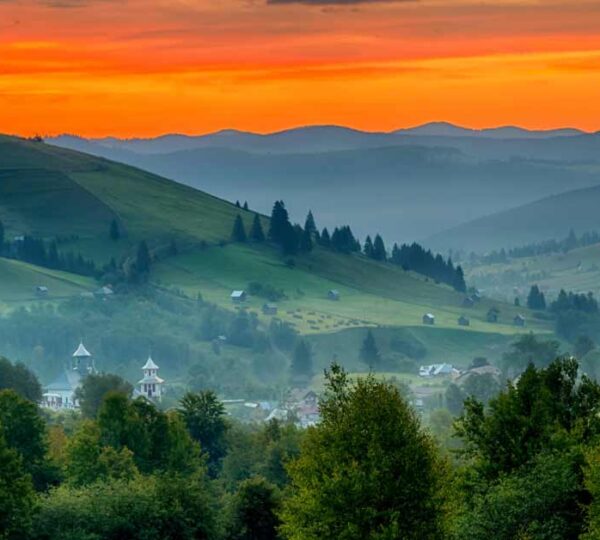
Some of the most meaningful moments on a trip are the quiet ones: a slow drive through a mountain pass, snow falling over an old town square, the calm of a valley at sunrise. These aren’t breaks from the journey, they are the journey.
Take the Transfăgărășan road in Romania: officially DN7C, cut through the Făgăraș mountains between Wallachia and Transylvania in the early-to-mid 1970s. It climbs past Bâlea Lake near the highest point of the route and closes for winter every year, usually from late October into June depending on snowfall – check current status before planning around it, since exact dates shift yearly.
In Bulgaria, the same idea shows up at the Shipka Pass, crossing the Balkan range between the Rose Valley and Gabrovo, a site with as much history as scenery: it was the ground of a major battle in the 1877-78 war for Bulgarian independence.

How to travel experientially (practical guide)
Before you go
- Learn a bit of cultural context and everyday customs. Locals notice, and appreciate, when a visitor tries even a single word in their language.
- Pick up simple language basics: a polite “mulțumesc” [mool-tsoo-mesk] (“thank you” in Romanian), a joyful “Nazdrave!” [nah-zdrah-veh] (“cheers”, also said after a sneeze, in Bulgarian), or “paçim” [pah-cheem] (“goodbye” in Albanian).
- Set intentions before you land: what do you want to feel, not just see. Hold your itinerary loosely.
On the road
- Pick fewer places and spend more time in each. Stay at a local guesthouse – a “pensiune” in Romania typically runs 100 to 250 RON a night depending on region and season, often less than a mid-range hotel nearby, with breakfast made that morning instead of pulled from a buffet. Talk to your host – they almost always know more about the area than any guidebook.
- Eat locally and pay attention to daily rhythms. Hospitality across the region tends to work the same way: people like sharing their time, food and stories, and you’ll usually be waved in to join rather than just served.
- Take a walk with no set plan. Let go of the day’s goals for an hour and just watch how a place actually runs.
- Ask questions and stay curious. Most people in tourist areas speak some English, and people across the Balkans tend to be generous storytellers once you show real interest.
- Keep a journal or take notes. Photos capture what a place looked like; notes capture what it felt like.
After the journey
Experiential travel doesn’t end when you land back home. Reflecting on the trip, by writing, talking, or just thinking it through, is what turns a set of moments into something you actually carry with you. The notes you took on the road make that possible later.
Balkan Trails tour highlights as experiential travel models
Here are a handful of routes and add-ons from our own catalogue that show what this approach looks like in practice.
Experience Romania
If you want a single, comprehensive trip into Romanian tradition, food and everyday life, this is the one we’d point you to. It covers how Romanians actually live, eat, celebrate and mark loss, alongside the country’s major landmarks – not instead of them.
Discover Szekely Land: Europe’s uncommon and mysterious hidden gem
Szekely Land, or Ținutul Secuiesc, covers Harghita and Covasna counties in eastern Transylvania: home to a Hungarian-speaking Székely community with its own dialect, carved wooden gates outside many homes, and dishes like Székely gulyás you won’t find on menus elsewhere in the country. The Discover Szekely add-on gets you into that world, and pairs with Romania Revealed, Best of Bulgaria and Romania, Bulgaria and Romania Revealed, the Dracula Tour in Transylvania, and Highlights of Bulgaria and Transylvania. Most itineraries skip this region entirely, which is part of why it tends to stick with people. For more on the wider region it sits in, our Transylvania travel guide is a useful starting point.

Experience Romanian gastronomy in Sibiu
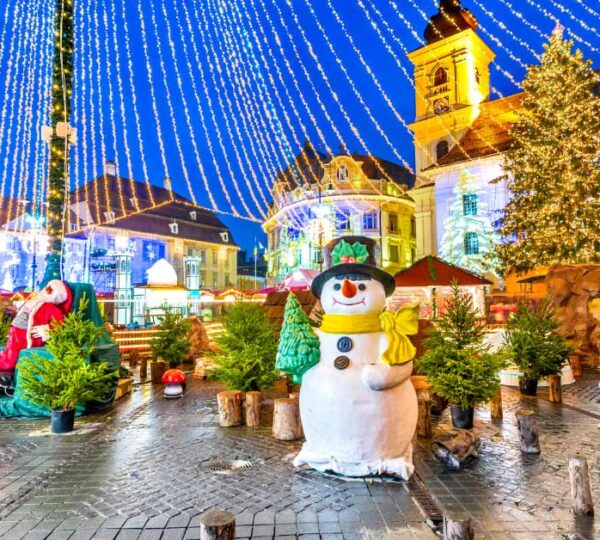
If you want a food-focused way into Romanian culture and history, this add-on is built for that. Sibiu itself is worth extra time on its own – Piața Mare, the main square, and the Bridge of Lies are both worth seeing before or after the food stops. It pairs with:
- Best of Romania
- Romania Revealed
- Best of Bulgaria and Romania
- Bulgaria and Romania at a Glance
- Bulgaria and Romania Revealed
- Dracula Tour in Transylvania
- Highlights of Bulgaria and Transylvania
- Romania at a Glance
- UNESCO Painted Monasteries of Bucovina
Our guide to Sibiu covers the rest of the city beyond the food stops, if you want to build in extra time there.

Mocănița narrow-gauge train
A slow journey through landscape and tradition, where the movement itself is the point – this is Mocănița, the narrow-gauge train of more than 100 years. It runs on the old forestry line through the Vaser Valley out of Vișeu de Sus, one of the last working steam logging railways left in Europe. You can add this experience to:
- Best of Bulgaria and Romania
- Best of Romania
- Bulgaria and Romania Revealed
- Romania Revealed
Maramureș is also home to the Merry Cemetery in Săpânța and several of the region’s painted wooden churches. Our Maramureș and Bucovina guide covers the rest of what’s worth building a trip around.
All these routes and add-ons point to the same thing: moving at your own pace, staying present, and making connections that go beyond checking off a list. If you’d rather have someone local handle the logistics, our piece on why book through a local operator explains what that actually gets you.
Travel as transformation
Experiential travel means moving from seeing a place to actually understanding it. It asks you to slow down, get involved, and stay open to whatever wasn’t on the plan.
In the Balkans, that pays off. Culture here isn’t kept behind glass, it shows up in homes, markets, landscapes and daily rituals that were never built for an audience.
If you want to go beyond the usual checklist, that’s what a Balkan Trails trip is built for: routes shaped by stories, culture and real connection, not by how many stops you can fit into a day.