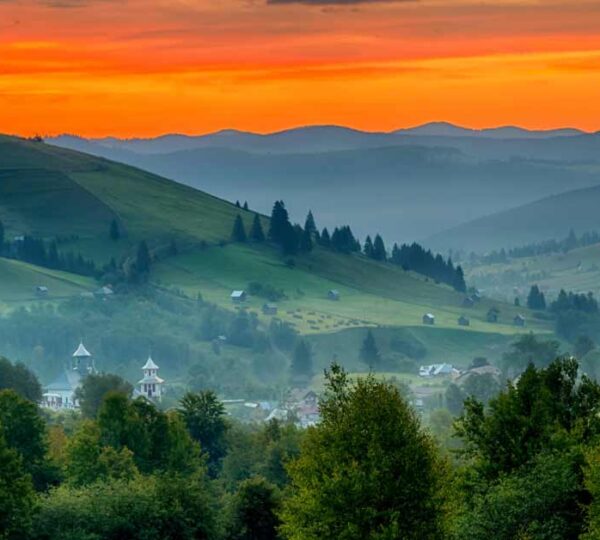
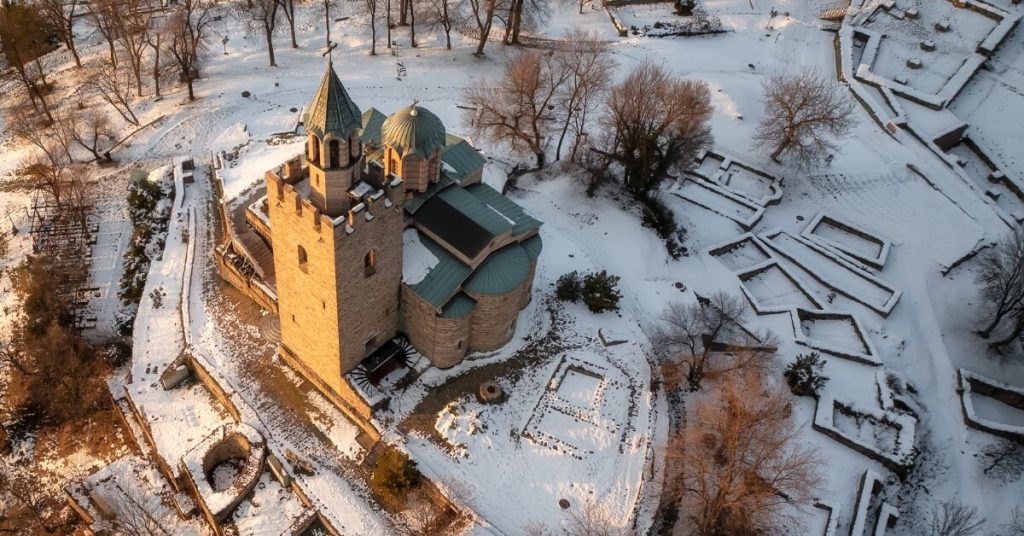
If you want a deeper taste of winter and a reason to stand somewhere history actually happened, the snow-covered castles and fortresses of Romania and Bulgaria are hard to beat. From a distance they’re just dark shapes on a white hillside. Up close, they’re places where empires clashed, kings were crowned, and a few genuinely strange legends took root behind very thick walls.
Romania and Bulgaria have more of these than most travelers expect, and winter is when they show a different side of themselves. Without the July queues, you can walk a courtyard in near silence, hearing mostly your own boots on the snow. It does get cold – properly cold, not “bring a light jacket” cold – so plan for real winter gear: waterproof boots with grip, since stone steps and rock paths ice over and some of these sites involve genuine climbing, not flat sightseeing. Our winter packing guide covers what’s actually worth bringing, season by season.
Here are five fortresses and castles I send winter groups to most often – three in Romania, two in Bulgaria, picked because each one shows a different side of the region’s history rather than repeating the same story five times.
1. Belogradchik fortress, Bulgaria
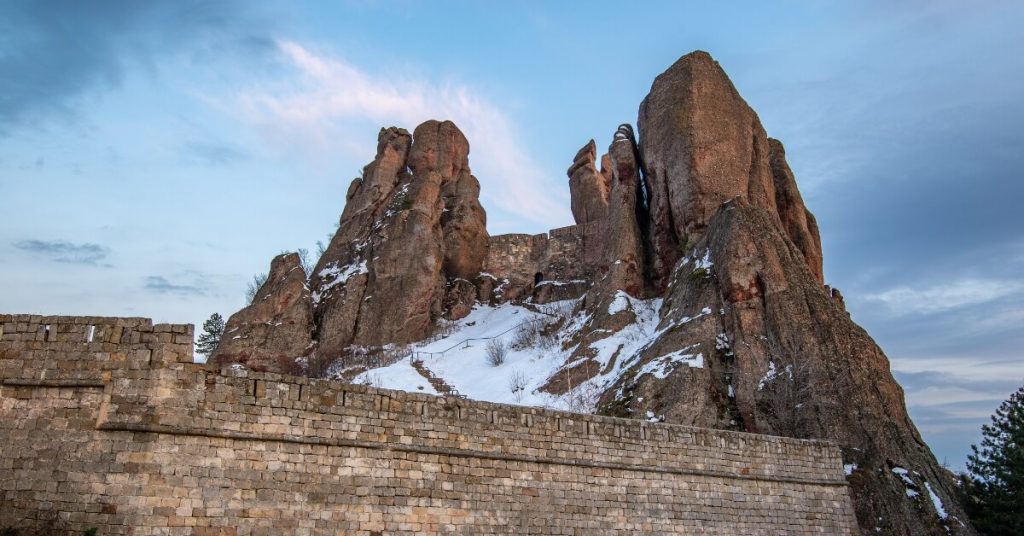
Winter is arguably the best time to see Belogradchik. My wife Zoe grew up a few hours from here and still calls it one of the strangest, most striking places in the country – and I agree. January and February bring real snow to this part of northwestern Bulgaria, enough to turn the reddish rock formations white on top and rust-colored underneath. The paths up to the fortress walls run over natural rock and can genuinely ice over, so this isn’t a stroll in dress shoes – decent boots make a real difference here.
What makes Belogradchik unusual is that it isn’t really a built fortress in the normal sense. Unlike Tsarevets in Veliko Tarnovo, which is a hill fortified with walls, Belogradchik’s builders worked the other way around: they wedged the defensive walls directly into a set of massive natural rock pillars, using the rock itself as part of the structure. Romans, then Ottomans, then Bulgarians all held this position at different points and each left something behind.
The oldest layer is a Roman watch post; Bulgarians expanded it into a real fortress in the 14th century; most of what still stands today, including the outer walls you actually walk along, is Ottoman work from the rebuilding around 1805 to 1837. In winter the vertical red rock stands out hard against the snow, and it’s genuinely one of the more unusual sights in Bulgaria.
A short distance away is the Magoura Cave, and it’s worth the detour. It holds prehistoric paintings, some showing hunting scenes and what’s believed to be a solar calendar, and it’s been on UNESCO’s tentative World Heritage list since 1984. Inside you’ll also find the Fallen Pine, one of Bulgaria’s largest stalagmites. Driving from Sofia, it’s roughly a three-hour trip through Vidin, so this works best as an overnight stop rather than a day trip if you’re also planning to see Sofia or Veliko Tarnovo on the same route.
2. Corvin Castle, Romania
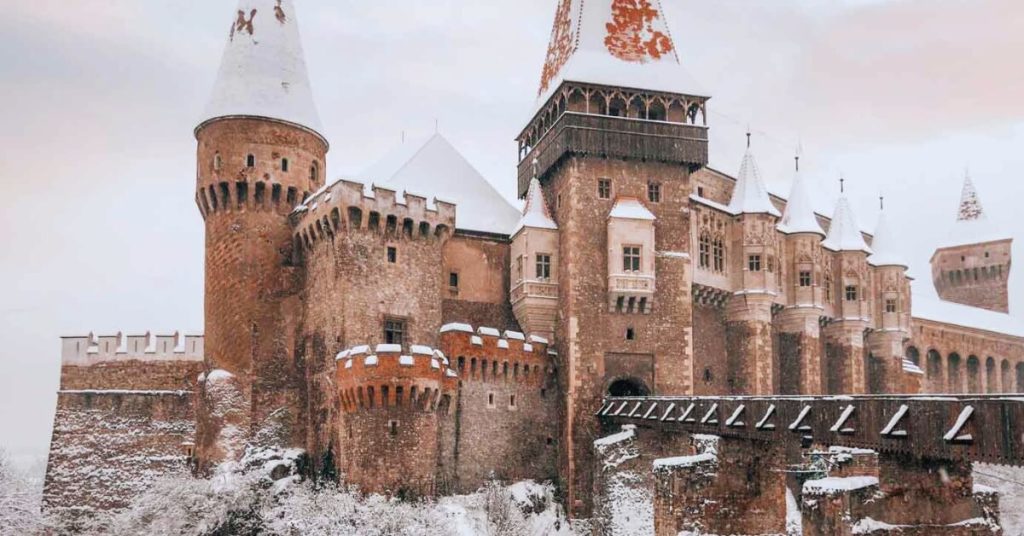
Corvin Castle, also called Hunyadi Castle, rises above Hunedoara and was once home to Matthias Corvinus, the Hungarian king. Its core dates to the 14th century, though most of what you actually see and walk through today was built up in the 15th century under John Hunyadi. Winter is when it earns its reputation: snow on the towers, cold air moving through the courtyards, and none of the summer tour-bus crowds to break the mood.
Inside, the Knights’ Hall is the highlight – red marble columns with floral carvings and noble crests dating to the 15th century. You reach the castle itself over a stone bridge with covered wooden arcades, built later to replace the drawbridge that used to span the ravine – it’s a small detail, but it’s the first thing that makes the castle feel more like a fortress than a museum. Beneath the castle sits its best-known legend: that Vlad the Impaler, the historical figure behind Dracula, was imprisoned here. There’s no solid documentary proof, but standing in the lower halls on a grey winter afternoon, it’s easy to see why the story stuck.
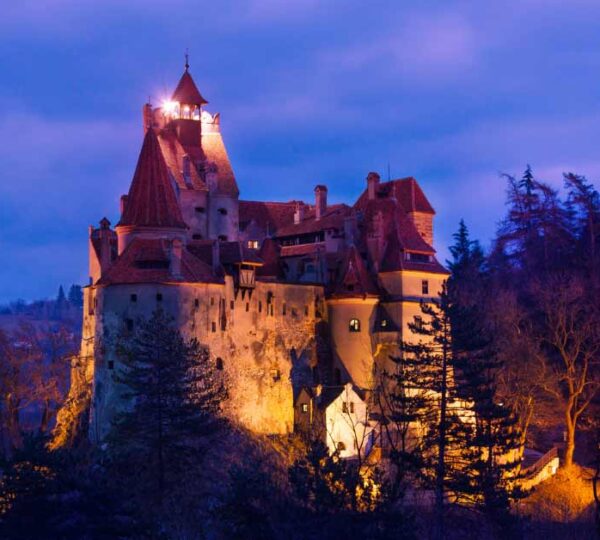
Here’s the detail most visitors don’t know: Bran Castle gets marketed as “Dracula’s Castle,” but its actual link to Vlad the Impaler is thin at best. Corvin Castle’s connection, while still legend rather than fact, is the stronger of the two by most historians’ accounts. If you’re chasing the Dracula story specifically, our guide to Bran Castle covers what that castle actually offers versus what the marketing promises.
Corvin sits roughly 330 km from Bucharest, about four and a half hours by car, but only around two and a half hours from Cluj-Napoca, which makes it a much easier add-on if you’re already routing through Transylvania. Winter opening hours run shorter than summer, so check the current schedule before building your day around it.
3. Cantacuzino Castle, Romania
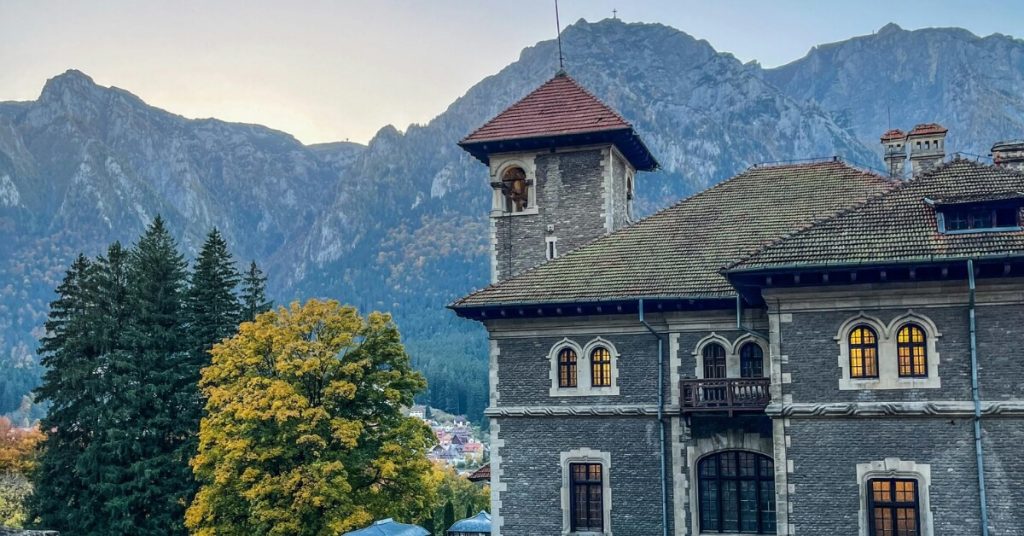
If you want a winter castle visit that comes with actual relaxation built in, Cantacuzino is the one. It sits on a wooded hill above Bușteni, with the Bucegi Mountains rising behind it, and the walk up from town is short enough that it becomes part of the visit rather than a chore.
Worth knowing before you go: the DN1 road through the Prahova Valley toward Bușteni and Sinaia is the same road everyone takes to reach Poiana Brașov, Predeal and the other ski resorts, so winter weekends can mean real traffic. Aim for a weekday if your schedule allows it. Once you’re there, take your time – the grounds are genuinely nice for a slow walk, and the on-site café is a legitimate reason to linger, not just a gift-shop afterthought. You can get a hot tea and a plate of ciorbă de legume or sarmale with polenta while looking out at the mountains through the windows.
The castle was built in 1911 for Prince Gheorghe Grigore Cantacuzino, and the grounds still have their winding paths, fountains, statues, a small cave, and genuinely good mountain views. Where Corvin is medieval and a little brooding, Cantacuzino is Belle Époque and romantic – tall painted halls, arcades, stained glass, a marble staircase – so if you’re doing both castles on the same trip, the contrast is part of the point rather than repetition. White stone fireplaces and period furniture round out the interior, and it’s considered one of the best-preserved castles of its kind in the country.
As a more recent footnote, some scenes from Netflix’s Wednesday were filmed here. The valley has been drawing visitors long before Netflix showed up, mostly just for the mountain views. Since Bușteni sits right next to Sinaia, most guests combine the two – our guide to Sinaia covers Peleș Castle and the rest of the town if you want to build a fuller day out of it.
4. Tsarevets Fortress, Bulgaria
Tsarevets might be the single best winter argument on this list. Summers here get hot and genuinely crowded; winter turns the same hill into something closer to a private history lesson. Snow softens the stone, mist sits over the hill in the mornings, and the cold has a way of making the history feel more immediate rather than less.
The fortress sits 206 meters above sea level on Tsarevets Hill in Veliko Tarnovo and was the seat of the Second Bulgarian Empire. You enter through the same eastern gate nobles and soldiers once used, and in winter, with almost nobody else around, walking past the internal walls, battle towers and palace ruins genuinely feels like private access rather than a tourist route. Ask about Baldwin’s Tower while you’re up there – it’s named for Baldwin I of Constantinople, who according to local tradition was held prisoner in it after being captured in battle in 1205. Zoe’s family used to bring her here as a kid, and she still says the view from that end of the complex, looking toward the Yantra River bend, is the best sunset spot in town.
From the walls, Veliko Tarnovo spreads out below with the Yantra River cutting through it and the hills fading into pale winter color. At the northern end of the hill, look for Execution Rock, a sheer drop over the river where convicted traitors were reportedly thrown during the empire’s darker stretches – it’s a grim footnote, but it’s the kind of detail that makes the site feel like a real place with a real history rather than a backdrop. The famous Light and Sound Show only runs in the warmer months, so you won’t get that in winter, but what you get instead – space, quiet, nobody rushing you – is arguably the better trade. The fortress was restored between 1930 and 1981 to mark 1300 years since Bulgaria’s founding as a state, and in winter it still reads less like a monument and more like an actual place you’re allowed to walk through.
It’s about two and a half to three hours from Sofia by car, and worth budgeting extra time – the hill is exposed, and it’s noticeably windier and colder up on the walls than it is down in the town, so dress for that difference specifically. Our guide to Veliko Tarnovo covers the rest of the town if you’re staying more than an afternoon.
5. Palace of Culture, Iași, Romania
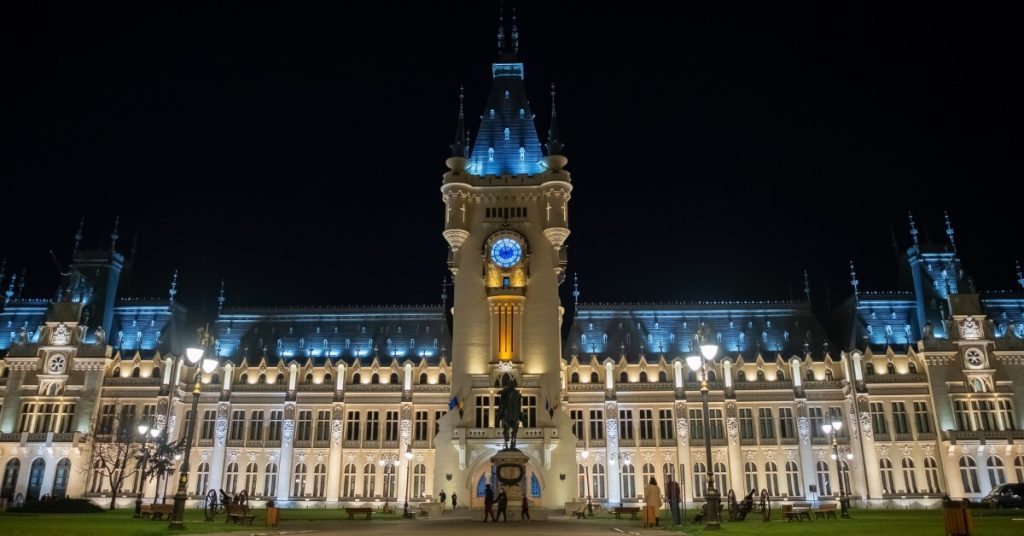
Not every winter highlight has to be a mountain fortress. The Palace of Culture sits right in central Iași, next to one of the city’s biggest malls, and it’s proof that winter drama works in a city center too – its neo-Gothic façade against a grey sky or a fresh layer of snow is its own kind of striking. January and February give you the best odds of snow on the ground for photos; December trades that for Christmas lights and a livelier street atmosphere, so pick based on which you’d rather have.
It’s the clear symbol of Iași, built in the early 20th century, covers more than 7000 square meters, and took close to 20 years to finish. It’s also a genuinely practical winter stop precisely because it’s indoors and in the city – no mountain roads, no exposed hilltop walking, which matters if the weather turns while you’re traveling through eastern Romania.
Inside, the Hall of Honor is the obvious first stop: stained glass, imperial arches, a chess-pattern mosaic floor, and a grand staircase in white Carrara marble. The Hall of Voivods, on the first floor, is arguably the more moving room – portraits of Moldavia’s rulers from the 12th to 16th centuries line the walls, and a marble chimney topped with a symbolic tree carries their portraits up through its branches. Henri Coandă Hall, once the Jury Court from the building’s years as the Palace of Justice, was modeled on London’s Westminster Hall and has the same solemn weight. The Clock Tower is open to visitors and gives you a rooftop view over Iași that’s worth the climb.
Beyond the halls, the palace also houses the History Museum, the “Ștefan Procopiu” Science and Technical Museum, the Art Museum and the Ethnographic Museum. If you’re building a trip around Iași specifically, our complete guide to visiting Iași covers what else is worth your time in the city, plus how to get there from Bucharest – it’s a long drive at roughly 400 km, so most people fly or take the train instead.
See Romania and Bulgaria in winter
Winter shows a quieter side of both countries. Snow softens the landscape, makes the architecture more dramatic, and turns these five stops – plus countless monasteries, mountain villages and medieval towns beyond them – into something worth the cold. With smaller crowds and less rush, you get to actually look at these places instead of moving past them.
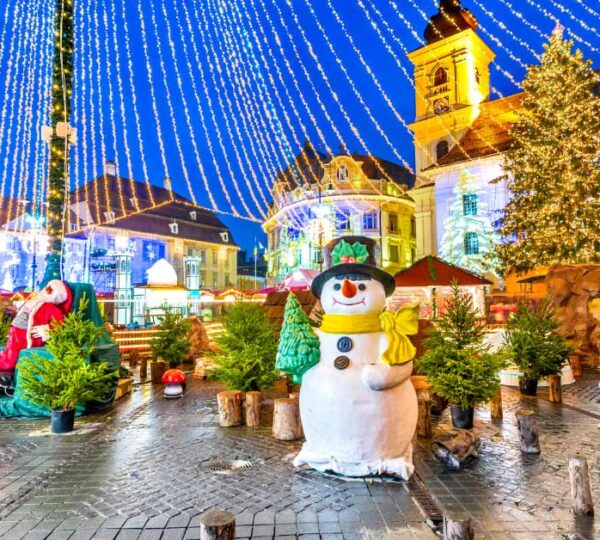
It’s also one of the better times to run into real winter food and customs: mulled wine (vin fiert) at Christmas markets in Sibiu or Brașov, hearty soups on cold days, and the kind of local hospitality that has more room to breathe once the busy season ends. Our guide to Romanian and Bulgarian winter traditions goes deeper into what that actually looks like on the ground.
None of this needs a packed itinerary. One or two of these stops, done properly and with time to actually stand in them, beats rushing through all five in a week.
If any of this has you thinking about a winter trip, get in touch with us and we’ll build a cold-season route around whichever of these places actually interests you.