I’ve driven the loop between Sibiu, Sighișoara and Brașov more times than I can count, and Biertan is still the stop I look forward to most. This guide covers the Saxon villages I take our guests to, plus a few I only visit on my own time because, honestly, they’re not really built for groups.
Transylvania’s fortified church country is bigger than most guides let on. Over 150 fortified churches still stand across the region, built between the 13th and 16th century by Saxon farmers who needed somewhere sturdy to store grain, hide livestock and shelter their families when Ottoman or Tatar raiding parties came through the valley.
Only seven made it onto the UNESCO World Heritage list – Biertan was inscribed alone in 1993, then six more were added in 1999: Câlnic, Dârjiu, Prejmer, Saschiz, Valea Viilor and Viscri. I cover six of those seven below. Câlnic and Dârjiu sit further out, in Alba and Harghita counties, and deserve their own guide rather than a rushed mention here. Alongside them I’ve included five villages that never made the UNESCO list but that I still send people to, because a fortified church surrounded by working farmland tells you more about this region than one surrounded by tour buses.
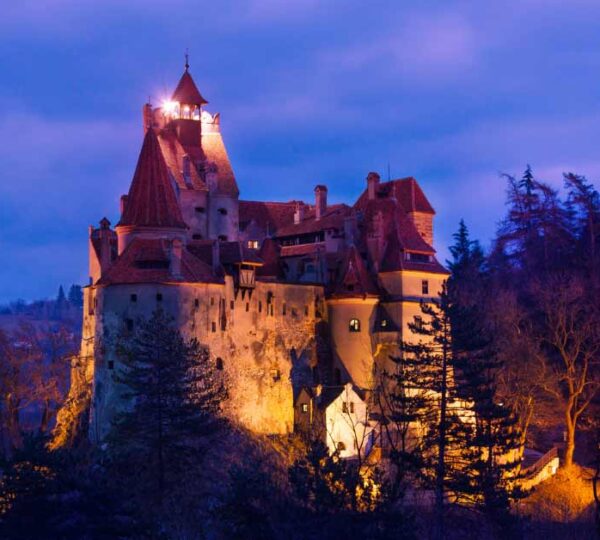
One thing worth clearing up first: if you came looking for turrets and gift shops, that’s Bran, not this list. Bran Castle is a different kind of attraction, and I’ve written about it separately. The villages below are working farming communities where the fortified church was, for centuries, the only building sturdy enough to survive raids, fires and later two world wars. Rolling hills, yes. But also mud in March, silence in November, and a version of Transylvania that has almost nothing to do with Dracula.
The wider farmed landscape here gets cited often in conservation literature – low-intensity hay meadows and orchards supporting species long gone from Western Europe’s farmland. Conservation groups put the area at roughly 300000 hectares, with around 100000 people across some 150 villages, though the figures shift depending on the boundary drawn – still shaped by small farms rather than agribusiness, which is why the villages look the way they do.
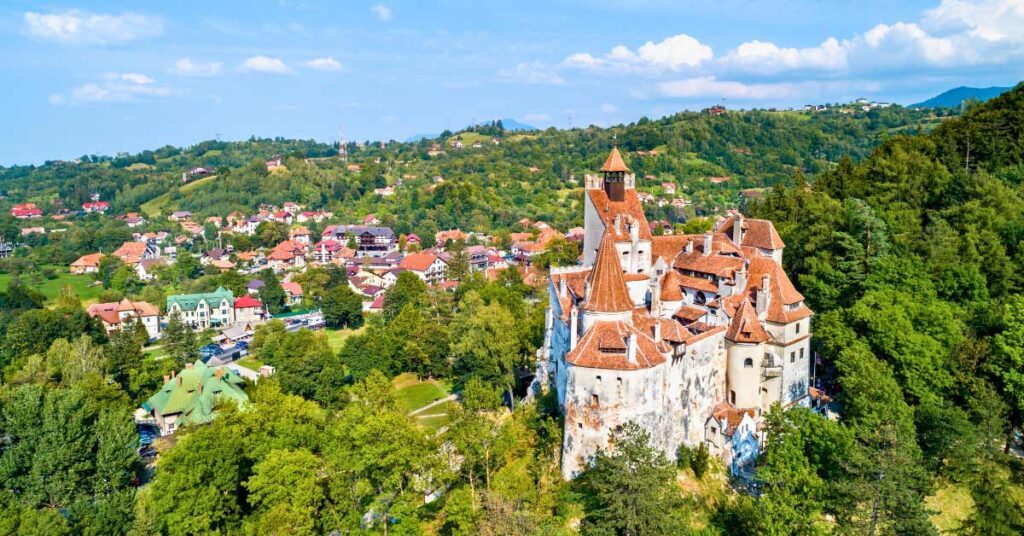
Bran Castle in Bran
How I’d actually plan a Saxon villages trip
You need a car for most of this. Sighișoara, Prejmer and Hărman have train or local bus connections, and Cisnădie has a local bus from Sibiu, but nothing links the villages to each other. If you’re renting, plan around three bases: Sibiu for Biertan, Valea Viilor, Cisnădie and Cisnădioara; Sighișoara for Saschiz and Mălâncrav; Brașov for Prejmer, Hărman, Rupea and Viscri.
A single day from Sibiu can realistically cover Cisnădioara, Cisnădie, Valea Viilor and Biertan, in that order, with lunch in Biertan. With three or four days, loop Sibiu to Sighișoara via Valea Viilor and Biertan, sleep there, then continue toward Saschiz, Mălâncrav, Rupea and on to Brașov for Viscri, Prejmer and Hărman. Trying all eleven in two days is the most common mistake I see – you rush past locked churches and never talk to anyone.
Here’s what most articles skip: many of these churches don’t run on fixed hours. A local caretaker, the custode, holds the key, and in smaller villages you may need to ask around or call a number posted at the gate. Entrance is usually a small donation, not a ticket, and it changes by village and by year, so carry cash – none of these take cards. Sighișoara, Biertan, Prejmer and Viscri are the exceptions; someone is usually around, especially May through September.
A few honest warnings: roads into Mălâncrav and some approaches to Viscri turn to gravel and washboard, and GPS sometimes suggests routes too rough after rain. Stray and farm dogs are common on the village edges – our safety guide to traveling in Romania covers how to handle that calmly. Between November and March, call ahead where you can, since custodes often travel for other work. Our packing list guide covers what we tell every guest to bring.
Biertan
Biertan sits in Sibiu County, about an hour’s drive on a mix of county roads through vineyard hills. The fortified church served as the seat of the Evangelical Lutheran Bishop of Transylvania from 1572 to 1867, which is why the complex is bigger than a single village would normally need – three rows of defensive walls, several gate towers, and a sacristy door secured by 19 separate bolts that engage with one turn of a single key.
What most articles skip is the small room in the church grounds known locally as the “marital prison.” For over 300 years, Biertan couples seeking divorce were sent by the bishop to spend up to six weeks together there, sharing one bed, one chair, one plate and one spoon. Church records reportedly show only one divorce went through in all that time – not because the room fixed marriages, but because six weeks away from the farm made separating the harder choice.
The village’s Saxon roots go back to the 12th century, with the same ochre and blue facades you’ll see across the region lining its cobbled streets. Biertan sits in the Târnave wine region – try the local white if a guesthouse pours one, mostly Fetească Regală or Riesling Italico. I’d send a first-time visitor here before almost anywhere else on this list.
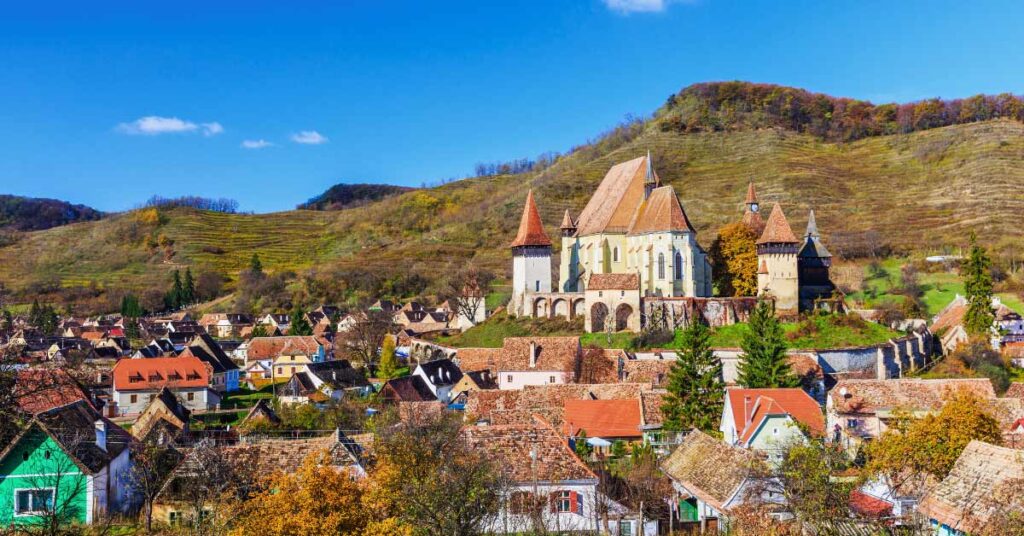
Biertan’s fortified Church
Viscri
Viscri, in Brașov County, is the one everyone has already half-heard of. Its fortified church is among the oldest of the seven UNESCO sites, with parts dating to the 12th century, and its whitewashed walls and red tile roof are about as photogenic as this style of building gets.
Viscri is roughly 80 kilometers from Brașov, and the last stretch runs along an unpaved road through the village itself – cars now share it with cattle herded home each evening. The Saxon houses, painted in traditional blues and ochres, are well preserved rather than restored for effect, largely thanks to sustained work by the Mihai Eminescu Trust (MET), active across dozens of Transylvanian villages.
King Charles III bought a property in Viscri years before he took the throne, now known locally as “The King’s House.” It reopened as a small museum and exhibition space in 2022, and has drawn over 75000 visitors since then – which tells you how un-hidden this village now is in peak season. Go early morning if you want the dirt road to yourself. Romania Insider covered the reopening in more detail.
One honest comparison: if you only have time for one UNESCO village and want quiet, pick Biertan over Viscri. Viscri is more famous and, in July and August, considerably more crowded with tour buses from both Sighișoara and Brașov.
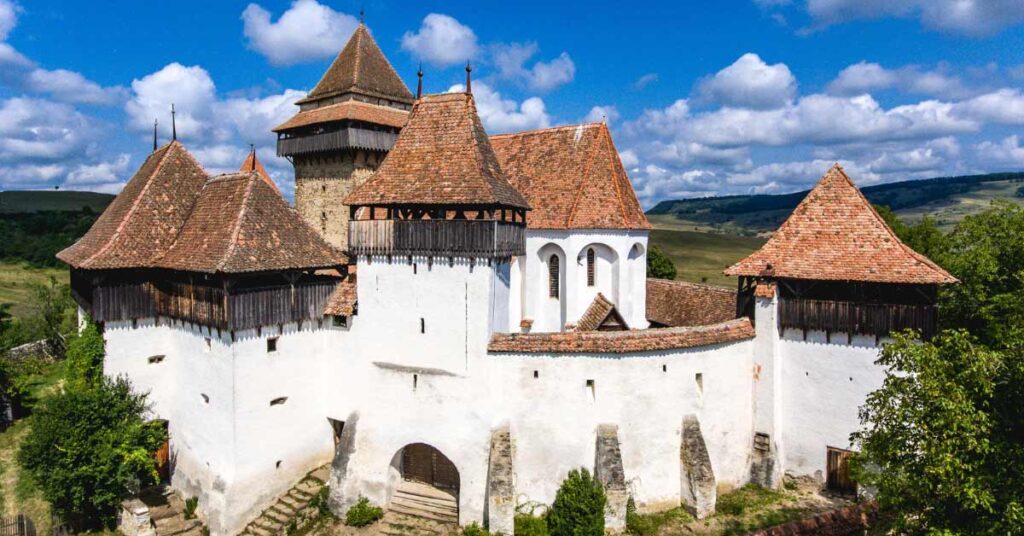
Fortified Church Viscri
Prejmer
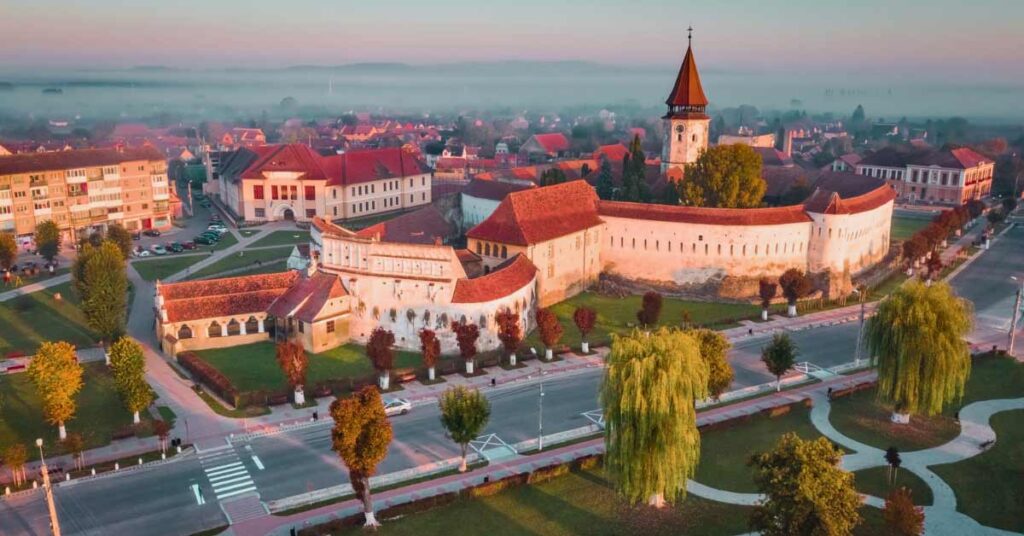
Prejmer, also in Brașov County, is the largest fortified church of its kind in southeastern Europe, and it’s worth correcting something most articles get wrong: it was not, in fact, “never conquered.” Built from 1218 by the Teutonic Knights and later strengthened by Saxon settlers, it withstood roughly 50 recorded sieges over five centuries but was captured exactly once, in 1611, when the forces of Transylvanian prince Gabriel Báthori took it after the defenders ran out of drinking water. That exception doesn’t make it less impressive – it makes the story more honest.
Inside, 275 storage and shelter rooms across four levels line the circular walls, one assigned to each family in the village, connected by narrow wooden staircases that still creak the way a 500-year-old structure should. Prejmer sits just 18 kilometers from Brașov and is reachable by car or local train, making it one of the easier stops on this list without a rental car.
I always pair Prejmer with Hărman rather than treating them as separate trips – they’re a ten-minute drive apart and both manageable in a single afternoon, with Prejmer the more architecturally significant of the two.
The Prejmer Fortified Church
Sighișoara
Sighișoara, in Mureș County, needs no introduction – it’s the birthplace of Vlad III, the historical figure behind the Dracula legend, and its citadel is a UNESCO World Heritage Site in its own right, separate from the seven fortified church villages. If Dracula folklore is what drew you here, our guide to authentic Dracula-adjacent experiences in Romania goes well beyond the citadel gift shops.
Sighișoara sits about 120 kilometers from Sibiu and 150 from Brașov, and it’s the easiest stop on this list to reach without a car – regular CFR trains connect it to both cities on the main Brașov-Sighișoara-Cluj line. The Clock Tower marks the citadel entrance with panoramic views over the rooftops. Don’t skip the Church on the Hill, reached by the covered wooden staircase locals call the Scholars’ Stairs – a genuine climb, and usually where the crowds thin out.
Fair warning: in July and August, Sighișoara’s old town gets more tour-bus traffic than any other stop on this list, including Viscri. For the citadel without the crowds, stay overnight and walk it after 6pm, once the day-trippers have left.
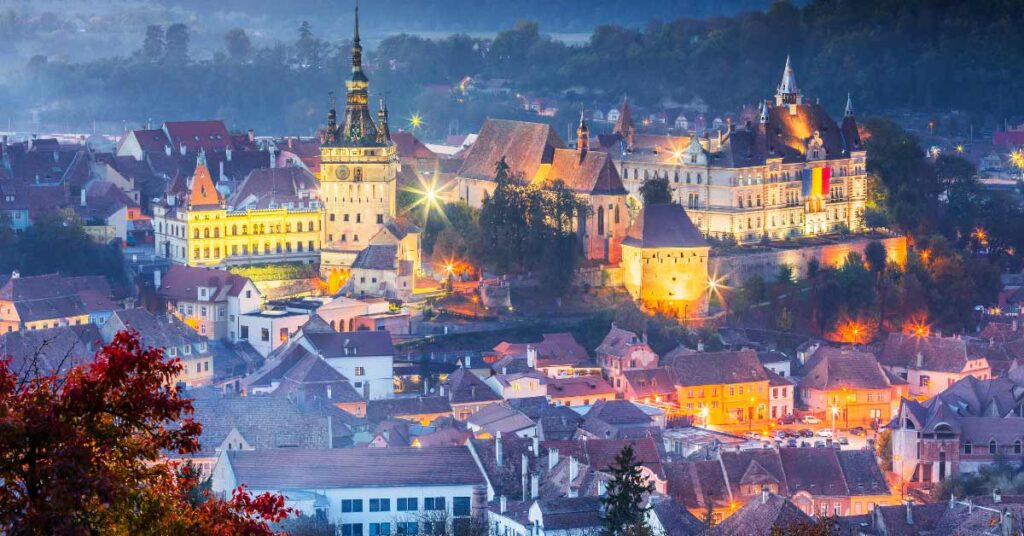
Night-view in Sighișoara
Rupea
Rupea sits on DN13, the main road between Brașov and Sighișoara, roughly 70 kilometers from Brașov – its citadel is less a destination in itself and more the best reason to stop the car for an hour on a longer drive. The hill was fortified long before the Saxons arrived: finds here point to Paleolithic and Neolithic settlement, and later a Dacian stronghold, with local legend claiming this is where the Dacian king Decebalus took his own life rather than be captured by the Romans in 106 AD – the kind of layered history most of these villages simply don’t have.
The citadel was restored between 2010 and 2013 and now draws over 10000 visitors a month. Parking at the base is free, and the climb is short but steep, so budget more time than its size suggests. Our complete guide to Romania’s castles covers how these fortified churches relate to the region’s proper castles.
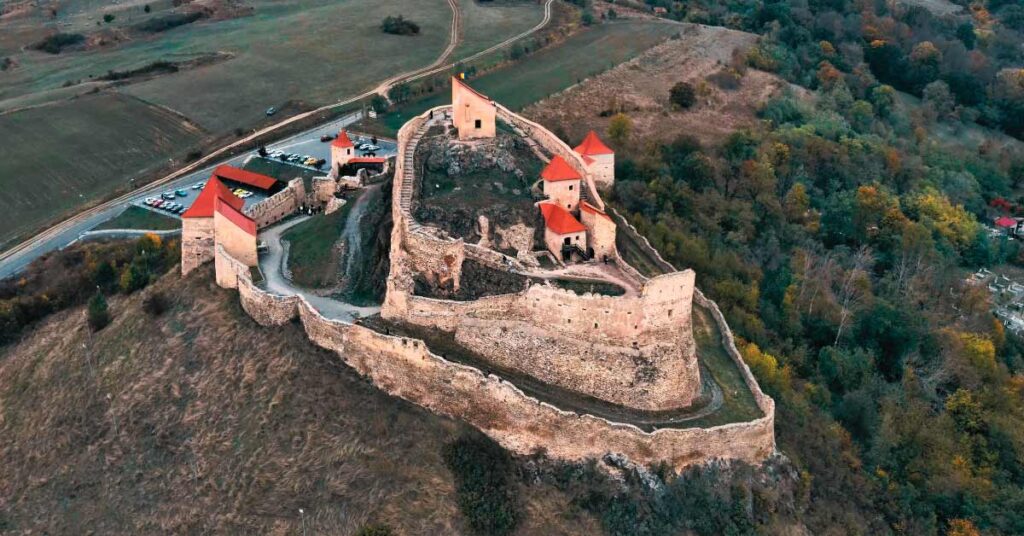
Rupea Citadel
Cisnădie
Cisnădie sits just 10 kilometers from Sibiu, close enough to treat as an afterthought – which would be a mistake. Its fortified church dates to the 12th century, with defensive walls and frescoes that hold up well against villages twice as far from any city, and the tower is one of the tallest among these fortified churches.
Cisnădie is reachable by car or local bus from Sibiu, and since it sits so close to the city, I usually recommend it as a half-day add-on – pair it with Cisnădioara, five minutes further down the same road, for two very different versions of “Saxon village near a city” in one afternoon.
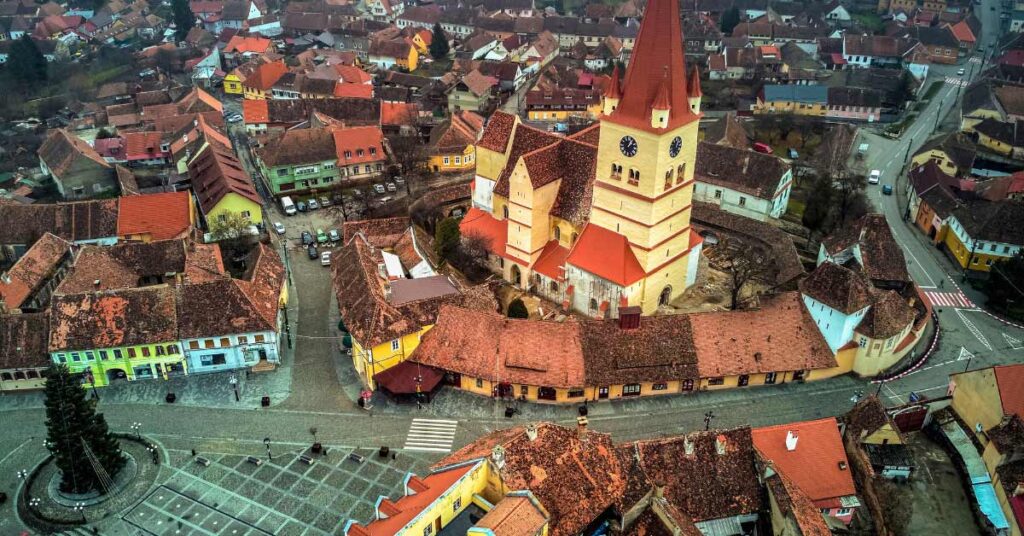
Cisnădie center
Saschiz
Saschiz, in Mureș County, sits about 20 kilometers from Sighișoara along scenic rural roads, and its fortified church – part of the same UNESCO inscription as Biertan and Viscri – is one of the more visually striking on this list, thanks to its unusually tall, narrow silhouette. Above the village, the ruins of a 14th century peasant citadel sit on a separate hilltop.
Saschiz’s other claim to fame is its pottery tradition. Our guide to Romanian pottery artisans covers the local workshops in more depth, including where you can try shaping a piece yourself rather than just watching.
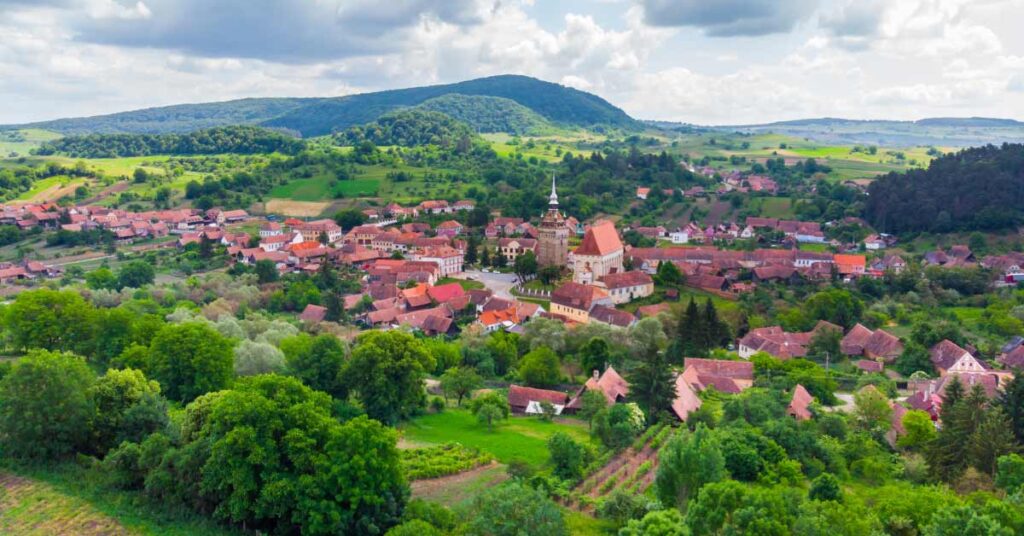
Fortified Church in the middle of Saschiz
Mălâncrav
Mălâncrav is the most isolated village on this list, and that’s exactly why it’s worth the extra effort. It sits about 20 kilometers from Sighișoara, but the last stretch runs 13 kilometers down a country road that turns to gravel. The German name is Malmkrog and the Hungarian is Almakerék – worth knowing since both still surface locally, including on older maps.
The fortified church, dating to the 14th century, holds some of the oldest and most complete Gothic frescoes in Transylvania, in a style more commonly associated with royal courts elsewhere in Europe. Just below it stands the Apafi Manor, a 15th century hunting residence abandoned for most of the 20th century until the Mihai Eminescu Trust bought it in 2000 and restored it over four years, reopening it in 2007 as a guesthouse – now one of roughly 20 MET-restored guesthouses across villages including Mălâncrav, Viscri and Biertan. You can book bread-making workshops, guided walks and shepherd-cooked dinners at a nearby sheepfold through the foundation directly – the closest thing on this list to participating in the region rather than just photographing it.
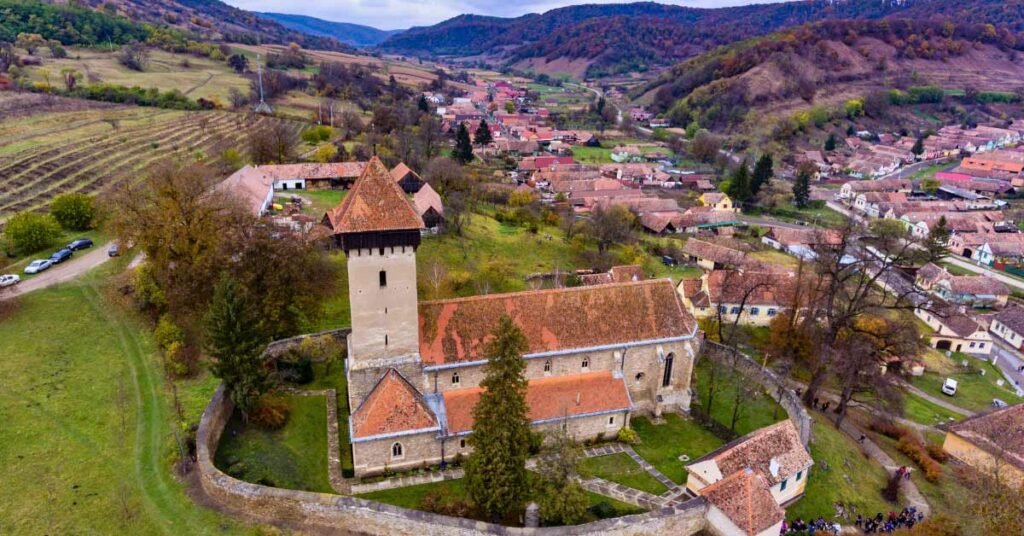
Fortified Church in Mălâncrav
Valea Viilor
Valea Viilor, back in Sibiu County, sits about 50 kilometers from Sibiu along scenic countryside roads. Its fortified church, another of the seven UNESCO sites, has defensive walls and towers that feel more compact than Biertan’s or Prejmer’s but no less atmospheric in early morning light, with vineyards still in shadow.
There isn’t much else to the village beyond the church and the narrow streets around it, and I mean that as a recommendation rather than a criticism – this is the stop for someone who wants fifteen quiet minutes with a genuinely old building and nothing else competing for attention.
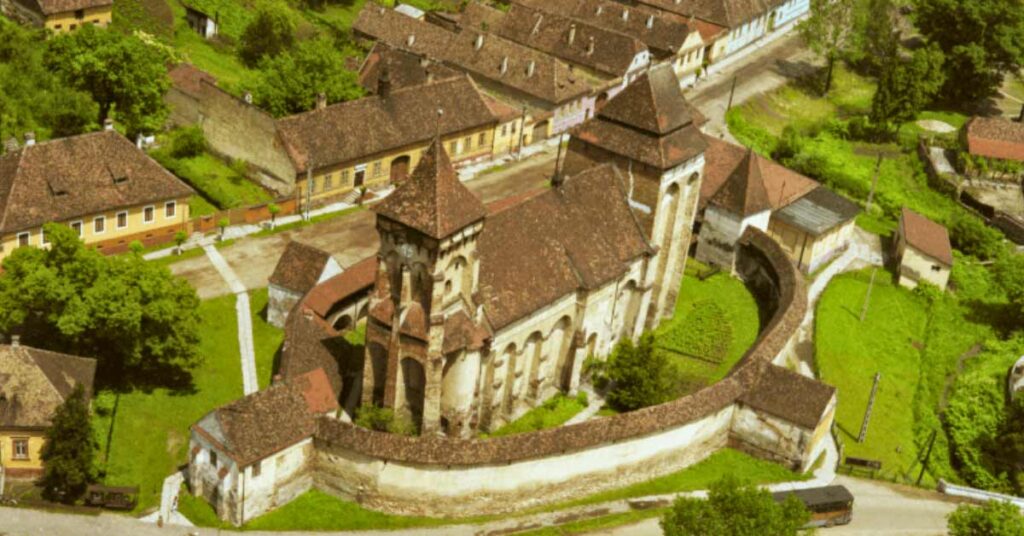
Medieval Fortified Church in Valea Viilor
Hărman
Hărman, in Brașov County, sits just 10 kilometers from the city and is easy to reach by car or local bus. Its fortified church has Gothic architecture and interior frescoes worth the short detour, and the defensive structure – smaller than Prejmer’s – tells the same essential story of a farming community building the only shelter it could afford.
As mentioned above, I treat Hărman and Prejmer as one trip rather than two – close enough that splitting them across separate days wastes time better spent in Rupea or Viscri.
Cisnădioara
Cisnădioara looks, at first glance, more like a Sibiu suburb than a Saxon village – paved streets, regular traffic, five minutes from the city center. Look past that and you’ll find one of the oldest stone-built village churches in Transylvania, a 12th century Romanesque structure on a rocky hilltop, reached by a short but steep footpath.
The climb is the point here – the church itself is modest compared to Biertan or Prejmer, but the view over the orchards and the edge of the city is one of the better ones on this list for the effort involved. It works well as a last stop on a day that started in Sibiu.
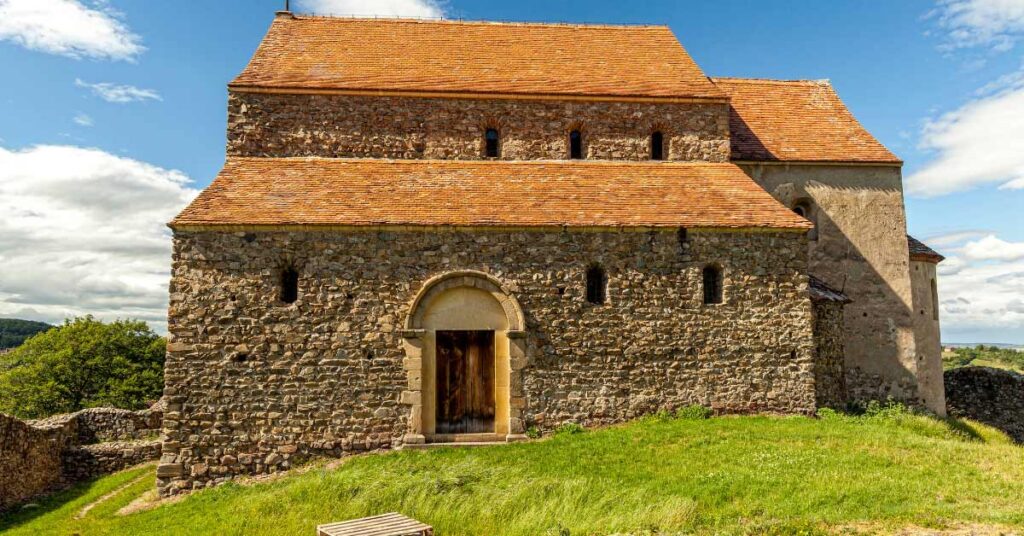
Saxon church in Cisnădioara
When to go
Spring (April-May) means mud on the unpaved approaches to Mălâncrav and Viscri, but also empty villages and orchards in bloom – my personal favorite window. Summer (July-August) is when Sighișoara and Viscri get genuinely crowded; villages like Valea Viilor and Cisnădioara stay quiet even then. Autumn (October) brings harvest around Biertan’s vineyards and good light, but shorter days. Winter is the honest gap here – several custodes travel for other work between November and March, hours become unreliable, and unpaved roads get difficult after snow. If you’re set on winter, stick to Sighișoara, Biertan and Prejmer, and call ahead for anywhere else.
A few frequently asked, actually specific questions
Do you need to book ahead to visit the King’s House in Viscri? Not to walk through the village or see the fortified church, but the museum keeps seasonal hours and can close on short notice for events – it hosted an art exhibition through parts of 2025 – so check current hours before building your day around it.
Can you visit these villages without a rental car? Partially. Sighișoara, Prejmer and Hărman have workable public transport, and Cisnădie has a local bus from Sibiu. Viscri, Mălâncrav, Rupea, Saschiz, Valea Viilor and Cisnădioara really need a car or a private driver.
Are the fortified churches open every day? Not reliably, especially outside Sighișoara, Biertan, Prejmer and Viscri. Most others depend on a local custode with the keys, and hours shift by season and by year. Treat a locked church as a normal possibility, not a failed trip.
Eleven stops, one region, and honestly more variation between them than most guides let on – Biertan’s scale and history, Viscri’s fame and crowds, Valea Viilor’s quiet, Mălâncrav’s isolation. I’d rather send someone to four of these done properly than all eleven done in a rush. If you’d rather have someone handle the driving, the key-holder calls and the timing between villages, that’s exactly the kind of trip a local tour operator is built for – it’s most of what Zoe and I actually do for a living.